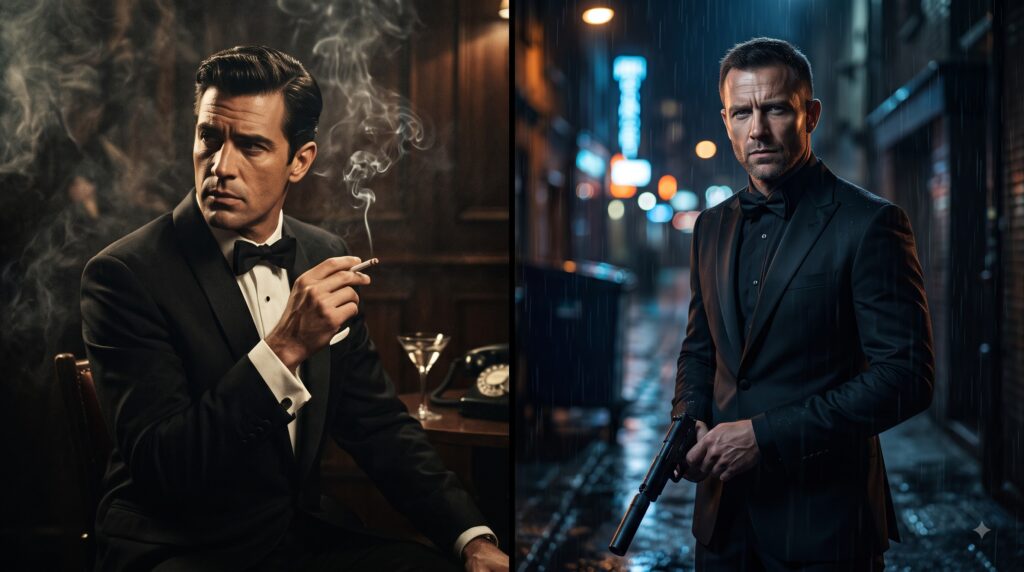
Comparing Sean Connery and Daniel Craig reveals two distinct interpretations of Ian Fleming’s original literary spy.
For more than six decades, cinema audiences and literary scholars have debated the definitive portrayal of Ian Fleming’s iconic secret agent. The Daniel Craig vs Sean Connery comparison represents the most enduring argument in Bond fandom, pitting the original cinematic 007 against the modern reboot’s gritty operative.
In this in-depth character study and comparison, we analyze both actors across physical accuracy, psychological depth, and fidelity to Fleming’s novels. Understanding the Daniel Craig vs Sean Connery debate requires examining how each actor interpreted the author’s complex creation.
The Literary James Bond: Ian Fleming’s Blueprint
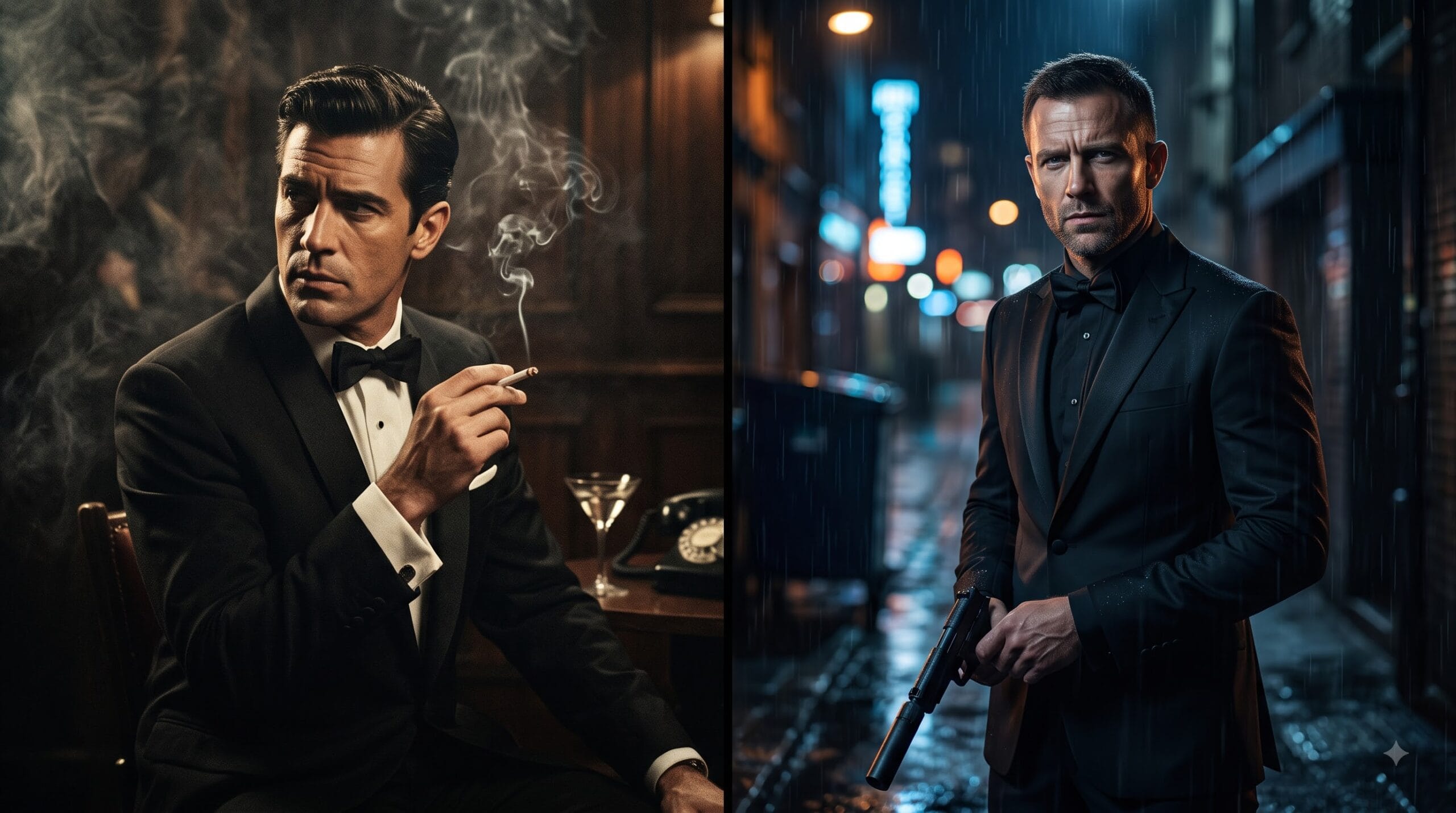
To understand the debate between Daniel Craig vs Sean Connery, one must first examine Ian Fleming’s literary blueprint. Fleming described Bond as a complex, flawed instrument of the state – not a superhero, but a professional assassin with refined tastes and deep psychological scars.
Fleming described Bond as possessing dark, clean-cut features with a distinctive comma of black hair falling over his forehead, blue-grey eyes, and a cruel mouth. More importantly, Fleming emphasized Bond’s cold professionalism, his capacity for violence, and the emotional cost of his profession.
Read Also: The Evolution of the Bond Girl: From Sidekick to Secret Agent
Sean Connery: The Raw Magnetism of the Original 007 (1962-1971)
When Scottish bodybuilder and actor Sean Connery stepped onto the set of Dr. No in 1962, Ian Fleming initially objected to the casting. Yet Connery’s portrayal would define the cinematic Bond for generations and set the standard for the Daniel Craig vs Sean Connery comparison.
Strengths in Literary Accuracy:
- Effortless Animal Grace: Connery moved with the predatory physicality that Fleming described in the novels, combining lethal capability with natural charisma.
- Unflinching Cruelty: Connery’s early films (Dr. No, From Russia with Love) captured Bond’s capacity for cold-blooded killing without hesitation or remorse.
- Fleming’s Eventual Approval: Fleming was so thoroughly won over by Connery’s performance that he wrote Connery’s Scottish heritage into the Bond backstory in later novels.
Deviations from the Novels:
As the franchise progressed into Goldfinger (1964) and Thunderball (1965), Connery’s Bond became increasingly invulnerable and gadget-reliant, drifting from Fleming’s more grounded, vulnerable operative. The Daniel Craig vs Sean Connery debate often centers on this divergence from literary realism.
Daniel Craig: The Blunt Instrument Reborn (2006-2021)
When Daniel Craig was cast as Bond in 2005, the backlash was immediate. Yet Craig’s portrayal would redefine the character for the 21st century and intensify the Daniel Craig vs Sean Connery debate among purists.
Strengths in Literary Accuracy:
- Physical Vulnerability and Trauma: Craig’s Bond bleeds, bruises, and shows the psychological cost of killing, aligning with Fleming’s depiction of a damaged professional.
- The “Blunt Instrument” Persona: Fleming described Bond as a “blunt instrument” of government. Craig captured this utilitarian brutality, especially in Casino Royale (2006).
- Cold Professional Detachment: Craig’s interpretation emphasized Bond’s emotional isolation and the dehumanizing effect of his license to kill.
Deviations from the Novels:
Craig’s Bond is more emotionally vulnerable and psychologically complex than Fleming’s original, who was more of a stoic professional. The Daniel Craig vs Sean Connery comparison often highlights Craig’s modern sensitivity versus Connery’s classic stoicism.
Read Also: How to Watch James Bond Movies in Order: Chronological & Release Timelines
Head-to-Head Comparison Matrix
The table below provides a structured comparison of both actors against Fleming’s literary criteria, clarifying the Daniel Craig vs Sean Connery debate through objective metrics.
| Criterion | Sean Connery (1962-1971) | Daniel Craig (2006-2021) | Fleming’s Original |
|---|---|---|---|
| Physical Description | Tall, dark, athletic – matches well | Blond, stocky, craggy – differs from text | Dark hair, blue-grey eyes, 6’0″, slim build |
| Emotional Depth | Charming, stoic, limited vulnerability | Traumatized, vulnerable, psychologically complex | Professional, detached, occasional vulnerability |
| Violence Portrayal | Effortless, almost casual brutality | Brutal, messy, physically costly | Cold, efficient, professional |
| Cultural Impact | Defined the cinematic icon | Redefined for modern audiences | Literary archetype |
Beyond the Page: How Each Bond Reshaped the Franchise
Fidelity to Fleming is only half the story. Each actor’s Bond also rewrote what the franchise could be on screen.
Connery’s Goldfinger (1964) did more than any single film to codify the Bond formula: the standalone pre-title sequence, the Q-branch gadget briefing, the heavy reliance on technology, and a more tongue-in-cheek tone all became series staples after it. Made for roughly $3 million, it grossed around $125 million worldwide, turned Bond into a genuine cultural phenomenon, and became the first Bond film to win an Academy Award (Best Sound Editing).
Craig’s Casino Royale (2006) performed the opposite trick: it stripped the formula back. The grounded origin story, shorn of invisible cars and gadget excess, earned a 94% Rotten Tomatoes rating and over $600 million worldwide — then the highest-grossing Bond film ever, until Skyfall ($1.1 billion) surpassed it in 2012. Critics called Craig the first actor to truly embody Fleming’s Bond on screen. His 15-year tenure remains the longest of any actor in the role.
The Verdict: Who Was the Most Accurate Ian Fleming Bond?
After analyzing both portrayals against Fleming’s literary blueprint, the Daniel Craig vs Sean Connery debate reveals that each actor captured different aspects of the author’s complex creation.
- If you measure accuracy by physical presence and cultural definition, Sean Connery wins. He embodied the suave, dangerous charisma that made Bond a global icon, and Fleming himself acknowledged Connery’s interpretation by writing Scottish heritage into the novels.
- If you measure accuracy by psychological depth and modern realism, Daniel Craig wins. His portrayal captured the trauma, vulnerability, and moral ambiguity that Fleming hinted at but never fully explored in the 1950s novels.
The Daniel Craig vs Sean Connery comparison ultimately demonstrates that Fleming’s Bond was too complex for any single interpretation. Connery defined the myth; Craig deconstructed it. Both are essential to understanding the character’s evolution.
Learn more about the author’s original vision on the Ian Fleming Wikipedia page, which details how the Daniel Craig vs Sean Connery debate reflects changing interpretations of Fleming’s work.
Frequently Asked Questions
Who played Bond closest to the books?
Most literary scholars argue Daniel Craig’s portrayal is closer to Fleming’s original vision of a flawed, psychologically damaged professional. However, the Daniel Craig vs Sean Connery debate continues, with Connery’s supporters citing his embodiment of Bond’s effortless charisma.
Did Ian Fleming like Sean Connery as Bond?
Initially skeptical, Fleming was won over by Connery’s performance. He was so impressed that he gave Bond Scottish heritage in You Only Live Twice (1964). The Daniel Craig vs Sean Connery discussion often notes that Fleming never saw Craig’s interpretation.
How many times did each actor play Bond?
Sean Connery played Bond in 7 official Eon films (1962-1971, plus 1983’s unofficial Never Say Never Again). Daniel Craig played Bond in 5 films (2006-2021). The Daniel Craig vs Sean Connery comparison spans nearly 60 years of cinema history.
For official filmography details, visit the official James Bond website to explore both actors’ contributions to the franchise.

Kunal is the founder and editor of Media1Gyan.com, an independent James Bond 007 fan blog. A lifelong James Bond fan, he started Media1Gyan to give fellow fans clear, well-researched coverage of the world of 007 — from the classic Eon films to the new Amazon-MGM era and the road to Bond 26. On Media1Gyan, Kunal covers Bond movie news and casting rumors, ranked listicles (villains, Bond girls, theme songs, gadgets), explainers on Bond history and trivia, and deep dives into characters like Vesper Lynd and Ernst Stavro Blofeld. Every article is researched from publicly available information and reliable sources, and reviewed for accuracy before publishing. His approach is fan-first: no hype without sourcing, no rumors presented as fact, and complex Bond lore explained in plain language. When he covers developing stories like the next James Bond casting, articles are updated as new information breaks. Follow Media1Gyan.com for daily James Bond coverage — news, rankings, and guides for fans around the world.