
Vesper Lynd remains the definitive emotional catalyst across Daniel Craig’s five-film James Bond era.
The Literary Foundation: Ian Fleming’s Original Heartbreak
To understand the profound weight of Vesper Lynd on screen, one must look back to Ian Fleming’s debut 1953 novel, Casino Royale. In the book, Fleming created Vesper not as a disposable companion, but as a competent HM Treasury liaison whose sudden betrayal and suicide shattered Bond’s worldview. Fleming used Vesper’s death to harden his protagonist into an emotionally detached operative. The novel concludes with Bond’s legendary, ice-cold transmission to M: “The bitch is dead now.” That line was not delivered out of hatred, but as a desperate defense mechanism to lock away his capacity for love forever.Read Also: Daniel Craig vs Sean Connery: Who Was the Most Accurate 007?
The Train to Montenegro: Intellectual Equals
The Shower Scene: A Shift in Vulnerability
The turning point of their dynamic occurs not during a romantic embrace, but in the immediate aftermath of brutal violence. Following the stairwell fight against Obanno, Bond finds Vesper sitting fully clothed under running shower water, shivering from psychological trauma. Instead of seducing her, Bond sits beside her, holds her hand, and offers quiet comfort without judgment. This pivotal scene stripped away the indestructible superhero myth, establishing a deeply grounded emotional core that defined Daniel Craig’s entire tenure.Read Also: How to Watch James Bond Movies in Order: Full Franchise Timeline
The Venice Tragedy: The Birth of the Cold Operative
Bond’s decision to resign from MI6 and sail away with Vesper was genuine. He was prepared to abandon his licence to kill entirely. However, the discovery of her blackmail by Quantum (and later SPECTRE) led to the catastrophic collapse of a Venetian palazzo. Vesper’s final act—locking herself inside an elevator beneath the canal to ensure Bond could not drown trying to save her—haunted him permanently. Her sacrifice forced him to confront two devastating realities simultaneously: she had betrayed him, yet she loved him enough to die to protect his life.Vesper’s Lasting Impact Across the Craig Era
Unlike earlier standalone entries in the franchise, Daniel Craig’s continuity treated Vesper Lynd as an inescapable narrative ghost across five interconnected films:| Film Title | Vesper Lynd Narrative Connection | Impact on James Bond |
|---|---|---|
| Casino Royale (2006) | Direct narrative co-lead and tragic love interest. | Breaks his emotional vulnerability; establishes his cynical persona. |
| Quantum of Solace (2008) | Bond pursues her blackmailer, Yusef Kabira. | Learns the truth of her sacrifice; drops her Algerian love knot in the snow. |
| Skyfall (2012) | Subconscious trauma referenced during psychological evaluations. | Reinforces his total reliance on M and MI6 as his sole family. |
| Spectre (2015) | Blofeld reveals he orchestrated Vesper’s blackmail and death. | Proves that all of Bond’s personal pain originated from one shadow network. |
| No Time to Die (2021) | Bond visits her tomb in Matera, Italy, to seek final closure. | Allows him to finally let go of the past and open his heart to Madeleine Swann. |
Style and Heritage: The Algerian Love Knot
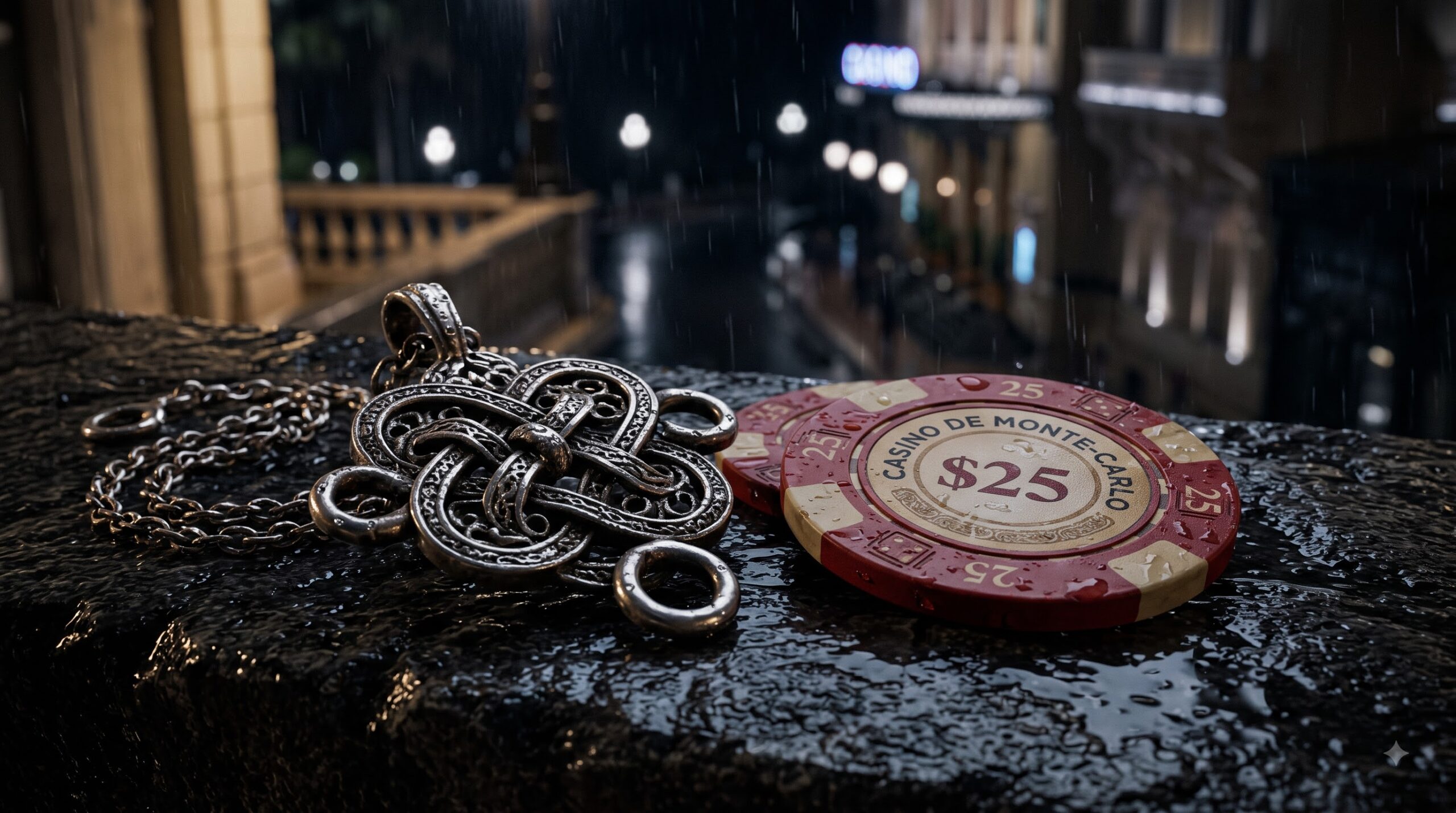
Beyond dialogue and action, Vesper Lynd left a visual trademark on the franchise. The Algerian Love Knot necklace, designed by Sophie Harley, served as a recurring visual motif across multiple films. Just as Bond’s choice of rugged Omega Seamaster watches symbolized his tactical military discipline, Vesper’s pendant represented the delicate, unresolved emotional anchor he carried throughout his missions.Read Also: 7 Iconic James Bond Watches Omega Rolex: The Ultimate Buying Guide
Why Vesper Lynd Remains the Ultimate Bond Character
The enduring resonance of Vesper Lynd Daniel Craig Bond storylines stems from realism. She was not a trophy or an obstacle; she was an equal who shattered Bond’s emotional defenses and rebuilt him into the hardened operative audiences know today. Without Vesper Lynd, Daniel Craig’s James Bond would have been just another efficient government assassin. Because of her, he became a tragic, multi-dimensional figure whose greatest battle was never against villains with doomsday devices, but against his own capacity for grief. For more deep-dive analyses, complete franchise chronologies, and casting updates, visit Media1Gyan, and stay connected with official updates at the official 007 Website.Frequently Asked Questions (FAQ)
Did Vesper Lynd truly love James Bond?
Yes. While she was blackmailed by Quantum to steal the poker winnings to save her previous lover, she fell genuinely in love with Bond and chose to drown in Venice rather than allow him to be killed.
What does the line “The bitch is dead” mean?
In both the novel and the 2006 film adaptation, Bond delivers this line to M immediately after Vesper’s death. It serves as an emotional defense mechanism to hide his grief and return to operational detachment.
Who played Vesper Lynd in Casino Royale?
French actress Eva Green portrayed Vesper Lynd in the 2006 film Casino Royale, earning widespread critical acclaim and a BAFTA Rising Star Award.
who was vesper lynd
Vesper Lynd was a British Treasury agent assigned to oversee James Bond’s funds in “Casino Royale” (2006). She becomes Bond’s true love — the only woman he ever intended to leave MI6 for. Her betrayal and death fundamentally shape Bond’s character, making him the colder, more guarded agent seen in later films.
is vesper lynd a villain
No, Vesper Lynd is not a villain. She was blackmailed by the criminal organization behind Le Chiffre, who threatened her boyfriend’s life. She fed information to the enemy under duress while genuinely falling for Bond. Her final sacrifice — saving Bond at the cost of her own life — proves her love was real.
why did vesper betray bond
Vesper betrayed Bond because a criminal organization was holding her boyfriend hostage. They forced her to steal Bond’s poker winnings in exchange for his life. Torn between love for Bond and fear for her boyfriend, she chose to protect both — ultimately sacrificing herself to save Bond from drowning.
The Enduring Legacy of Vesper Lynd Daniel Craig Bond
No exploration of the Vesper Lynd Daniel Craig Bond era is complete without acknowledging how thoroughly she rewrote 007’s emotional code.
Before Vesper, Bond was a blunt instrument. After the Vesper Lynd Daniel Craig Bond tragedy in Venice, he became a hero who feels deeply yet trusts rarely.
That transformation is why the Vesper Lynd Daniel Craig Bond dynamic still dominates fan debates nearly two decades later.
It was never just a romance in the Vesper Lynd Daniel Craig Bond saga. It was the origin story of the modern 007.
Every film in the Vesper Lynd Daniel Craig Bond timeline traces back to Venice — from the grief of Quantum of Solace to the closure of No Time to Die.
She loved him enough to die for him. He loved her enough to never fully recover.
For more on how the Vesper Lynd Daniel Craig Bond relationship compares to Fleming’s novels, explore our literary analyses.
Few fictional romances in the Vesper Lynd Daniel Craig Bond canon achieve such immortality.
The Vesper Lynd Daniel Craig Bond story endures because it dared to break its hero — and in breaking him, made him unforgettable.
That is the paradox at the heart of every Vesper Lynd Daniel Craig Bond retelling.

Kunal is the founder and editor of Media1Gyan.com, an independent James Bond 007 fan blog. A lifelong James Bond fan, he started Media1Gyan to give fellow fans clear, well-researched coverage of the world of 007 — from the classic Eon films to the new Amazon-MGM era and the road to Bond 26. On Media1Gyan, Kunal covers Bond movie news and casting rumors, ranked listicles (villains, Bond girls, theme songs, gadgets), explainers on Bond history and trivia, and deep dives into characters like Vesper Lynd and Ernst Stavro Blofeld. Every article is researched from publicly available information and reliable sources, and reviewed for accuracy before publishing. His approach is fan-first: no hype without sourcing, no rumors presented as fact, and complex Bond lore explained in plain language. When he covers developing stories like the next James Bond casting, articles are updated as new information breaks. Follow Media1Gyan.com for daily James Bond coverage — news, rankings, and guides for fans around the world.