Why does James Bond say “shaken, not stirred”? It is the most famous drink order in cinema history, a three-word catchphrase that has survived more than six decades, six actors, and countless parodies. But behind the suave delivery lies a surprisingly rich story: a line first written by Ian Fleming in the 1950s, borrowed from his own drinking habits, invented for a cocktail that can no longer be made the way Bond ordered it, and — according to one tongue-in-cheek medical study — possibly the result of a spy who simply drank too much.
“Why does James Bond say shaken, not stirred?” remains one of the most-searched questions about the franchise — and the true answer is better than the legend.
In this deep dive, we unpack the real history of James Bond’s “shaken, not stirred” martini: where the phrase came from, why shaking changes the drink, the original Vesper recipe, and seven surprising facts every 007 fan should know. If you arrived here asking why does James Bond say shaken, not stirred, start with Fleming — because the movies did not invent the line.
The Phrase Was Not Invented by the Movies
Most people assume “shaken, not stirred” was cooked up by a Hollywood screenwriter. It was not. The catchphrase comes straight from Ian Fleming’s novels. It first appears in Diamonds Are Forever, published in 1956 — the fourth Bond novel — though in that book Bond himself does not actually say it. That honour goes to the 1958 novel Dr. No, where Bond’s exact words are “shaken and not stirred.”
Fleming’s Bond was a connoisseur long before the films made him a global icon. In the books, Bond drinks with a specificity that borders on the obsessive: he names brands, specifies garnishes, and corrects bartenders. The martini order was simply the most memorable of his rituals, and it became the template for everything the cinematic Bond would later turn into legend. Which raises the obvious question — why does James Bond say shaken, not stirred at all? Because Fleming wrote it that way first.
Who Actually Said It First on Screen? The Villain, Not Bond
Here is the twist that catches even hardcore fans off guard. In the film adaptations, the phrase is first uttered not by Sean Connery’s Bond, but by the villain Dr. Julius No (Joseph Wiseman) in Dr. No (1962). When the megalomaniac offers his prisoner a drink, he serves up “a medium dry martini, lemon peel — shaken, not stirred.”
Connery’s Bond does not get to say the line himself until Goldfinger (1964), and from that moment on it became his property — repeated, referenced, and parodied in film after film. There are two famous exceptions worth knowing. In You Only Live Twice (1967), a bartender wrongly offers Bond a martini that is “stirred, not shaken” — and Bond, visibly pleased, replies, “Perfect.”
Four decades later, a younger, angrier Bond would rebel against the whole ritual: in Casino Royale (2006), after losing millions at the poker table, Daniel Craig’s Bond is asked whether he wants his martini shaken or stirred and snaps, “Do I look like I give a damn?” Even the exceptions prove the rule: ask why does James Bond say shaken, not stirred, and the film answer begins with a villain serving a prisoner a drink.
Bond’s Original Drink Was Not a Vodka Martini — It Was a Vesper
Here is another surprise: the drink most associated with “shaken, not stirred” was, in Fleming’s original telling, not a vodka martini at all. It was the Vesper — a cocktail Bond invents on the page in Casino Royale (1953). The Vesper is central to why does James Bond say shaken, not stirred: the instruction was written for this specific cocktail.
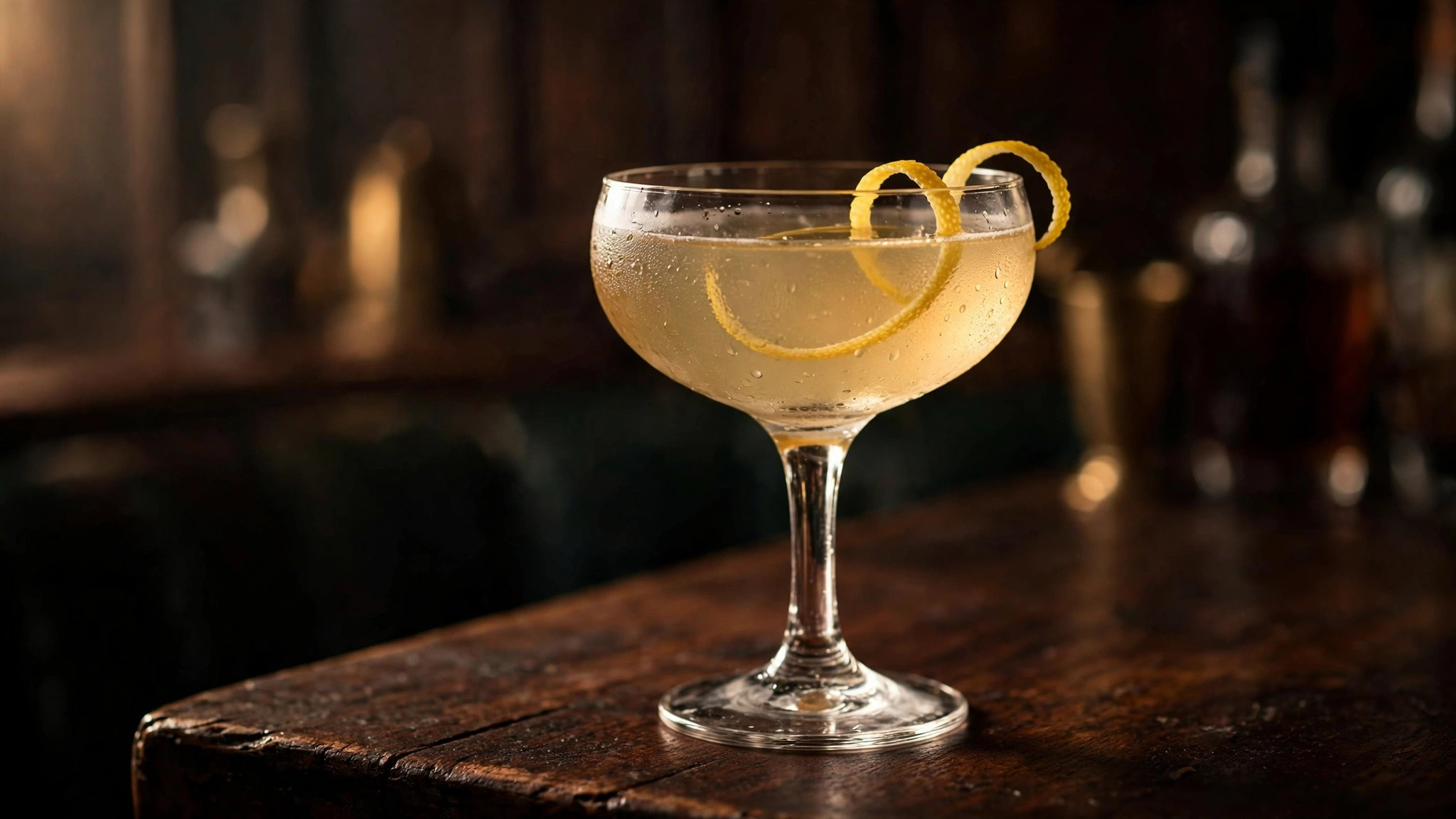
In chapter seven, Bond orders his own creation from the barman: three measures of Gordon’s gin, one measure of vodka, and half a measure of Kina Lillet, shaken until ice-cold and finished with a large, thin slice of lemon peel. He names it the Vesper, after Vesper Lynd, the Treasury liaison who would break his heart — the same Vesper whose story we explore in our character study of her legacy. It is a far stronger, more complex drink than the simple vodka martini the films later settled on.
The Vesper reveals something important about the phrase. Bond was not just ordering a drink; he was authoring one. The specificity — the brands, the measures, the shaken instruction — was Fleming’s way of signalling that 007 was a man who knew exactly what he wanted, everywhere in life.
Read Also: Vesper Lynd Daniel Craig Bond: 5 Tragic Ways She Shaped 007
Why Shake a Martini at All? The Science Behind “Shaken, Not Stirred”
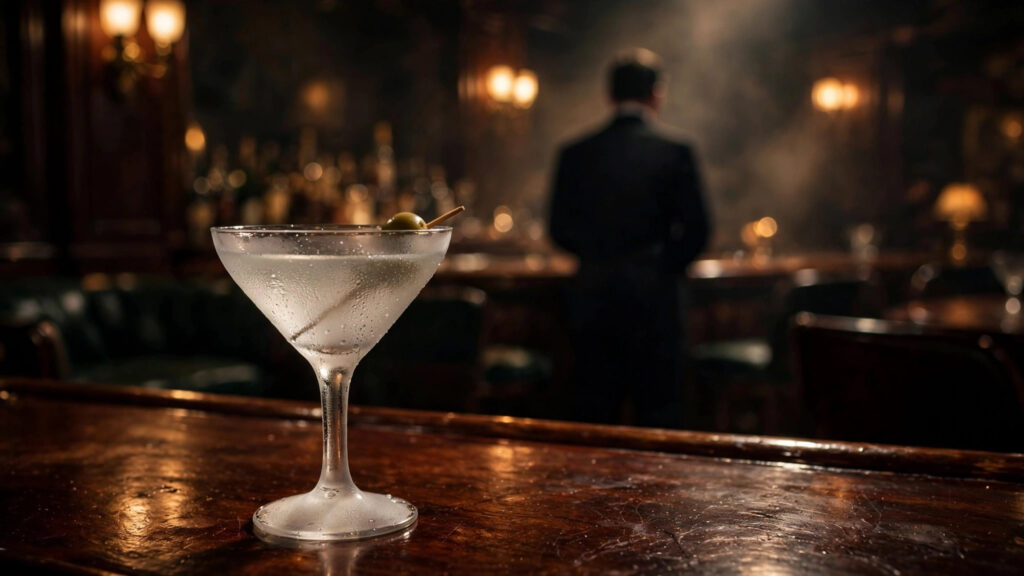
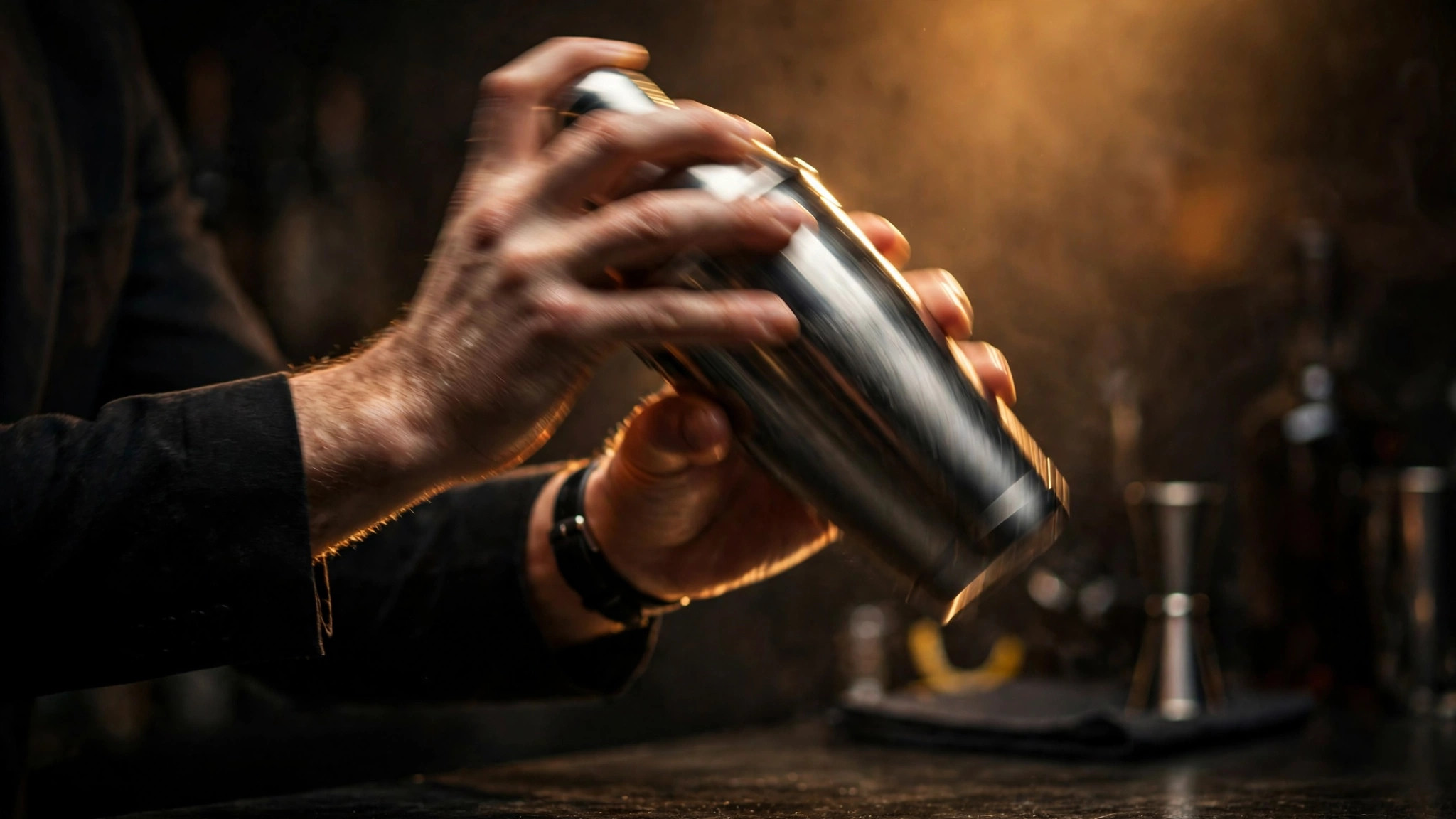
So why does James Bond say “shaken, not stirred” — and does the shaking actually do anything? Bartenders have strong opinions here. A shaken cocktail is colder, more diluted, and aerated; tiny ice shards give it a cloudier appearance. Connoisseurs sometimes say that shaking “bruises” gin, giving it a slightly bitter edge — and Fleming himself seems to have noticed this effect, writing in Casino Royale that Bond watched the glass become frosted with the pale golden drink, “slightly aerated by the bruising of the shaker.”
There is also a practical argument for shaking Bond’s particular drink. Before the 1960s, much vodka was refined from potatoes and carried an oily quality; shaking disperses that oil, and shaking also dissolves vermouth more effectively into the spirits. A shaken martini is, properly speaking, known to bartenders as a Bradford — so Bond’s order was not a novelty invented by a spy novelist, but a real, if unfashionable, drink order.
Modern cocktail professionals generally disagree with 007’s method. The standard rule of the trade is that drinks made only of spirits — like a martini — should be stirred, not shaken, to keep them silky and clear rather than cloudy and diluted. Shaking is reserved for cocktails with ingredients that are hard to combine, like citrus juices or syrups. Bond’s insistence on shaking is precisely what makes the order so character-defining: it is technically wrong, and he does not care.
Forget the mixology — when fans ask why does James Bond say shaken, not stirred, the honest answer is character, not chemistry.
Fleming Was Writing About Himself
One reason the martini order feels so authentic is that Ian Fleming lifted it, like so much of Bond, from his own life. According to Fleming’s biographer Andrew Lycett, the author himself preferred his martinis shaken because he believed shaking preserved the flavour of the drink. Bond’s tastes were Fleming’s tastes, poured into a fictional glass. In other words, one honest answer to “why does James Bond say shaken, not stirred?” is simply: because Ian Fleming did.
The vodka connection may reach back even further. In John Pearson’s biography of Fleming, there is an account of the young Fleming — then a journalist covering the trial of British engineers accused of spying in Moscow before the Second World War — being served a vodka martini in the bar of Moscow’s National Hotel. Some have argued that this early encounter with vodka cocktails seeded the idea that would later become 007’s signature order. The James Bond Dossier’s deep dive into the shaken-versus-stirred debate traces these Fleming roots in fascinating detail.
As we detail in our exploration of how Fleming created his hero from real wartime experience, the line between the author’s life and his creation was always thin. The martini is one more example: an author’s private habit, sharpened into a cultural catchphrase.
Read Also: Creation of James Bond: 7 True WWII Secrets Revealed
You Cannot Order the 1953 Vesper Anymore — Here Is Why
Here is the cruel irony at the heart of this story. If you walked into a bar today and ordered Bond’s original Vesper exactly as Fleming wrote it, you could not have it. The ingredients no longer exist. Yet the question persists: why does James Bond say shaken, not stirred? Because the line outlived the recipe.
Kina Lillet, the quinine-laced French aperitif at the heart of the recipe, was reformulated in 1986 and reborn as the lighter, fruitier Lillet Blanc — less bitter than the original. And Gordon’s gin itself was reformulated in 1992 at a lower proof than the 94-proof spirit of the 1950s. The drink Bond invented is, strictly speaking, impossible to reproduce faithfully.
Bartenders have spent years trying to get close. Many swear by Cocchi Americano, an Italian aperitif that retains the quinine bitterness of the original Kina Lillet, as the truest substitute. The International Bartenders Association’s official Vesper recipe calls for 45 ml of gin, 15 ml of vodka, and 7.5 ml of Lillet Blanc. Esquire, in a famous 2006 piece, went further and suggested adding a pinch of quinine powder to bridge the gap — a fix the magazine’s recipe memorably concluded with the instruction, “Shoot somebody evil.”
How Much Does 007 Actually Drink? The Science Gets Weird
All of this raises an awkward question: exactly how much alcohol is James Bond consuming? A team of researchers decided to find out. In a tongue-in-cheek study published in a Christmas issue of the medical journal BMJ, three scientists read all 14 of Fleming’s Bond novels, logged every single drink, and calculated 007’s intake in standard alcohol units.
The results were alarming. Bond averaged 92 units of alcohol per week — more than four times the recommended limit — with a maximum single-day consumption of nearly 50 units. Their conclusion was half-joking but memorable: “Ideally, vodka martinis should be stirred, not shaken,” the researchers wrote, noting that Bond’s preference for shaken martinis was “incongruous with his otherwise impeccable mastery of culinary etiquette.” Their playful explanation? An alcohol-induced tremor in the hands — 007 literally could not stir his drinks, so he ordered them shaken.
It is almost certainly a joke, but it is the kind of joke only the most famous drink order in fiction could inspire. The study’s punchline doubles as an answer: why does James Bond say shaken, not stirred? Because, the researchers joked, his trembling hands left him no choice.
Read Also: Ian Fleming James Bond Books in Order: 14 Amazing Classics
“Shaken, Not Stirred” in Pop Culture: A Phrase Bigger Than the Franchise
Few film quotes escape their movies entirely; “shaken, not stirred” is one of them. It has been parodied in countless comedies, quoted by bartenders on every continent, and deployed in political cartoons and advertising for decades.
It even travelled to the White House — on screen, at least. In an episode of The West Wing titled “Stirred,” President Josiah Bartlet takes the opposite side of the debate, telling his aide that shaking “will get you cold water with a dash of gin and dry vermouth,” and that the reason you stir with a special spoon is to keep the ice from chipping. The fictional president, it turns out, thought Bond was ordering a weak martini.
Ask a stranger why does James Bond say shaken, not stirred, and they will likely know the line without ever having seen a Bond film.
The phrase’s staying power is remarkable because it started as a minor detail — a mixing instruction buried in a spy novel — and became shorthand for a whole archetype: the unflappable, ultra-competent man who stays cool when everything is on fire. You do not need to have seen a Bond film to know what “shaken, not stirred” means. That is what makes it the most successful piece of drink marketing ever written into fiction. Which is exactly why the question why does James Bond say shaken, not stirred still gets asked sixty years on: three words became a personal brand.
7 Surprising Facts About “Shaken, Not Stirred”
Before we wrap up, here is the rapid-fire round — seven facts for everyone still wondering why does James Bond say shaken, not stirred:
- Bond did not invent it. A shaken martini is properly called a Bradford — a real bartender’s term. Fleming was writing about an existing drink order, not inventing one.
- A villain said it first on screen. Dr. Julius No uttered the phrase before Sean Connery’s Bond ever did, in Dr. No (1962).
- The book version is slightly different. In the 1958 novel Dr. No, Bond’s exact words are “shaken and not stirred” — not the sleeker “shaken, not stirred” of the films.
- The original drink was the Vesper, not a vodka martini. Bond’s 1953 invention mixed gin and vodka with Kina Lillet — a far more complex drink than the simple martini the movies settled on.
- You cannot make the original anymore. Kina Lillet was reformulated in 1986 and Gordon’s gin in 1992, so the exact Vesper of Casino Royale is lost to history.
- Fleming drank like his creation. The shaken-martini habit came from the author’s own bar stool — Fleming reportedly believed shaking preserved a martini’s flavour.
- Bond himself has broken the rule. In You Only Live Twice (1967) he approves a “stirred, not shaken” martini with a delighted “Perfect,” and in Casino Royale (2006) he snaps, “Do I look like I give a damn?”
Our Take
Here is what we think, after all this research: “shaken, not stirred” endures because it is the rare fictional detail that is both completely true to character and completely real. Fleming did not invent a catchphrase in a marketing meeting; he wrote down his own drink order and gave it to his hero, and the world fell in love with the specificity of it.
The technical debate — shaken versus stirred — almost misses the point. Bartenders are right that a martini should be stirred. But Bond was never ordering a martini the way a bartender would make one. He was ordering it the way Ian Fleming would drink one: colder, stronger, cloudier, and entirely on his own terms. That is the whole character in three words.
So the next time you hear the phrase, remember what it really describes — not a recipe, but a man. A man who writes his own cocktail recipes, corrects his bartenders, and drinks like the world might end tomorrow. In Bond’s case, it usually almost does. So why does James Bond say shaken, not stirred? Because three words told you everything about him.
Frequently Asked Questions
What does “shaken, not stirred” mean?
It is James Bond’s signature instruction for how his martini should be prepared: shaken with ice in a cocktail shaker rather than stirred with a bar spoon. Shaking makes the drink colder, more diluted, and cloudier than stirring. Anyone asking why does James Bond say shaken, not stirred should know the phrase describes the method, not the ingredients.
Why does James Bond say “shaken, not stirred”?
The preference came from Ian Fleming’s novels and from the author’s own drinking habits — Fleming himself reportedly liked his martinis shaken. In-story, it marks Bond as a man of exacting, uncompromising taste. A tongue-in-cheek medical study in the BMJ once joked that Bond might prefer shaking because an alcohol-induced hand tremor made stirring difficult.
Why does James Bond say “shaken, not stirred” instead of just ordering a martini?
Because the specificity is the point. A plain martini order would tell the bartender nothing; asking why does James Bond say shaken, not stirred misses that the ritual — the brands, the measures, the method — is how Fleming showed that Bond controls every detail of his world.
What is the original James Bond Vesper martini recipe?
In Casino Royale (1953), Bond invents the Vesper: three measures of Gordon’s gin, one measure of vodka, and half a measure of Kina Lillet, shaken until ice-cold and garnished with a large, thin slice of lemon peel. He names it after Vesper Lynd. The original cannot be made exactly today because Kina Lillet was reformulated in 1986 — many bartenders use Cocchi Americano as the closest substitute.
Which James Bond film first used the phrase “shaken, not stirred”?
Dr. No (1962), where the villain Dr. Julius No says it while serving Bond a drink. Sean Connery’s Bond did not say the line himself until Goldfinger (1964).
Is a shaken martini better than a stirred one?
Most professional bartenders say no — drinks made only of spirits, like a martini, are usually stirred to keep them silky and clear. Shaking makes the drink colder but cloudier and more diluted. Bond’s insistence on shaking is part of what makes the order so character-defining: technically unfashionable, utterly uncompromising.