The Short Answer
The Casino Royale poker scene explained in one line: Bond wins the tournament with a straight flush, four to eight of spades, beating Le Chiffre’s full house and taking a $115 million pot. The scene works because Bond first loses his stake, is poisoned, and returns on a rebuy before that final hand.
The Casino Royale poker scene explained properly starts with a simple question: why is a secret agent playing cards at all? In the 2006 film Casino Royale, Daniel Craig’s James Bond is not gambling for fun. He is sent to Montenegro to bankrupt Le Chiffre, a banker who handles money for terrorists and needs to win the tournament to repay clients he has already lost money for. If Bond takes his chips, Le Chiffre has nowhere left to run, and MI6 can turn him into an informant. That is the whole mission, and it is why a card game carries the weight of an action sequence.
This Casino Royale poker scene explained guide walks through the tournament hand by hand: the stakes, the rules you need, the tell that tricks Bond, the poisoning, and the final hand card by card. It also separates what the film gets right about poker from what it invents for drama.
Why Bond Is at the Table
Le Chiffre, played by Mads Mikkelsen, is not a normal villain with a world-domination plan. He is a money man. He invested his clients’ funds badly, and the high-stakes tournament at the Casino Royale in Montenegro is his way back. Ten players pay $10 million each to enter, with a $5 million rebuy available, and the winner takes a pot that reaches $115 million. Bond’s buy-in comes from the British Treasury, and his orders are plain: win the money, and Le Chiffre will be forced to seek protection from the people he stole from.
That setup matters because it explains Bond’s patience. He is not trying to win every hand. He is trying to survive long enough to face Le Chiffre when it counts, and to learn how his opponent plays before the decisive confrontation. The film’s director, Martin Campbell, shoots the tournament the way other Bond films shoot a chase: in short, tense bursts, with the camera lingering on faces rather than on cards.
The Rules You Need in 60 Seconds
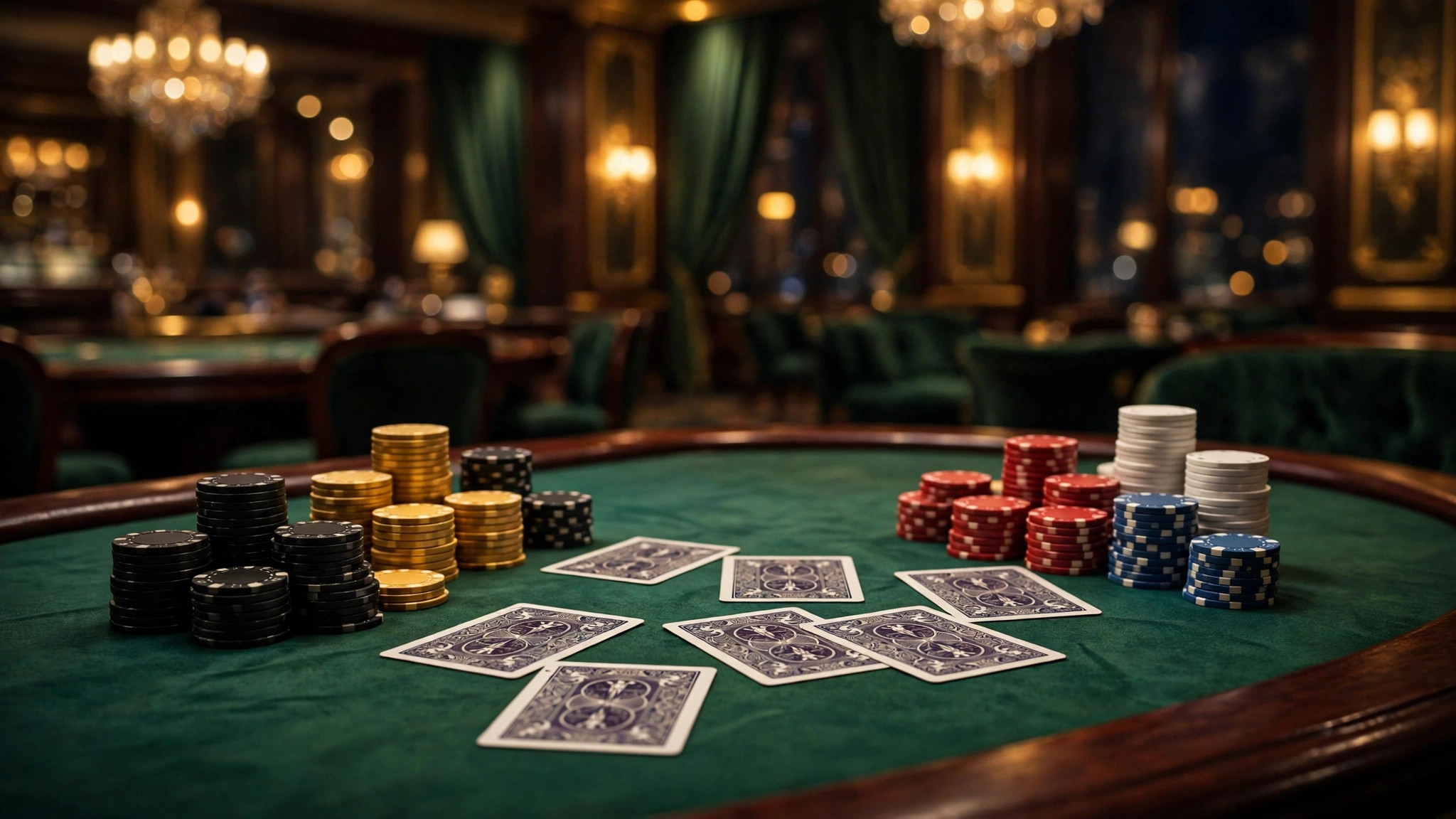
The game is no-limit Texas Hold’em. Each player gets two private cards, called hole cards, and five shared community cards are dealt face up in stages. Players build the best five-card hand they can from their two cards plus the five on the table, and they can bet, fold, or go all-in at any point. In no-limit poker, a player can push every chip they have into the pot on a single bet, which is why one hand can end a tournament.
Hand rankings, weakest to strongest, are what decide the final scene, so keep this order in mind: high card, one pair, two pair, three of a kind, straight, flush, full house, four of a kind, straight flush, and royal flush. A flush is five cards of the same suit. A full house is three of one rank plus two of another. A straight flush is five cards in sequence, all in the same suit. That last hand is the one that wins the film.
Le Chiffre’s Tell, and the Hand That Tricks Bond
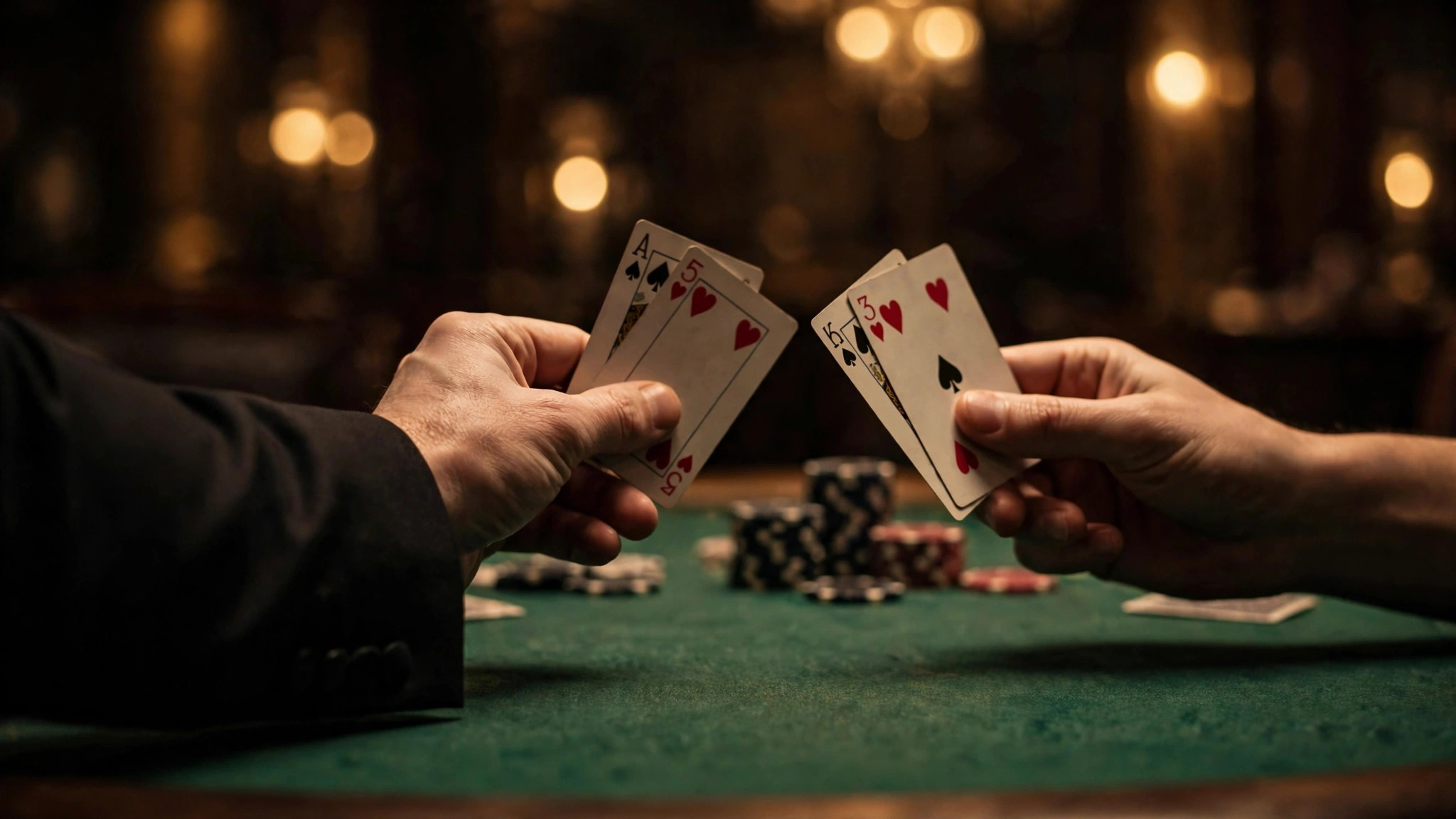
Early in the tournament, Bond studies Le Chiffre the way a detective studies a suspect. The film gives Le Chiffre a tell: an involuntary movement around his scarred eye when he is bluffing. Bond believes he has spotted it, and he plays a big hand on the strength of that read. Le Chiffre, however, has understood what Bond is doing, and he fakes the same tell to trap him. Bond loses a large pot, and for a stretch of the film he looks beaten.
This is the scene’s cleverest poker idea, and it is a real one. In live poker, a tell is any physical habit that leaks information about a hand, and experienced players both hunt for tells and plant false ones. The film exaggerates how cleanly a tell can be read, but the underlying psychology is genuine: poker at this level is played against people, not just against cards.
Poison, Collapse, and the $5 Million Rebuy
After the defeat at the table, Bond is poisoned during a break in play. He retreats to his car, works out what has happened, and is saved when Vesper Lynd reaches him in time to use a defibrillator. He returns to the tournament shaken but alive, and CIA agent Felix Leiter, played by Jeffrey Wright, stakes him for the $5 million rebuy that keeps him in the game.
The rebuy is more than a plot device. It resets the story’s tension. Bond has lost his Treasury stake, survived an attempt on his life, and is now playing with borrowed money and borrowed time. When the final hand arrives, the audience knows he cannot afford another mistake, which is exactly why the slow reveal of four strong hands lands so hard.
The Final Hand, Card by Card
By the final stage, only four players remain, and the big blind has climbed to $1 million. All four go all-in, and the pot stands at $115 million. The five community cards on the table are the four of spades, the six of spades, the eight of spades, the ace of hearts, and the ace of spades. Here is what each player holds, in the order the hands are revealed:
| Player | Hole cards | Best hand |
|---|---|---|
| Fukutu | King and queen of spades | Ace-high flush |
| Infante | Eight of hearts and eight of clubs | Full house, eights over aces |
| Le Chiffre | Ace of clubs and six of hearts | Full house, aces over sixes |
| Bond | Five and seven of spades | Straight flush, four to eight of spades |
Read the table from top to bottom and the scene’s drama becomes clear. Fukutu’s king and queen of spades, combined with the three spades on the board, make a flush, which looks strong until Infante shows a full house. Le Chiffre’s aces over sixes beat that full house, and he smiles, because he believes only a straight flush or four of a kind can beat him. Then Bond turns over the five and seven of spades. Combined with the four, six, and eight of spades on the board, they complete a straight flush from four to eight, all in spades. It outranks every hand on the table, and Bond wins the $115 million pot.
Two details are worth noting. First, Bond’s hand is not a royal flush, which runs from ten to ace in one suit. He does not need one: an eight-high straight flush is already unbeatable here. Second, Bond tips the dealer $500,000 after the win. Director Martin Campbell has since joked about that moment, pointing out that the money was never Bond’s to give away, and that the gesture is pure cinema rather than casino etiquette.
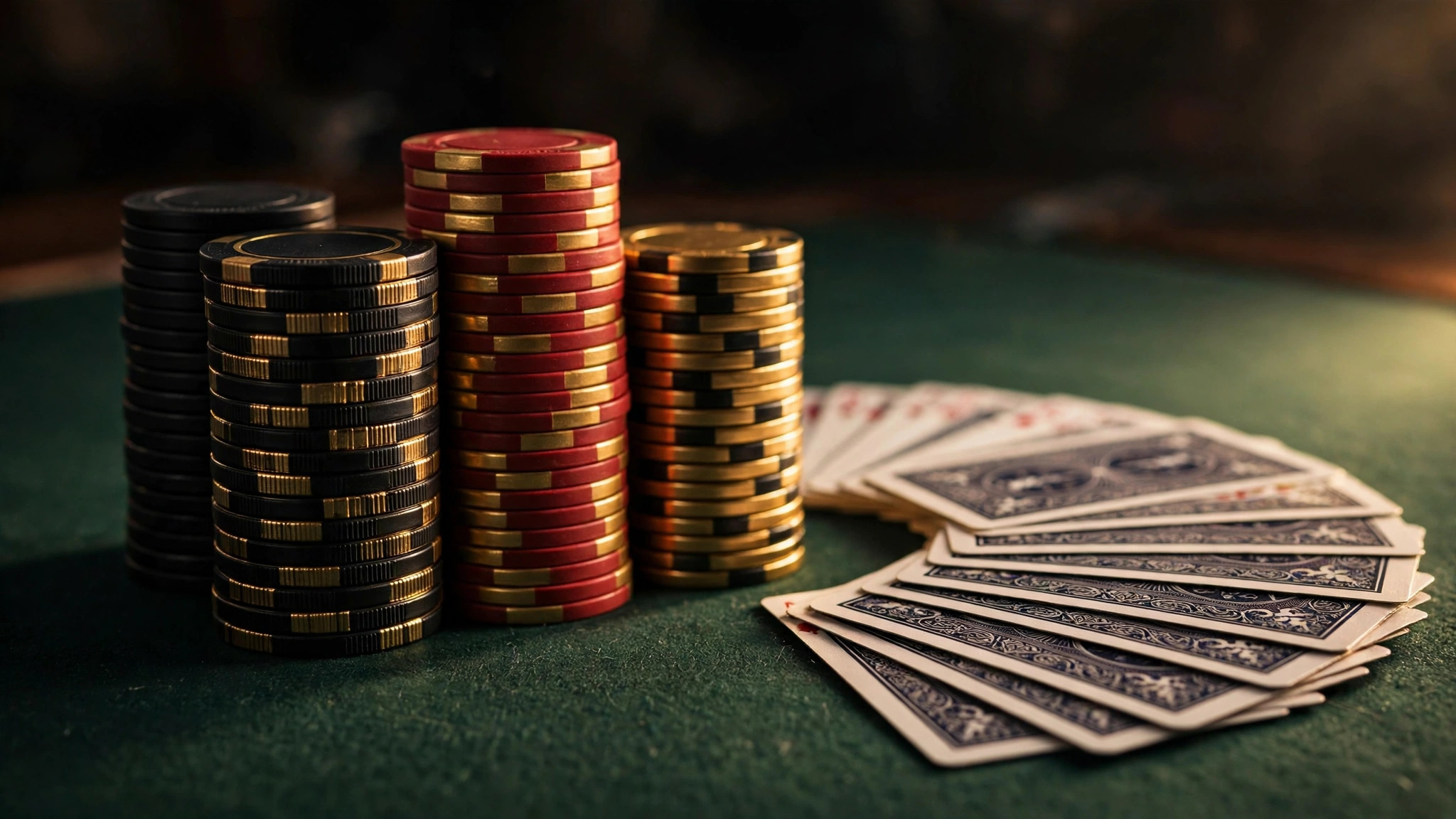
Any Casino Royale poker scene explained honestly must admit both sides: the film respects the psychology of poker, and it invents the scale. For a full card-by-card breakdown of the final hand, see FilmInk’s inside look at Bond’s $10 million poker game, and for the psychology of the tells, Fiction Horizon’s poker-detail explainer.
What the Scene Gets Right About Real Poker
For a mainstream film, Casino Royale respects poker more than most. The bet sizing carries meaning, the slow reveal of community cards builds genuine tension, and the idea that information matters more than luck is accurate to how high-level players think. Bond’s arc across the tournament is about learning to read an opponent, not about being dealt lucky cards, and that is a fair picture of the game.
What the film gets wrong is scale and probability. Four players holding a flush, two full houses, and a straight flush in the same hand is a statistical freak show. Four-time World Poker Tour champion Darren Elias, analysing the scene in 2025, put Bond’s straight flush at roughly 3,500-to-1 to make, and gave the scene a low score for realism, calling the $115 million single hand fantasy territory.
Real high-stakes tournaments also run over days, with hundreds of hands and slow attrition, rather than a handful of showdowns in one sitting. The film compresses all of that into one evening because a real tournament schedule would make terrible cinema.
- Right: tells, bet sizing, and reading opponents are real poker skills.
- Right: no-limit Hold’em lets one hand end a tournament, which is why the stakes feel real.
- Wrong: four monster hands in one deal almost never happens in real play.
- Wrong: a $115 million pot for a single hand, and a tournament decided in one session, are film inventions.
- Wrong: the film largely ignores table position, one of the most important concepts in real Hold’em.
Book Versus Film: From Baccarat to Poker
In Ian Fleming’s 1953 novel Casino Royale, Bond plays baccarat, not poker. The card game in the book is chemin de fer, a version of baccarat popular in French casinos, and the novel’s tension comes from Bond’s nerve rather than from reading opponents across many betting rounds. The 2006 film switched to Texas Hold’em because, by the early 2000s, Hold’em was the poker game television audiences actually understood. Visible community cards, multiple betting rounds, and a slow build of information make Hold’em far easier to film than baccarat, where most of the drama is hidden in a single draw.
The change also updated Bond, and it is a key point for any Casino Royale poker scene explained for book readers. Fleming’s Bond was a man of the 1950s casino; Craig’s Bond is a man of the televised poker boom. The mission stays the same in both versions, bankrupt the banker, but the game changes to fit the audience watching it.

Our Take
The Casino Royale poker scene explained above works because it refuses to treat the card game as a break from the action. The tournament is the action, and every beat around it, the fake tell, the poisoning, the rebuy, exists to raise the price of the final hand. When Bond turns over the five and seven of spades, the win feels earned not because the cards are lucky, but because the film spent an hour showing what losing would cost him.
It is also the scene that best explains the Craig era. This Bond does not win by being the coolest man in the room. He wins by taking punishment, learning from a mistake, and coming back with borrowed money and a steadier nerve. The straight flush is the payoff, but the comeback is the point. Few blockbuster set pieces trust their audience to follow a card game this closely, and that trust is why the scene is still discussed, and still argued over by poker players, twenty years on.
To recap, this casino royale poker scene explained guide has followed Bond from the first tell to the final straight flush. A second look at the casino royale poker scene explained above shows why the tell matters, why the poisoning matters and why the rebuy matters.
Anyone reading a casino royale poker scene explained summary should remember the four hands, the $115 million pot and the five and seven of spades. That is the core of the casino royale poker scene explained here: a fake tell, a poisoning, a rebuy and a straight flush.
In other words, the casino royale poker scene explained in this article is not only about cards, it is about patience under pressure. A final casino royale poker scene explained note: Bond wins because he survives long enough to play the final hand, and that comeback is the point of the casino royale poker scene explained for new viewers. This casino royale poker scene explained recap therefore ends where the film ends, with Bond holding a straight flush and Le Chiffre holding a beaten full house.
Read Also:
James Bond Movies: The Complete 007 Film Guide (1962–2026)
Why James Bond Says ‘Shaken, Not Stirred’: 7 Facts
James Bond Movie Mistakes: 10 Goofs You Cannot Unsee
Frequently Asked Questions
How does Bond win the Casino Royale poker game?
Bond wins with a straight flush, four to eight of spades, made from his five and seven of spades plus the four, six, and eight of spades on the board. It beats Le Chiffre’s full house, aces over sixes, and wins the $115 million pot.
What cards are in the final hand of Casino Royale?
The board is the four of spades, six of spades, eight of spades, ace of hearts, and ace of spades. Fukutu holds a flush, Infante holds eights over aces, Le Chiffre holds aces over sixes, and Bond holds the five and seven of spades for a straight flush.
What is Le Chiffre’s tell in Casino Royale?
Le Chiffre’s tell is an involuntary movement around his scarred eye when he is bluffing. Bond believes he has read it, but Le Chiffre fakes the same tell to trap Bond into losing a large pot earlier in the tournament.
How much money does Bond win in Casino Royale?
Bond wins the tournament pot of $115 million. He then tips the dealer $500,000, a gesture director Martin Campbell has joked about, since the winnings were never Bond’s personal money.
Did Casino Royale use poker in the original book?
No. In Ian Fleming’s 1953 novel Casino Royale, Bond plays baccarat, specifically chemin de fer. The 2006 film changed the game to Texas Hold’em because it was the poker variant audiences knew best in the early 2000s.

Kunal Chaudhary is the founder and editor of Media1Gyan, covering Bond 26 casting news, rankings and Bond history since July 2026, sourcing every developing story from trade reporting and official announcements and labelling rumor separately from confirmed fact. Kunal is the founder and editor of Media1Gyan.com, an independent James Bond 007 fan blog. A lifelong James Bond fan, he started Media1Gyan to give fellow fans clear, well-researched coverage of the world of 007 — from the classic Eon films to the new Amazon-MGM era and the road to Bond 26. On Media1Gyan, Kunal covers Bond movie news and casting rumors, ranked listicles (villains, Bond girls, theme songs, gadgets), explainers on Bond history and trivia, and deep dives into characters like Vesper Lynd and Ernst Stavro Blofeld. Every article is researched from publicly available information and reliable sources, and reviewed for accuracy before publishing. His approach is fan-first: no hype without sourcing, no rumors presented as fact, and complex Bond lore explained in plain language. When he covers developing stories like the next James Bond casting, articles are updated as new information breaks. Follow Media1Gyan.com for daily James Bond coverage — news, rankings, and guides for fans around the world. He writes under his real name.