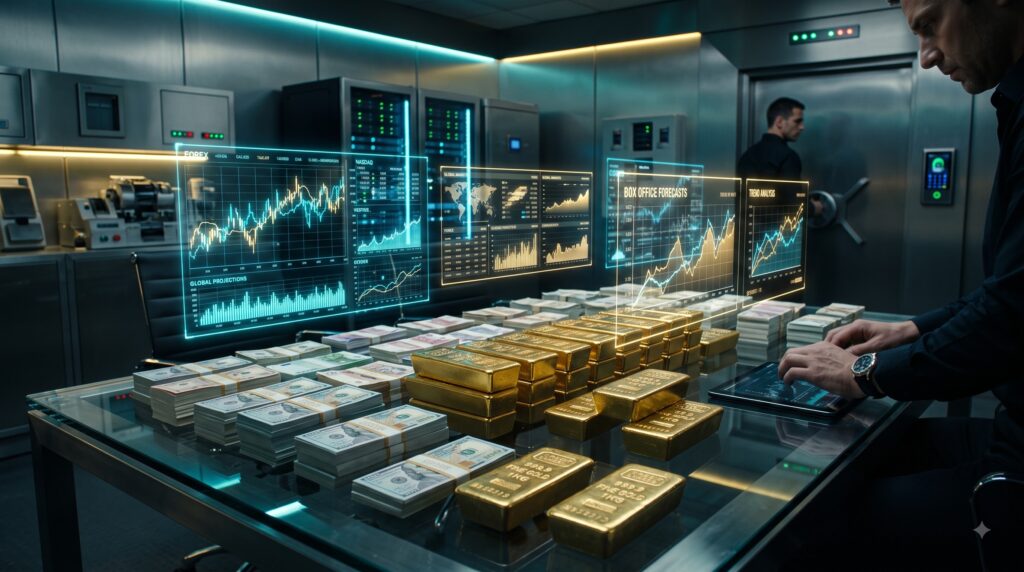
Adjusting global box office receipts for inflation reveals the true commercial titans of the James Bond franchise.
The Short Answer
Raw box office figures only tell half the story. This post ranks the highest-grossing James Bond movies adjusted for inflation, showing how modern blockbusters like Skyfall and Spectre compare with classic entries once ticket volume and cultural dominance, not just unadjusted totals, are counted.
When measuring the financial dominance of cinema’s longest-running franchise, raw box office figures only tell half the story. While modern blockbusters like Skyfall and Spectre boast staggering unadjusted totals surpassing hundreds of millions of dollars, evaluating the highest grossing James Bond movies adjusted for inflation paints a dramatically different picture of franchise popularity, ticket volume, and cultural dominance. In this data-driven financial analysis of the highest grossing James Bond movies, we adjust historical theatrical earnings, evaluate global ticket sales, break down performance by actor era, and reveal which 007 missions were the true commercial juggernauts of box office history.
Why Inflation Adjustment Matters for 007 Box Office
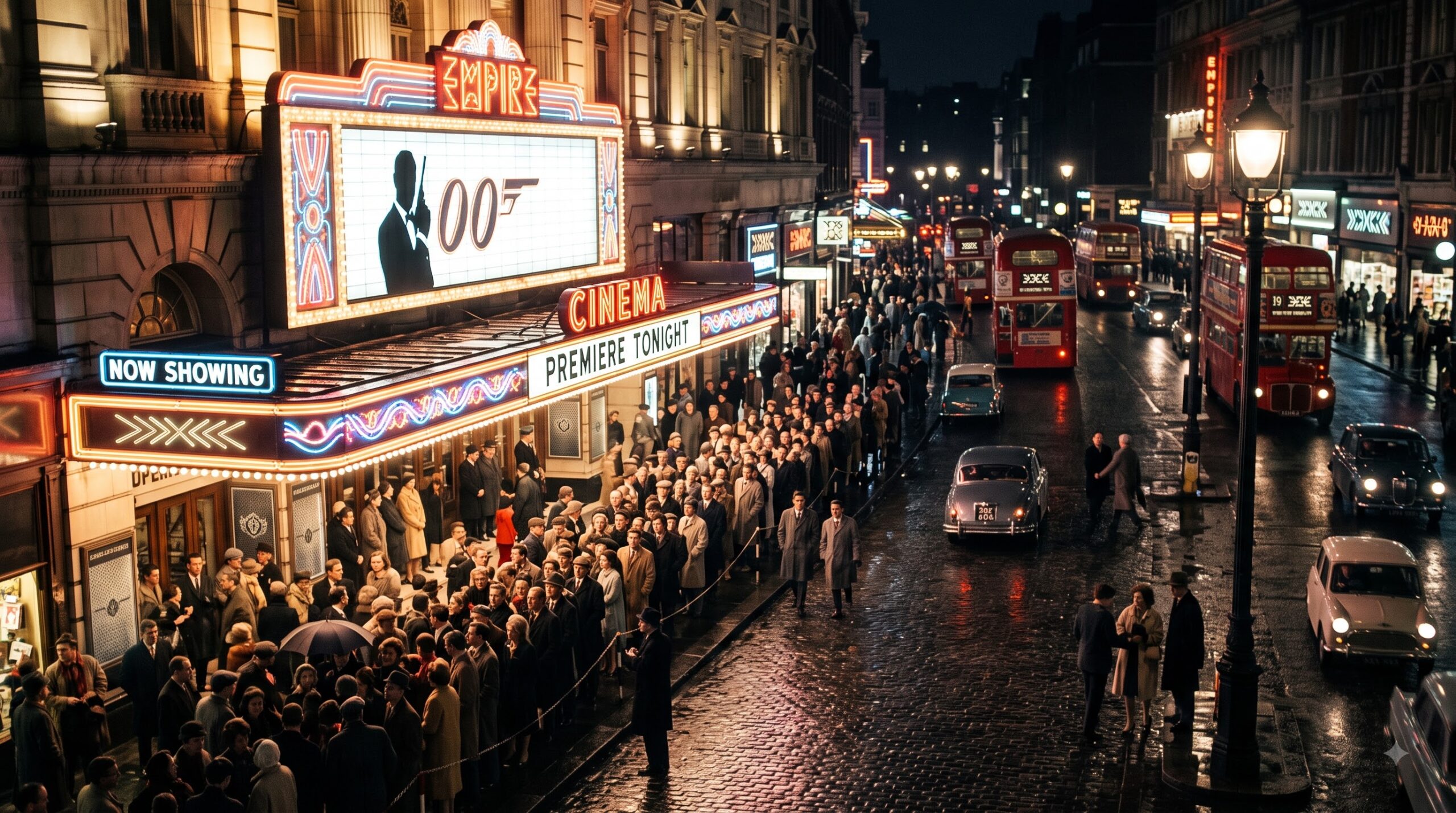
Comparing a 1964 film like Goldfinger to a 2012 release like Skyfall using unadjusted gross earnings is fundamentally flawed. In the mid-1960s, a standard cinema ticket in the United States cost less than $1.25, whereas modern cinema admissions average well over $10.50. When calculating the real economic impact of the highest grossing James Bond movies, adjusting for consumer price index (CPI) and total estimated theater admissions reveals how many individual audience members actually purchased tickets during each film’s original theatrical run.
Read Also: How to Watch James Bond Movies in Order: Full Franchise Timeline
The Top 10 Highest-Grossing James Bond Movies Adjusted for Inflation
The definitive ranking of the highest grossing James Bond movies below combines worldwide box office receipts adjusted to modern purchasing power, illustrating the commercial peak of the 007 franchise across six decades:
| Rank | Film Title (Release Year) | Lead Actor | Original Global Gross | Adjusted Worldwide Gross (Est.) |
|---|---|---|---|---|
| 1 | Skyfall (2012) | Daniel Craig | $1,108,561,013 | $1,480,000,000+ |
| 2 | Thunderball (1965) | Sean Connery | $141,200,000 | $1,360,000,000+ |
| 3 | Goldfinger (1964) | Sean Connery | $124,900,000 | $1,220,000,000+ |
| 4 | Spectre (2015) | Daniel Craig | $880,700,000 | $1,110,000,000+ |
| 5 | You Only Live Twice (1967) | Sean Connery | $111,600,000 | $995,000,000+ |
| 6 | Moonraker (1979) | Roger Moore | $210,300,000 | $940,000,000+ |
| 7 | Casino Royale (2006) | Daniel Craig | $616,500,000 | $935,000,000+ |
| 8 | Die Another Day (2002) | Pierce Brosnan | $431,970,000 | $795,000,000+ |
| 9 | Tomorrow Never Dies (1997) | Pierce Brosnan | $333,010,000 | $770,000,000+ |
| 10 | No Time to Die (2021) | Daniel Craig | $774,153,007 | $765,000,000+ |
Deep Dive: The Standout Financial Peaks of 007
1. Skyfall (2012) – The Global Billion-Dollar Juggernaut
Released during the 50th anniversary of the cinematic franchise, Sam Mendes’ Skyfall leads the highest grossing James Bond movies with unprecedented critical and commercial acclaim. Not only did it become the first Bond film to cross $1 billion unadjusted at the global box office, but even after adjusting for ticket inflation, its massive international footprint keeps it at the very pinnacle of franchise revenue.
2. Thunderball (1965) – Peak “Bondmania” and Record Admissions
In terms of pure theater attendance and raw ticket volume, 1965’s Thunderball remains untouchable among the highest grossing James Bond movies. Driven by the height of 1960s pop-culture mania, the film sold an estimated 74 million tickets in North America alone, an attendance record that modern action films rarely achieve today.
Read Also: Daniel Craig vs Sean Connery: Who Was the Most Accurate 007?
3. Goldfinger (1964) – The Blueprint Blockbuster
Goldfinger set the structural formula for Hollywood blockbusters, featuring customized sports cars, high-tech gadgets, and theatrical villain lairs. Its unprecedented box office velocity caused cinema riots and round-the-clock screenings in major metropolitan theaters upon release.
4. Moonraker (1979) – Roger Moore’s Sci-Fi Box Office Triumph
Capitalizing on the post-Star Wars science fiction boom, producer Albert R. Broccoli sent Roger Moore into orbit. While purists often debate its tonal excess, Moonraker was a monumental financial triumph, remaining the highest-grossing Bond film in unadjusted numbers for sixteen years until 1995’s GoldenEye.
Box Office Performance by Lead Actor Era
Evaluating the highest grossing James Bond movies across different casting eras reveals how each actor maintained franchise viability over their respective tenures:
- The Sean Connery Era: Highest average ticket volume per release, driven by original cultural discovery and rapid cinematic expansion.
- The Roger Moore Era: Consistent, sustained commercial returns across seven films, peaking with The Spy Who Loved Me and Moonraker.
- The Pierce Brosnan Era: Re-energized the franchise following the Cold War hiatus, maintaining remarkably steady global grosses between $330M and $430M unadjusted ($700M–$800M adjusted) per film.
- The Daniel Craig Era: Achieved peak financial returns in international markets, driven by prestige production scale and modernized action choreography.
Read Also: 7 Dark Eras of Ernst Stavro Blofeld History: 007’s Ultimate Nemesis
Commercial Merchandising and Horological Value
Box office tickets represent only one dimension of the 007 commercial empire. High-profile product placements, luxury vehicle associations with Aston Martin, and official partnerships for luxury timepieces—such as the iconic Omega Seamaster and vintage Rolex Submariner models—generate hundreds of millions of dollars in ancillary revenue with each production cycle.
Read Also: 7 Iconic James Bond Watches Omega Rolex: The Ultimate Buying Guide
The Financial Stakes for Bond 26
With the highest grossing James Bond movies pushing lifetime franchise box office earnings surpassing $19 billion adjusted for inflation, the stakes for the next entry are monumental. As Amazon MGM Studios prepares the creative reset for the next era, matching the historical financial benchmarks established by Sean Connery and Daniel Craig represents one of the greatest commercial challenges in contemporary studio cinema.
Read Also: Next James Bond Actor: Current Odds, Rumors, and Frontrunners for Bond 26
For more detailed box office analyses, character breakdowns, and casting updates, visit Media1Gyan, and stay connected with official announcements via the official 007 Website.
How Inflation Adjustment Changes the Ranking
A nominal ranking, which compares the cash taken at the time of release, will always favour recent films, because ticket prices, the number of screens and the size of the global market have all grown since the 1960s. Inflation adjustment tries to correct for ticket prices by restating older grosses in present-day money, usually using a consumer price index. It does not correct for a larger world population, more cinemas, or markets that did not exist for the early films, so an adjusted figure is a comparison tool, not a ticket count.
Different methods also produce different orders, which is why adjusted rankings should always state their scope. One widely cited method, published by Screen Rant in February 2025 and adjusted using the United States Bureau of Labor Statistics, keeps Skyfall (2012) at the top with $1,526.55 million, followed by Thunderball (1965) at $1,414.71 million and Goldfinger (1964) at $1,271.58 million. Spectre (2015) follows at $1,161.31 million, with Live and Let Die (1973) close behind at $1,150.11 million. On that method, the gap between Skyfall and Thunderball narrows sharply compared with the nominal gap, and 1970s titles such as Diamonds Are Forever, at $903.96 million adjusted, enter a top ten from which nominal grosses alone would exclude them.
A different scope gives a different answer. MI6-HQ publishes a United States-only adjusted list, on which Thunderball leads with $427.108 million, ahead of Goldfinger at $378.573 million. That is not a worldwide ranking, so it should not be compared directly with the worldwide list above. Thunderball as “highest adjusted” usually means a domestic-only measure; Skyfall at the top usually means a worldwide, price-adjusted measure.
Why Recent Bond Films Grossed More in Nominal Terms
The main reason recent Bond films post larger nominal totals is that they sell in far more places, on far more screens, than the early films did. Box Office Mojo records Spectre’s original release in 66 markets, with $880.67 million worldwide, of which $680.6 million came from outside North America and $200.07 million from North America. A film earning roughly three-quarters of its money outside its home market is operating in a different theatrical world from a 1960s release, even before ticket-price inflation is considered.
China illustrates the change most clearly. Screen Daily reports Spectre earning $83.5 million in China, behind only the United Kingdom at $124.5 million and North America at $200 million, and Skyfall earning $59.3 million there. China Film Insider reported Spectre taking nearly $49 million in its first three days in China. No Time to Die later earned $65.05 million in China, according to The Numbers. Such markets did not contribute at this scale to the Connery-era films.
Premium formats add a smaller effect. Skyfall was the first Bond film screened in IMAX venues, according to the Smithsonian Institution, and trade reporting put its IMAX weekend takings at $4.3 million from 132 locations in 36 territories. A premium ticket costs more than a standard ticket, so premium screenings can raise a nominal gross without selling proportionally more tickets.
Higher grosses also came with higher costs. TheWrap reported Spectre’s production budget at $250 million, against $200 million for Skyfall, which is why a larger nominal gross does not automatically mean a larger return. For Bond 26, the relevant comparison is therefore not simply whether it can match Skyfall’s nominal total, but whether it can do so across a global release, in premium formats, and in markets such as China, while keeping its budget in proportion to that reach.
Frequently Asked Questions (FAQ)
What is the single highest-grossing James Bond movie of all time?
In unadjusted box office terms, Skyfall (2012) leads the highest grossing James Bond movies, earning over $1.108 billion worldwide. When adjusted for inflation, Skyfall and 1965’s Thunderball remain the two highest-earning films in franchise history.
Which James Bond movie sold the most theater tickets?
Thunderball (1965) starring Sean Connery sold the highest estimated number of theater tickets in franchise history, totaling approximately 74 million admissions in the US and Canada alone.
How much has the entire James Bond franchise grossed?
Across 25 official Eon Productions feature films, the James Bond franchise has grossed over $7.8 billion unadjusted and more than $19 billion when adjusted for modern inflation.

Kunal Chaudhary is the founder and editor of Media1Gyan, covering Bond 26 casting news, rankings and Bond history since July 2026, sourcing every developing story from trade reporting and official announcements and labelling rumor separately from confirmed fact. Kunal is the founder and editor of Media1Gyan.com, an independent James Bond 007 fan blog. A lifelong James Bond fan, he started Media1Gyan to give fellow fans clear, well-researched coverage of the world of 007 — from the classic Eon films to the new Amazon-MGM era and the road to Bond 26. On Media1Gyan, Kunal covers Bond movie news and casting rumors, ranked listicles (villains, Bond girls, theme songs, gadgets), explainers on Bond history and trivia, and deep dives into characters like Vesper Lynd and Ernst Stavro Blofeld. Every article is researched from publicly available information and reliable sources, and reviewed for accuracy before publishing. His approach is fan-first: no hype without sourcing, no rumors presented as fact, and complex Bond lore explained in plain language. When he covers developing stories like the next James Bond casting, articles are updated as new information breaks. Follow Media1Gyan.com for daily James Bond coverage — news, rankings, and guides for fans around the world. He writes under his real name.