
The Short Answer
The Moonraker ending explained in one paragraph: Hugo Drax plans to kill every human on Earth with nerve gas and start again with a hand-picked master race from his hidden space station. Bond and Holly Goodhead sneak aboard as pilots of Moonraker 6, disable the station’s radar cloak, and let the US space marines in.
Bond turns Jaws against Drax, shoots Drax with a cyanide dart, and ejects him into space. Bond then destroys the three nerve-gas globes Drax has already launched, the station blows apart, and Jaws and Dolly escape in a pod.
Moonraker ending explained is the question every first-time viewer asks, because the finale of Roger Moore’s fourth Bond film goes further than any Bond film before it: it leaves Earth entirely. A stolen space shuttle, a hidden space station, a laser battle in orbit, and a villain who wants to wipe out humanity and breed a new one.
It sounds like science fiction, and it is, but the ending still follows the classic Bond shape. Bond finds the plan, Bond turns the villain’s own people against him, and Bond stops the weapon with seconds to spare.
This guide walks through the Moonraker ending explained step by step: what Drax was planning, how Bond and Holly Goodhead reach the station, why Jaws changes sides, how Drax dies, and what happens to everyone in the last ten minutes. It also compares the ending with Ian Fleming’s 1955 novel, which tells a very different story with the same villain.
The Moonraker Ending in 60 Seconds
If you only need the quick version, here is the Moonraker ending explained in seven beats:
- Drax launches four Moonraker shuttles from his secret Amazon base. Bond and Holly Goodhead escape being burned alive under the launch pad and pose as the pilots of Moonraker 6.
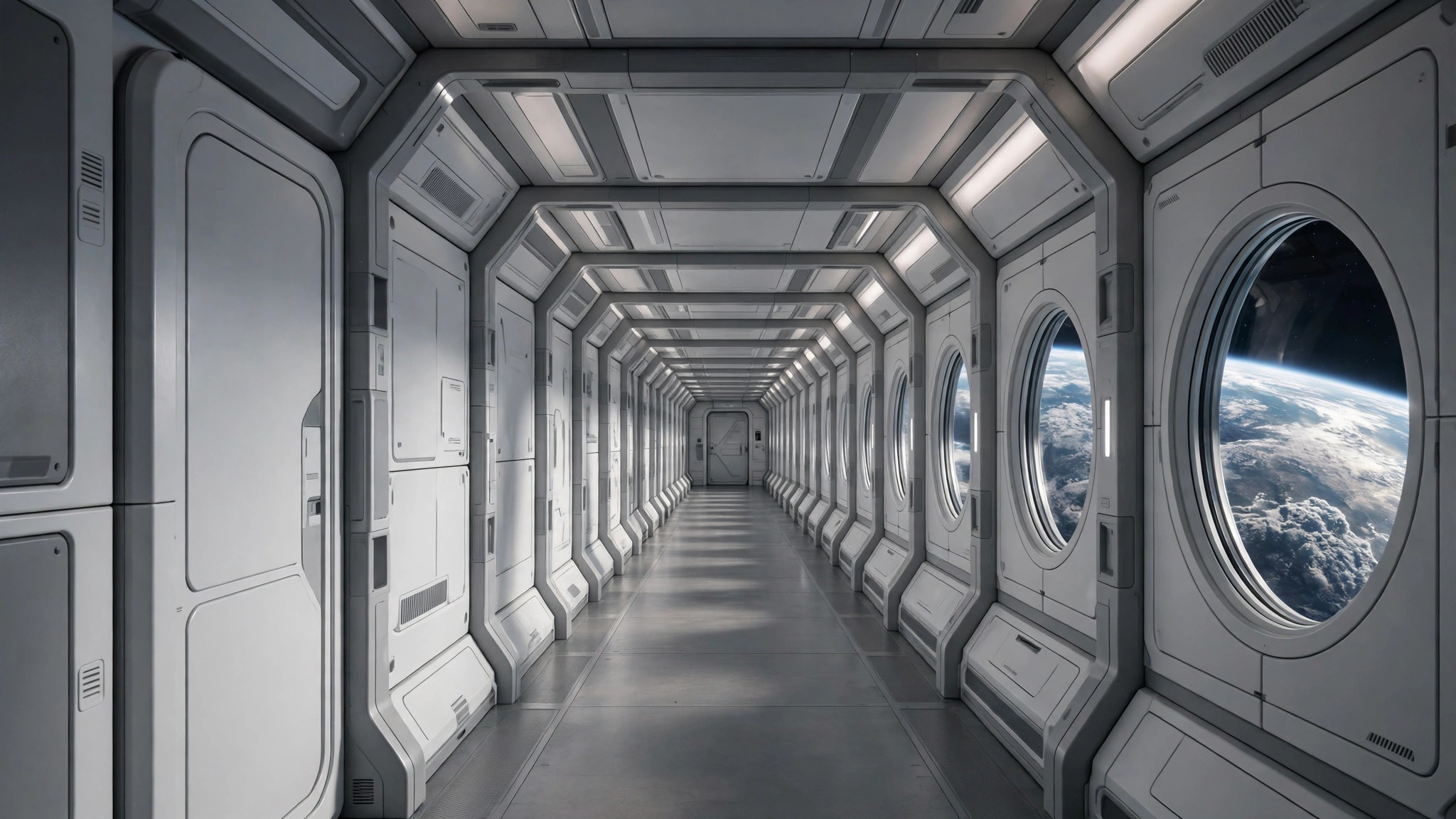
- The shuttles dock with Drax’s space station, a huge city in orbit hidden from radar by a cloaking device. Bond and Goodhead switch the cloak off, so the US military can see the station and send space marines.
- Drax reveals his plan: fifty globes filled with nerve gas will be released into Earth’s atmosphere to kill every human, while his chosen few wait safely on the station to rebuild humanity.
- Bond turns Jaws. He gets Drax to admit that anyone who fails his physical standards will be exterminated, including Jaws and Dolly. Jaws attacks Drax’s guards instead.
- A laser battle breaks out between Drax’s forces, Bond, Jaws and the arriving space marines. The station starts to break apart.
- Bond kills Drax with a cyanide dart from Q’s wrist dart gun, then pushes him through an airlock into space.
- Bond and Goodhead use Moonraker 5’s laser to destroy the three globes Drax has already launched. Jaws and Dolly escape in a pod. The station explodes, Earth is saved, and Bond closes the film with the series’ most famous final joke.

What Was Drax Actually Planning?
Hugo Drax is not after money, revenge or power over a government. His plan is bigger and colder than that. He has built a space station in secret, filled it with dozens of young men and women chosen for their looks, health and intelligence, and he means to kill everyone else on the planet. The tool is a nerve gas made from a rare orchid found in the Amazon jungle. The gas kills humans but leaves plants and animals untouched.
The delivery system is fifty glass globes, each carrying enough gas to poison the atmosphere. Drax will release them from orbit, wait on his station until Earth is safe, and then send his chosen people down to start a new master race, with himself as its god. It is genocide dressed up as gardening, and Drax presents it calmly, as if it were a business plan. That is the scale the Moonraker ending explained has to carry: fifty globes, one atmosphere, zero survivors.
The plan also explains the mystery that opens the film. A Moonraker shuttle on loan to Britain is hijacked in mid-air because one of Drax’s own shuttles developed a fault during assembly. Drax needed a replacement to carry his people into orbit, so he stole one. That theft is what brings Bond to California, to Venice, to Rio, to the Amazon, and finally to space.
Drax is played by Michael Lonsdale as a soft-spoken French industrialist who never raises his voice. That calm is what makes him frightening. He orders Bond’s death with a polite phrase, “Look after Mr. Bond, see that some harm comes to him,” and he watches his own plan unfold like a man watching a launch he has rehearsed a hundred times.
How Bond and Holly Goodhead Reach the Station
Bond does not fly to the station as a hero. He gets there as a stowaway. After Drax’s men capture Holly Goodhead, Bond escapes, reports to an MI6 base in Brazil, and follows the orchid toxin to a hidden launch site on the Amazon. Jaws captures him and brings him to Drax, just as four Moonraker shuttles lift off.
Drax locks Bond and Goodhead in a room beneath the launch platform, directly under the exhaust of Moonraker 5, so the launch will burn them alive and leave no trace. They escape through a vent moments before ignition, then slip aboard Moonraker 6 dressed as its pilots. It is a classic Bond escape: the villain’s own trap becomes the way in. The Moonraker ending explained needs that detail, because the whole finale depends on Bond arriving as a pilot, not a prisoner.
The station itself is hidden from every radar on Earth by a cloaking device that jams radar signals. That is why nobody knew it existed. Bond and Goodhead find the device and switch it off. The moment the station becomes visible, the United States military sends a company of space marines aboard another shuttle to intercept it. The cavalry, in this film, literally arrives from Earth.
Goodhead matters here. She is not a passenger in the finale. She is an astronaut and a CIA agent, played by Lois Chiles, and she flies the shuttle, works the station systems beside Bond, and fights in the laser battle. The Moonraker ending explained properly has to give her half the credit: without her, Bond never reaches the station at all.
Why Does Jaws Turn Against Drax?
Jaws is the heart of the Moonraker ending, and his turn is the scene the whole finale is built around. For most of the film he is Drax’s hired killer, the steel-toothed giant who has chased Bond since The Spy Who Loved Me. But in Rio he meets Dolly, a small young woman with pigtails and glasses, after his cable car crashes. She helps him lift the wreckage off himself. They fall in love at first sight, to the sound of Tchaikovsky.
On the station, Bond uses that love as a weapon. He talks to Drax in front of Jaws and gets Drax to spell out his master-race rules. Drax admits that only the physically perfect will survive, and that everyone else, including Jaws and Dolly, will be exterminated with the rest of humanity. Jaws looks at Dolly, understands he has been hired to help murder the woman he loves, and turns. That meeting is the hinge of the Moonraker ending explained: without Dolly, Jaws never turns.
It is a short scene, and it works because it is honest. Jaws is not converted by a speech about good and evil. He is converted by self-interest and love, the two things Drax never counted. He attacks Drax’s guards, fights beside Bond, and helps hold the line until the marines arrive.
The turn was a deliberate choice by the filmmakers. After The Spy Who Loved Me, children wrote letters to director Lewis Gilbert asking why Jaws had to be a villain. Gilbert decided to give him a face turn, and actor Richard Kiel pushed for the character to be played with heart rather than as a joke. Dolly, played by Blanche Ravalec, was cast small on purpose: Kiel argued that a tiny woman opposite the giant was more charming than the seven-foot-seven woman the producers first considered.
How Does Drax Die?
Drax dies the way Bond villains often die: killed by his own arrogance, with a gadget. As the station breaks apart around them, Bond faces Drax in the station’s control area. Drax, still calm, tells him, “At least I shall have the pleasure of putting you out of my misery.” Bond answers with Q’s wrist dart gun, a device strapped to his wrist and fired by nerve impulse, loaded with cyanide-tipped darts.
The dart hits Drax in the chest. As the poison takes hold, Bond shoves him into an airlock and opens it. Drax is blown out into space, spinning away from the station he built, dying in the void he wanted to rule. There is no long speech and no second chance. It is quick, cold and final, and it fits a villain who treated mass murder as housekeeping. That is how the Moonraker ending explained answers its oldest question: the villain dies by the gadget, not by a speech.
The death also settles the film’s oldest question: what is a Bond villain worth once his plan is gone? Drax has no army left, no station that will survive the next five minutes, and no master race to lead. Bond does not arrest him or debate him. He removes him, the same way Drax planned to remove humanity.
The Three Globes and the Laser Battle
Before Drax dies, he manages to launch three of his fifty globes toward Earth. That is the ticking clock of the finale. The globes are already falling, and if they break open in the atmosphere, the nerve gas will do exactly what Drax promised. The station may be lost, but the plan can still work. The Moonraker ending explained is not finished until those three globes are gone.
Bond and Goodhead escape to Moonraker 5, the shuttle that carried Drax to the station, which is fitted with a laser. They chase the globes and destroy all three with the laser, one by one, in orbit. It is the last action sequence of the film, and it is also the most important: everything else in the finale is about reaching the station, but this is the moment Earth is actually saved.
Meanwhile, the laser battle inside the station is the largest fight in the film. Drax’s guards, dressed in yellow jumpsuits, fight Bond, Jaws and the US space marines, who arrive in white suits with laser rifles. The station’s structure fails during the battle, sections break away, and the whole city in orbit comes apart. The film’s visual-effects team, led by Derek Meddings, earned an Academy Award nomination for Best Visual Effects for this sequence, and it shows: the station’s destruction still holds up as a piece of model work.

What Happens to Jaws and Dolly?
In the Moonraker ending explained, Jaws and Dolly get the happiest ending in the film, and the most surprising one for a Bond henchman. As the station disintegrates, they climb into one of Drax’s escape pods and eject. In the pod, Jaws opens a bottle of champagne, and he speaks the only line he has in the entire Bond series: “Well, here’s to us.”
It is a small moment, and it lands because Jaws has never spoken before. In two films, through every fight and every fall, he has been silent. His first words are a toast to the woman who saved him, and they are also the film’s answer to its own question about him: he was never a monster, only a man who had never been loved.
The US Marines recover the pod. Back on Earth, M is told that Jaws and Dolly made it back safely, and the film lets them live. There were once plans to bring Jaws back for a third film, in which he would have married Dolly, but the producers chose a more down-to-earth direction for For Your Eyes Only and the idea was dropped. The escape pod is the last we ever see of him.
The Last Joke: “Attempting Re-Entry”
The film ends with a joke that has followed Moonraker ever since. Bond and Goodhead, alone in Moonraker 5 on the way home, drift together in zero gravity while a video feed carries the picture back to M, Q and the British and American officials watching in London. The room full of generals and ministers watches Bond and Goodhead float into an embrace.
M, embarrassed, asks what Bond thinks he is doing. Q, without missing a beat, replies: “I think he’s attempting re-entry, sir.” It is a double meaning, a re-entry into Earth’s atmosphere and a very different kind of re-entry, and it is the last line of the film. That is the final image of the Moonraker ending explained: the world saved, and Bond already somewhere else.
The joke is pure Bond: the world is saved, the villain is dead, and 007 is already on to the next thing.
The gag also tells you what the film thinks of itself. Moonraker is the silliest Bond film of the 1970s, and it knows it. The space station, the laser battle, the champagne in the escape pod, and the final one-liner are all played with a straight face and a wink at the same time. That tone is why the film is still argued about: fans who want Bond grounded find it too much, and fans who love the Moore era at its most playful call it the peak.
Moonraker Ending vs the Novel
Fleming’s Moonraker, published in 1955, is a very different story with the same villain, and the ending is almost unrecognisable. The film keeps Drax, the rocket, and the scene where Bond and his companion are trapped under a launching rocket. Almost everything else was invented for the screen, because the producers wanted a science-fiction spectacle after the success of Star Wars. The Moonraker ending explained against the book shows how little of Fleming survived the trip to space.
| Element | Film ending (1979) | Novel ending (1955) |
|---|---|---|
| Drax’s identity | French industrialist, owner of Drax Industries, builder of space shuttles | Sir Hugo Drax, supposedly a British war hero; secretly Graf Hugo von der Drache, an ex-Nazi |
| The weapon | Fifty globes of nerve gas released from a space station | A nuclear warhead fitted to the Moonraker missile |
| The target | All of humanity, to make room for a master race | London, destroyed at noon the next day |
| Bond’s companion | Dr Holly Goodhead, NASA astronaut and CIA agent | Gala Brand, a Special Branch officer working undercover |
| How Bond wins | Disables the radar cloak, turns Jaws, shoots Drax with a cyanide dart, destroys the three launched globes with a laser | Escapes the launch pad, reprograms the missile’s gyros with Gala’s coordinates, sends it into the North Sea |
| How Drax dies | Shot with a cyanide dart and ejected into space through an airlock | Killed when the redirected missile destroys his escaping Soviet submarine |
| The farewell | Bond and Goodhead float together in zero gravity; Q jokes about re-entry | Bond and Gala part ways; she reveals she is engaged to another man |
The novel’s ending is quieter and crueller. There is no space station, no laser battle, and no redemption for a henchman. Drax dies by his own deception: he flees in a submarine to the exact spot where Bond has sent the missile. The film’s ending is louder, brighter and more hopeful, and it gives the villain a death in the open void rather than under the sea.
Moonraker Ending Timeline: The Facts
The Moonraker ending explained in context needs the dates, so here are the facts behind the finale.
| Date / Fact | Detail |
|---|---|
| 7 April 1955 | Fleming’s novel Moonraker is published by Jonathan Cape. |
| 1977 | The Spy Who Loved Me ends with “James Bond will return in For Your Eyes Only”, but Star Wars changes the plan. |
| 26 June 1979 | Moonraker is released in the United Kingdom; the US release follows on 29 June 1979. |
| 1979 | The film is the 11th in the Eon series and Roger Moore’s fourth as Bond, directed by Lewis Gilbert. |
| Budget / box office | Budget $34 million; worldwide box office $210.3 million, the highest-grossing Bond film at the time, a record held until GoldenEye in 1995. |
| Academy Awards | Derek Meddings is nominated for Best Visual Effects for the space-station sequences. |
| January 1981 | Bernard Lee, who plays M, dies; Moonraker is his final appearance as M. |
| June 1981 | For Your Eyes Only follows, returning Bond to Earth with a deliberately smaller, tougher story. |
One production detail explains why the ending looks the way it does. Because of budget problems, Moonraker was shot mainly in France, and the Pinewood Studios stages in England were used only by the special-effects team. The space station, the shuttle launches and the laser battle were built as models and miniatures at Pinewood while the actors worked in France, Italy, Brazil and Guatemala.
Our Take
The Moonraker ending works because it commits to its own absurdity. A film that sends Bond to space could easily fall apart in its last twenty minutes, but the finale is built on three solid choices: a villain with a clear, terrifying plan; a henchman who changes sides for a reason the audience can feel; and a ticking clock that only stops when the last globe is destroyed.
The lasers and the space marines are decoration. The story underneath is a love story and a con, and both land.
The ending is also the moment the Moore era stops pretending to be realistic. After Moonraker, the series corrected hard: For Your Eyes Only opens with Bond visiting Tracy’s grave and drops a villain down a chimney.
That reaction is the clearest proof of what the Moonraker ending explained really did: it took Bond further than the series had ever gone. But the finale itself is not a mistake. It is the most fun version of the Bond formula, played at the largest possible scale, and it ends with a joke that still gets quoted. For a film that many critics dismissed in 1979, that is a better legacy than most Bond endings manage.
If you watch one thing again after reading this, watch Jaws in the last ten minutes. He starts the scene as a weapon and ends it as a man toasting his own survival. That is the real ending of Moonraker: not the station exploding, but a silent killer finding one line worth saying.
Read Also:
Read Also: James Bond Movies: The Complete 007 Film Guide (1962–2026)
Read Also: The Man with the Golden Gun Ending Explained: Scaramanga, the Solex and the Duel
Read Also: Live and Let Die Ending Explained: Kananga, Baron Samedi and the Train
For the full film story, see Wikipedia’s Moonraker (1979) page, and for more on Jaws and Dolly, see SlashFilm on Jaws and Dolly in Moonraker.
Still curious? Here is the Moonraker ending explained in five quick answers.
Frequently Asked Questions
How does Drax die in Moonraker?
Bond shoots Drax with a cyanide-tipped dart from Q’s wrist dart gun, then pushes him into an airlock and ejects him into space.
Why does Jaws turn good in Moonraker?
Bond makes Drax admit that anyone who fails his physical standards will be killed, including Jaws and Dolly. Jaws realises he is marked for death too, so he fights Drax’s guards instead.
What happens to Jaws and Dolly at the end of Moonraker?
They escape the exploding space station in a pod, open a bottle of champagne, and are recovered by the US Marines. M later confirms they made it back to Earth safely.
What was Drax’s plan in Moonraker?
Drax planned to launch 50 globes of nerve gas into Earth’s atmosphere to kill all humans, then repopulate the planet from his space station with a hand-picked master race.
Does the Moonraker ending follow the Ian Fleming novel?
No. In Fleming’s 1955 novel, Drax plans to fire a nuclear missile at London, and Bond and Gala Brand redirect it into the North Sea. The film keeps only Drax, the rocket and the launch-site trap.

Kunal Chaudhary is the founder and editor of Media1Gyan, covering Bond 26 casting news, rankings and Bond history since July 2026, sourcing every developing story from trade reporting and official announcements and labelling rumor separately from confirmed fact. Kunal is the founder and editor of Media1Gyan.com, an independent James Bond 007 fan blog. A lifelong James Bond fan, he started Media1Gyan to give fellow fans clear, well-researched coverage of the world of 007 — from the classic Eon films to the new Amazon-MGM era and the road to Bond 26. On Media1Gyan, Kunal covers Bond movie news and casting rumors, ranked listicles (villains, Bond girls, theme songs, gadgets), explainers on Bond history and trivia, and deep dives into characters like Vesper Lynd and Ernst Stavro Blofeld. Every article is researched from publicly available information and reliable sources, and reviewed for accuracy before publishing. His approach is fan-first: no hype without sourcing, no rumors presented as fact, and complex Bond lore explained in plain language. When he covers developing stories like the next James Bond casting, articles are updated as new information breaks. Follow Media1Gyan.com for daily James Bond coverage — news, rankings, and guides for fans around the world. He writes under his real name.