The Short Answer
You Only Live Twice ending explained in one line: Bond stops SPECTRE from starting a nuclear war by blowing up its stolen-spacecraft rocket, Bird One, seconds before it swallows an American capsule — then Blofeld escapes through a secret passage, triggers the volcano base’s self-destruct, and Bond and Kissy Suzuki are picked up by a submarine as the volcano erupts. That is the you only live twice ending explained in short: the spacecraft are saved, the superpowers stand down, and the villain Bond finally meets face to face simply walks away to fight another day.
You Only Live Twice (1967) is the fifth James Bond film, the one where the series stops pretending to be grounded spy fiction and goes gloriously, unapologetically huge. A rocket base inside a hollow volcano. A private spacecraft that eats other spacecraft. An army of ninjas rappelling from the ceiling. And, after three films of seeing only his hands and his white cat, the first time Bond meets Ernst Stavro Blofeld face to face. This article is the full you only live twice ending explained, beat by beat: what SPECTRE stole and why, how Bond finds the volcano base, what happens in the final battle, why Blofeld escapes, and how Ian Fleming’s novel ends completely differently.
The Story So Far: Spacecraft Vanish, Superpowers Blame Each Other
To understand the you only live twice ending explained, you first need the crisis. The film opens in orbit, where an American NASA spacecraft, Jupiter 16, is swallowed whole by a mysterious larger craft. The United States blames the Soviet Union. The Soviet Union denies everything. Both sides move toward a nuclear confrontation, and the Cold War is one misunderstanding away from becoming a hot one. That standoff is the engine of the you only live twice ending explained: everything in the final twenty minutes is about stopping a war that has not started yet.
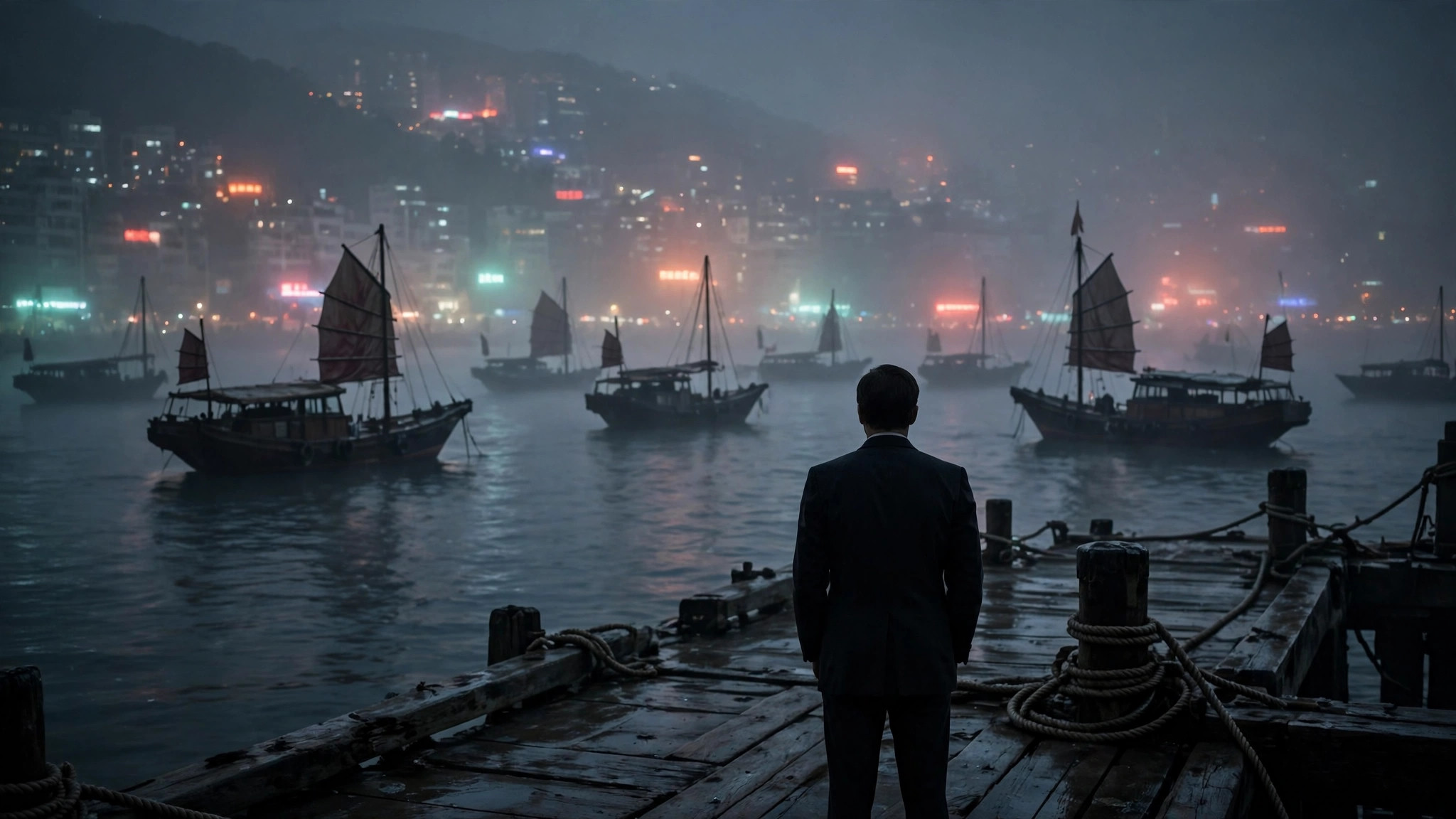
Britain suspects a third party. The captured capsule came down in the Sea of Japan, which points to Japanese involvement — or at least to someone operating from Japan. M sends Bond to Tokyo, but first, to let him move freely, MI6 fakes his death. In Hong Kong, gunmen “assassinate” Bond in his hotel bed, he is given a burial at sea, and British naval divers quietly fish him out of the water. From that moment on, officially, James Bond is dead — which is exactly how he likes it. Anyone looking for the you only live twice ending explained should know the film starts here, with Bond already buried at sea.
In Tokyo, Bond meets Tiger Tanaka, head of the Japanese Secret Service, who becomes his closest ally in the film. Tanaka’s agent Aki helps Bond trace the trail to Osato Chemicals, a front company for SPECTRE. The trail is classic Bond: a murdered contact, a sumo wrestler in a fight, a seductive SPECTRE agent named Helga Brandt who tries to kill Bond in a plane by sealing him in his seat and setting off a flare before bailing out with a parachute. Bond lands the plane himself and walks away.
It is a reminder, before the you only live twice ending explained reaches its climax, that SPECTRE has been trying to kill Bond from the very first scene. The you only live twice ending explained only works if you know how much of the film is Bond being hunted — SPECTRE knows he is alive long before he knows where they are.
Aki’s Death and the Road to the Volcano
The film’s emotional turning point comes in the middle, not the end. An assassin slips into Bond’s bedroom at night and sprays poison into the room, aiming for the sleeping agent. Aki, lying beside him, moves in her sleep — and takes the poison instead. She dies quietly, without a final speech, and Bond is left holding her. It is one of the coldest deaths in the Connery films, and it changes the mission. This is the death that gives the you only live twice ending explained its emotional weight: from here on, Bond is not just stopping a plot, he is settling a debt.
Tanaka sends Bond to the island of Kyushu in southern Japan with Kissy Suzuki, an ama diver who knows the coast. To move around the island without attracting attention, Bond goes through a crash course in becoming Japanese: a wedding ceremony with Kissy, a new identity as a fisherman, and ninja training with Tanaka’s men. It is the strangest sequence in any Bond film — and the film knows it. But it serves the plot: Bond needs to reach a remote fishing village near a volcano that the locals avoid, because the volcano is where SPECTRE is hiding.
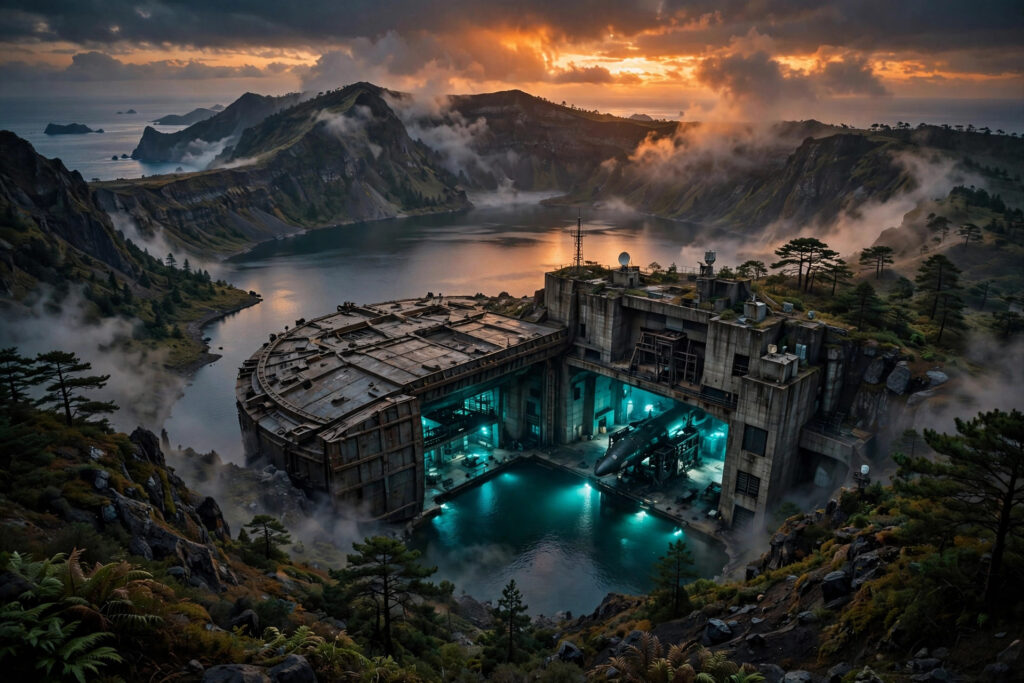
The clue is a cave on the coast. Bond and Kissy explore it by boat and find it flooded with phosgene gas, a chemical weapon. They dive out, climb to the volcano’s crater, and watch a helicopter fly into the crater lake — and vanish. The lake is a fake. Under the water sits a gigantic metal hatch, the retractable roof of a secret rocket base built inside the extinct volcano. That is the moment the you only live twice ending explained truly begins: Bond has found the base, and now he has to get inside it.
The Volcano Base: Blofeld’s Plan in Full
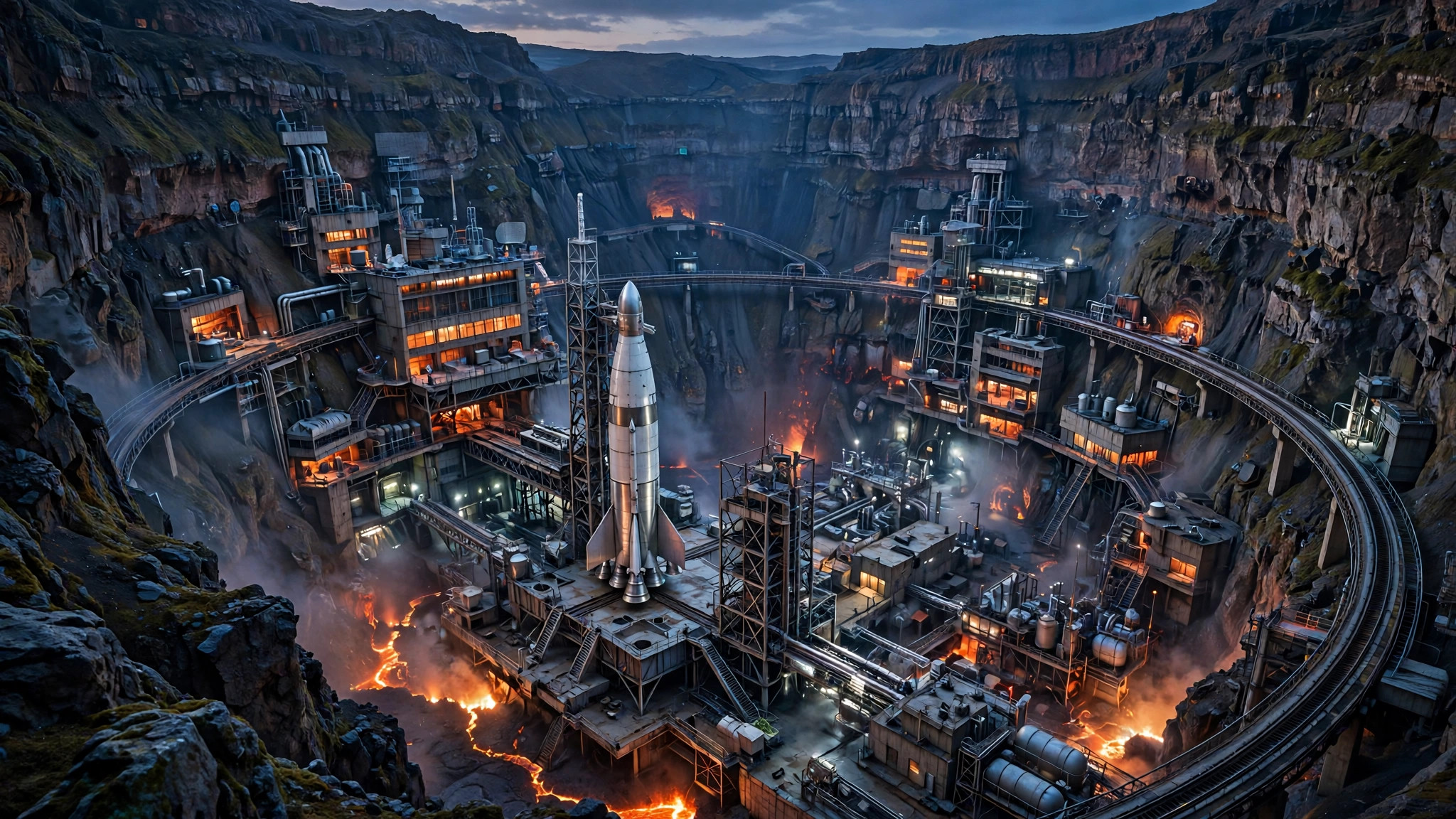
Inside the volcano sits the most famous set in Bond history. Production designer Ken Adam built the rocket base on the Pinewood Studios back lot in England, on a budget of roughly $1 million — an enormous sum for a single set in 1966. It used around 700 tons of structural steel, had a working monorail, a retractable crater roof, and was so large that a helicopter could land inside it. Two hundred and fifty men built it. When you watch the climax, you are watching the largest enclosed set ever built for a film at that time, and the film uses every inch of it.
The base belongs to SPECTRE, and its mastermind is finally revealed. This is the heart of the you only live twice ending explained: a plan that only works if two superpowers do exactly what SPECTRE wants.
Blofeld, played by Donald Pleasence, has been hired by an unnamed great power — strongly implied to be China — to provoke a war between the United States and the Soviet Union. His weapon is Bird One, a SPECTRE spacecraft that captures American and Soviet capsules in orbit and brings them back to the volcano base. Each capture pushes the superpowers closer to launching a nuclear strike on each other. Once the war starts, Blofeld’s employers expect to pick up the pieces. For the job, Blofeld has demanded $100 million — and his employers are already arguing about the price, because the agreement was to pay only once the war had actually broken out.
Bond slips into the base while Kissy goes back to alert Tanaka. He finds the captured American and Soviet astronauts held prisoner, frees them, and with their help steals a spacesuit, planning to infiltrate Bird One itself. But Blofeld spots him. Bond is dragged to the control room, and for the first time in the series, the villain turns his chair around and introduces himself: “Allow me to introduce myself. I am Ernst Stavro Blofeld.” After three films of a voice, a pair of hands and a white cat, the face is finally shown — and it is the face that would define Blofeld for generations.
The Ending, Beat by Beat
Here is the you only live twice ending explained step by step, in the order it happens on screen.
- Bird One launches. With Bond captured, Blofeld launches Bird One with a backup astronaut aboard. The spacecraft closes in on an American capsule, and in Washington, US forces prepare a nuclear strike on the Soviet Union in retaliation for what they believe is a Soviet attack.
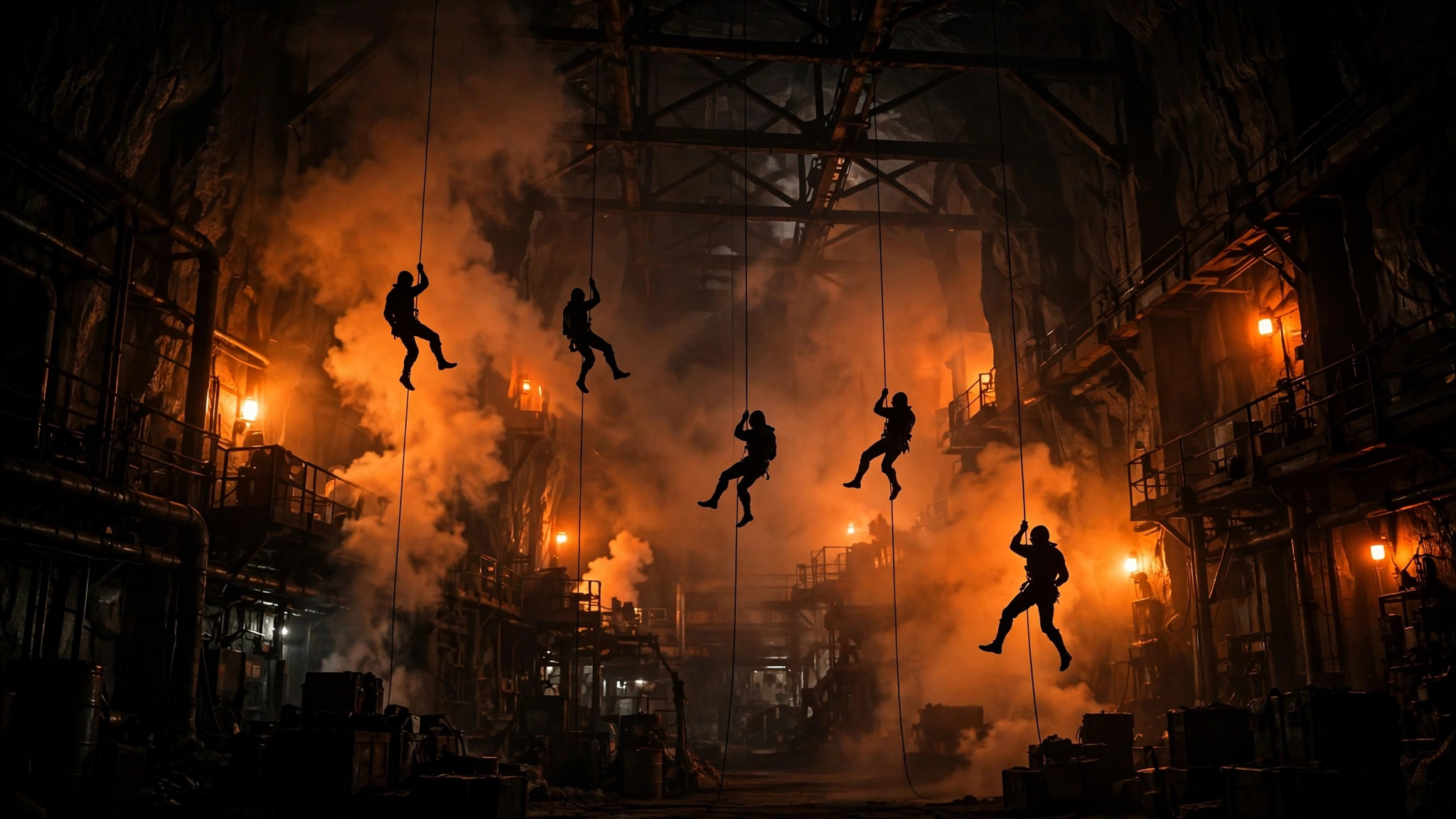
- The ninjas attack. Tanaka’s ninjas, trained for exactly this moment, approach the volcano’s crater — but the base’s sentry guns spot them and open fire. The assault stalls at the entrance, and the clock is running.
- Bond opens the hatch. In the control room, Bond asks Blofeld for a cigarette. It is a Q-branch cigarette, and it fires a small rocket. Bond kills the guard at the crater-hatch controls, throws the switch, and the great metal roof slides open. The ninjas pour into the base.
- Blofeld kills Osato. As the battle rages, Blofeld turns on Mr Osato, the SPECTRE agent whose failures let Bond get this far, and shoots him in front of the control room — a demonstration of what failure costs in his organisation. Helga Brandt has already paid the same price: Blofeld dropped her into a pool of piranhas through a trapdoor under her feet.
- The fight for the control room. Bond fights his way back through the base as the ninjas and SPECTRE’s guards battle around him. He reaches Blofeld’s bodyguard Hans, a huge silent enforcer, and throws him into the piranha pool.
- Bird One is destroyed. Bond reaches the self-destruct controls and activates them. Bird One explodes in orbit, seconds before it can swallow the American capsule. In Washington, the Americans see their spacecraft is safe and stand down their nuclear forces. The war is off.
- Blofeld escapes. Blofeld does not stay to fight. He slips away through a secret passage in the control room, and as his last act he triggers the base’s self-destruct system — a bomb that sets off the volcano itself. The base begins to tear itself apart.
- The escape. Bond, Kissy, Tanaka and the surviving ninjas get out before the eruption destroys the base. A submarine surfaces to pick up Bond and Kissy from the sea — and M is waiting, interrupting the romantic moment with the business of being 007.
That is the whole of the you only live twice ending explained: a countdown, a storming of the base, a self-destruct, and a villain who gets away. No other Connery Bond film ends with the main villain simply leaving. Blofeld walks out of his own exploding volcano, and the film lets him go.
Why Blofeld Escapes — and Why That Matters
The most asked question about the you only live twice ending explained is why Bond does not kill Blofeld. The answer is partly practical and partly about the series. In 1967, Blofeld was the only villain big enough to carry a sequel. Killing him would have closed the book on SPECTRE just as the organisation had become the spine of the franchise. So the script lets him escape, and the next two films pay the price of that decision: in On Her Majesty’s Secret Service (1969), Blofeld murders Bond’s wife Tracy, and in Diamonds Are Forever (1971), Bond finally hunts him down.
That choice is what makes the you only live twice ending explained unusual among Bond finales: the hero wins the battle and loses the villain. There is also a character logic to it. Bond’s mission was never to kill Blofeld. It was to stop the spacecraft captures and prevent a nuclear war. He does that. Blofeld escaping is a failure of the mission’s edges, not its centre — and the film is honest about it. The last shot is not a triumph. It is a rescue, and then an interruption. M’s arrival reminds Bond, and the audience, that the job is never really finished.
It is worth noting what the film does to Blofeld’s own people along the way. Brandt is fed to the piranhas for failing to kill Bond. Osato is shot for the same failure. Blofeld’s organisation eats its own, and that cruelty is the point: he is not a mastermind who rewards loyalty. He is a man who treats his people as disposable, which is why his plan needs a $100 million fee and a superpower as a client. Nobody works for Blofeld out of love.
How the Film’s Ending Differs from Fleming’s Novel
Roald Dahl, who wrote the screenplay, kept almost nothing of Ian Fleming’s 1964 novel except the title, the Japanese setting and the villain. The book is a completely different story, and its ending is far darker than anything in the film.
In the novel, Bond is sent to Japan grieving the death of his wife Tracy, who was murdered at the end of the previous book, On Her Majesty’s Secret Service. His mission is close to a suicide run: infiltrate the castle of Dr Guntram Shatterhand — Blofeld in disguise — and kill him. Shatterhand has built a “Garden of Death” full of poisonous plants, where suicidal people come to die. There are no gadgets, no volcano base and no spacecraft. Bond fights Blofeld with a wooden staff and his bare hands, and he kills him by strangling him.
Then the book’s ending turns strange and sad. Bond suffers a head injury in the fight and loses his memory completely. He washes up in a fishing village, where Kissy Suzuki takes him in. He lives happily as a fisherman, with no idea that he is James Bond — the first time in the whole series that Bond is at peace.
Kissy is secretly pregnant with his child. Then Bond sees a newspaper clipping with the word “Vladivostok” on it, something stirs in his damaged memory, and he leaves the village to head for Russia, trying to find out who he is. Fleming died months after the book was published, and many readers treat it as his farewell to the character.
The film keeps none of this. The difference is the sharpest part of the you only live twice ending explained for book readers: Fleming kills Blofeld and breaks Bond, while the film spares Blofeld and keeps Bond whole. Bond never loses his memory, never lives as a fisherman, and Blofeld never dies. The haiku that gives the story its title survives in spirit, though: “You only live twice: once when you are born, and once when you look death in the face.” In the novel, Bond writes it for Tanaka. In the film, it is the idea the whole story is built on — a man who is officially dead, doing his best work after his own funeral.
The Ending in Numbers
The scale of You Only Live Twice is part of why its ending still works. Those figures belong in the you only live twice ending explained too: the film’s size is the reason its climax still holds up. Here are the figures behind it.
| Fact | Detail |
|---|---|
| London premiere | 12 June 1967 |
| UK and US release | 13 June 1967 |
| Director | Lewis Gilbert |
| Screenplay | Roald Dahl, loosely based on Ian Fleming’s 1964 novel |
| Budget | $9.5 million |
| Worldwide box office | $111.6 million |
| Running time | 117 minutes |
| Volcano base set | About $1 million; around 700 tons of steel; built by 250 men at Pinewood Studios |
| Blofeld’s fee | $100 million, to start a US–Soviet war |
| Title song | “You Only Live Twice”, sung by Nancy Sinatra, music by John Barry |
The box office tells its own story. You Only Live Twice made $111.6 million worldwide on a $9.5 million budget — a healthy profit, but the first Bond film to earn less than its predecessor. Thunderball had made $141 million two years earlier. The spy craze was cooling, a rival spoof Casino Royale had opened two months earlier, and during filming Sean Connery announced that this would be his last Bond film. He was tired of being identified only as 007 and wanted other roles. George Lazenby took over for On Her Majesty’s Secret Service in 1969, and the producers eventually paid Connery a then-unheard-of $1.25 million to return for Diamonds Are Forever in 1971.
Our Take
You Only Live Twice is the Bond film that fans argue about most, and the ending is why. On the one hand, it is the most spectacular climax the series had ever staged: a volcano base, a ninja army, a rocket exploding in orbit, a villain escaping into an erupting mountain. On the other, it is the film where Bond stops being a spy and becomes a superhero — and the series would spend the next decade deciding whether that was a good idea.
Our view is that the ending works because the film commits to it completely. The volcano base is not a backdrop; it is the argument. Ken Adam’s set, the monorail, the retractable roof, the sheer size of the thing — all of it says that Bond has outgrown car chases and casino tables. The problem is what the ending costs. Aki’s death is the film’s best scene, quiet and cruel, and the rest of the film never matches it. Blofeld’s escape is dramatically right and emotionally unsatisfying at the same time: the villain who killed Aki walks away, and Bond’s victory is measured in spacecraft, not in justice.
Still, the film earned its place. It gave the series its most copied image — the villain’s lair inside a volcano — and it gave Bond his first real archenemy face to face. Every Blofeld since, from Christoph Waltz to the parodies, is answering Donald Pleasence’s turn in that chair. The you only live twice ending explained is not just a plot summary. It is the moment Bond stopped being a man with a licence to kill and became a myth, for better and for worse.
Read Also:
Read Also: James Bond Movies: The Complete 007 Film Guide (1962–2026)
Read Also: Thunderball Ending Explained: Largo’s Ransom, Domino’s Revenge and the Skyhook Rescue
Read Also: From Russia with Love Ending Explained: Grant, Klebb and the Venice Finale
Frequently Asked Questions
What is the you only live twice ending explained in one sentence?
Bond blows up SPECTRE’s spacecraft Bird One seconds before it swallows an American capsule, stopping a US–Soviet nuclear war, while Blofeld escapes through a secret passage and destroys his volcano base — and Bond and Kissy are rescued by a submarine.
Does Blofeld die at the end of You Only Live Twice?
No. Blofeld escapes through a secret passage in the control room and triggers the volcano base’s self-destruct as he leaves. He survives to return in On Her Majesty’s Secret Service (1969), where he murders Bond’s wife Tracy, and in Diamonds Are Forever (1971), where Bond finally hunts him down.
Who is behind the stolen spacecraft in You Only Live Twice?
SPECTRE, led by Ernst Stavro Blofeld, who has been hired by an unnamed great power — strongly implied to be China — to capture American and Soviet spacecraft and provoke a nuclear war between the superpowers. Blofeld demands a $100 million fee for the job.
How does Bond get into the volcano base?
Bond and Kissy Suzuki discover the base by watching a helicopter fly into the volcano’s crater lake, which is a fake — a giant metal hatch hiding the rocket base. Bond slips inside through the crater while Kissy goes back to alert Tiger Tanaka, whose ninjas then storm the base once Bond opens the hatch from within.
How is the You Only Live Twice film ending different from the book?
Completely different. In Ian Fleming’s 1964 novel there is no volcano base or spacecraft: Bond kills Blofeld in his “Garden of Death”, loses his memory, and lives happily as a fisherman with Kissy Suzuki, who is pregnant with his child. The film keeps only the title, the Japanese setting and the villain, and invents the whole space-race plot.

Kunal Chaudhary is the founder and editor of Media1Gyan, covering Bond 26 casting news, rankings and Bond history since July 2026, sourcing every developing story from trade reporting and official announcements and labelling rumor separately from confirmed fact. Kunal is the founder and editor of Media1Gyan.com, an independent James Bond 007 fan blog. A lifelong James Bond fan, he started Media1Gyan to give fellow fans clear, well-researched coverage of the world of 007 — from the classic Eon films to the new Amazon-MGM era and the road to Bond 26. On Media1Gyan, Kunal covers Bond movie news and casting rumors, ranked listicles (villains, Bond girls, theme songs, gadgets), explainers on Bond history and trivia, and deep dives into characters like Vesper Lynd and Ernst Stavro Blofeld. Every article is researched from publicly available information and reliable sources, and reviewed for accuracy before publishing. His approach is fan-first: no hype without sourcing, no rumors presented as fact, and complex Bond lore explained in plain language. When he covers developing stories like the next James Bond casting, articles are updated as new information breaks. Follow Media1Gyan.com for daily James Bond coverage — news, rankings, and guides for fans around the world. He writes under his real name.