Short Answer
From Russia with Love ending explained in one line: SPECTRE assassin Red Grant traps Bond on the Orient Express, drugs Tatiana Romanova and reveals the whole murder-suicide plot — but Bond tricks Grant into opening his booby-trapped attaché case, stabs him with its hidden knife and strangles him with Grant’s own garrotte wire; then, in Venice, Rosa Klebb tries to kill Bond with a poisoned blade hidden in her shoe, and Tatiana shoots her dead.
Bond throws the blackmail film of him and Tatiana into a canal, and the two ride away in a gondola together. That is the from russia with love ending explained in short: the trap fails, the assassin dies by his own weapon, and the woman SPECTRE used as bait saves Bond’s life.
It is one of the most tightly plotted endings in the whole Bond series, and it confuses first-time viewers for a good reason: almost nothing in the final act is what it seems. The friendly British agent is the assassin. The defector is a pawn who does not know she is a pawn. The chess master who designed the plan is executed by his own side before the film is over.
And the book the film is based on ends completely differently — with Bond himself poisoned and apparently dying. This article is the full from russia with love ending explained, beat by beat: what SPECTRE’s plan really was, how Bond kills Grant, why Blofeld executes Kronsteen, what happens in Venice, and how Ian Fleming’s novel ends.
The Story So Far: SPECTRE’s Trap
To understand the from russia with love ending explained, you first need the trap. From Russia with Love (1963), directed by Terence Young, is the second Eon Bond film and the second to star Sean Connery. It premiered in London on 10 October 1963, opened in the UK the next day, and reached the United States on 27 May 1964. It is based on Ian Fleming’s 1957 novel of the same name, the fifth Bond book — but the film changes the villain, and that change shapes the whole ending.
In the novel, the trap is set by SMERSH, the Soviet counter-intelligence agency. In the film, it is SPECTRE, the international criminal organisation introduced in Dr. No. SPECTRE wants revenge on Bond for killing their agent Dr. No in Jamaica, and it wants the revenge to be public and humiliating.
That revenge motive is the engine of the from russia with love ending explained, and it explains why SPECTRE wants Bond humiliated, not just dead. Its chief planner, Kronsteen — a Czechoslovak chess grandmaster played by Vladek Sheybal, and SPECTRE Number 5 — designs the plan like a chess problem. The bait is a Lektor cryptography device, held at the Soviet consulate in Istanbul, and a beautiful cipher clerk, Tatiana Romanova (Daniela Bianchi), who will supposedly defect to the West and bring the Lektor with her.
Tatiana believes she is working for her own side. Rosa Klebb (Lotte Lenya), a former head of SMERSH now serving as SPECTRE Number 3, has convinced her that the defection is a genuine Soviet operation. In reality, Tatiana is the bait.
The plan is that Bond will steal the Lektor, fall for Tatiana, and be filmed with her in bed — and then SPECTRE’s trained killer, Donald “Red” Grant (Robert Shaw), will murder them both and leave the film behind, so the world reads it as a sordid murder-suicide that destroys Bond and discredits MI6. SPECTRE will then sell the Lektor back to the Russians. Every piece on the board has a job, and none of them — except Kronsteen and Klebb — knows the whole plan.
Bond walks into the trap willingly. In Istanbul he works with Ali Kerim Bey (Pedro Armendáriz), the warm, funny head of MI6 Station T, who helps him steal the Lektor from the consulate in a tear-gas raid and smuggle it out through the city’s ancient underground waterways. Kerim Bey also kills Krilencu, a Bulgarian assassin, with Bond’s sniper rifle.
Before Bond leaves London, Q — Desmond Llewelyn in his first appearance in the role, taking over from Peter Burton, who played the part in Dr. No — hands him an attaché case that will decide the ending: it hides a tear-gas canister, a throwing knife, fifty gold sovereigns, and a sniper rifle. Remember that case. It kills Grant.
From Russia with Love Ending Explained: The Train Fight
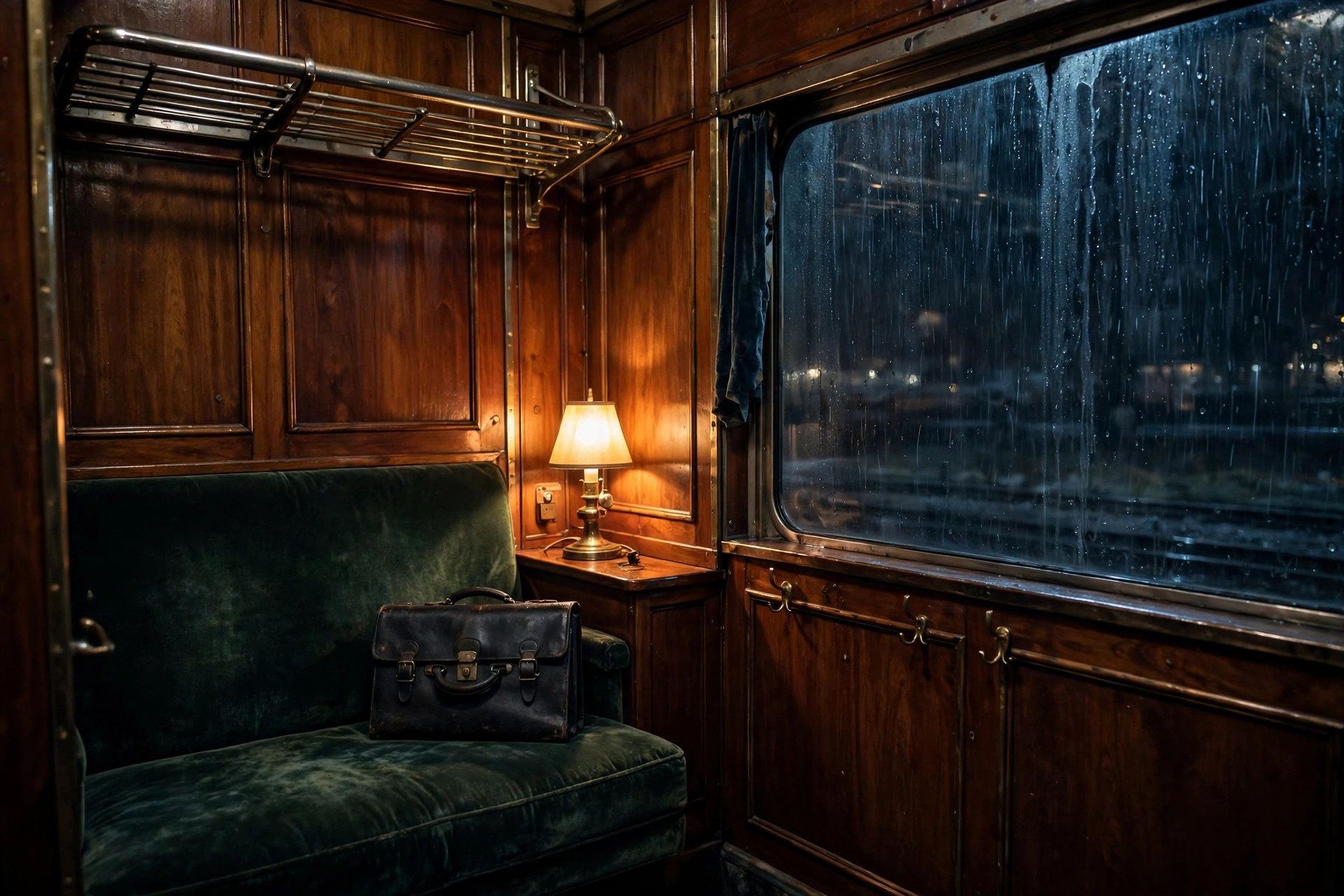
The from russia with love ending explained begins on the Orient Express, and it begins with a murder Bond does not see. Bond, Tatiana and Kerim Bey board the train to Trieste with the Lektor. Aboard is a Soviet security officer named Benz, who recognises Tatiana.
Bond and Kerim Bey overpower Benz and hold him prisoner — and while Bond is away with Tatiana, Grant slips into their compartment and kills both Kerim Bey and Benz, arranging the bodies to look as if they killed each other. Kerim Bey, the film’s warmest character, is dead before Bond understands what has happened. It is a bleak moment, and it is made bleaker by what we know off screen: Pedro Armendáriz, who plays Kerim Bey, was terminally ill with cancer during filming, and the production rushed his scenes so he could finish the role. He died on 18 June 1963, aged 51, months before the film’s premiere.
At Belgrade, Bond tells one of Kerim Bey’s sons that his father is dead, and asks for a British agent named Nash to meet him at Zagreb. Grant overhears the arrangement, murders the real Nash, and boards the train in his place. Bond, who has never met Nash, accepts the tall, polite Englishman at face value. That is the trap closing: the man assigned to protect Bond on the last leg of the journey is the man assigned to kill him.
Grant’s mistake is that he enjoys his work too much. Over dinner he drugs Tatiana’s wine, overpowers Bond, and then — instead of simply shooting him — explains the entire plan. He will shoot Bond and Tatiana, plant the film of their night together in Bond’s luggage, and leave a forged letter in which Tatiana supposedly demands marriage, so the deaths read as a lovers’ murder-suicide. The Lektor goes back to SPECTRE, to be sold to the Russians. It is the classic villain error, and Bond exploits it the way he always does: he keeps Grant talking.
Bond tells Grant about the fifty gold sovereigns hidden in his attaché case and offers them as a bribe. Grant, greedy and careless, opens the case — and the tear gas inside explodes in his face. In the fight that follows, Bond stabs Grant with the throwing knife hidden in the case, then strangles him with Grant’s own garrotte wire, the wire Grant keeps concealed in his watch.
Grant is killed by his own weapon, in a compartment he chose, after a plan he helped to build. That is the heart of the from russia with love ending explained: the assassin who spent the whole film hunting Bond dies because he could not resist a bribe and could not resist boasting.
Bond and Tatiana leave the train at dawn, steal Grant’s getaway truck, and are pursued by a SPECTRE helicopter and a flotilla of boats. Bond brings down the helicopter and sets the pursuing boats ablaze, dropping oil barrels into the water and igniting them with a flare gun. It is the last burst of action in the film — and it is deliberately smaller than the train fight, because the train fight was the real climax.
What Happens to Kronsteen?
One of the most asked questions in any from russia with love ending explained is what happens to the chess master. The answer is swift and cold. When news of Grant’s death reaches SPECTRE, Blofeld — the organisation’s chairman, Number 1, shown only as a pair of hands stroking a white cat, with Anthony Dawson as the body and Eric Pohlmann as the voice — summons Kronsteen and Klebb.
The two blame each other: Kronsteen says his plan was perfect and Klebb chose the wrong killer; Klebb says Kronsteen never took Bond seriously as a threat. Blofeld agrees with Klebb, reminds them that SPECTRE does not tolerate failure, and has his henchman Morzeny execute Kronsteen on the spot with a poisoned blade hidden in the toe of his shoe.
It is a short scene, and it matters for two reasons. Blofeld’s order is the coldest moment in the from russia with love ending explained, and it reframes everything Klebb does next. First, it tells us what SPECTRE is: not a government with rules, but a criminal board that kills its own planners when a plan fails. Second, it sets up the final confrontation. Klebb, who has just watched her colleague murdered beside her, is given one last chance: recover the Lektor and kill Bond herself, or suffer the same fate. She does not get a second warning, and she does not survive the attempt.
The Venice Finale: Rosa Klebb’s Last Move

The from russia with love ending explained finishes in Venice, quietly, in a hotel room. Bond and Tatiana are resting after the train and the boat chase, the Lektor secured, the mission apparently over. Klebb comes to their room disguised as a maid. She holds Bond at gunpoint and orders Tatiana to leave. Then Tatiana bursts back in, tackles Klebb, and knocks the pistol skidding across the floor. Klebb and Bond struggle — and Klebb deploys her last weapon, the poisoned blade concealed in the toe of her shoe, the same kind of blade that killed Kronsteen.
Bond is losing the struggle when Tatiana picks up the fallen pistol and shoots Klebb dead. It is the film’s final twist, and it is the right one: the woman SPECTRE used as bait, who spent the whole film as a pawn in other people’s plans, is the person who saves Bond’s life. She is not rescued in the final scene. She does the rescuing. That reversal is why the from russia with love ending explained keeps being discussed more than sixty years later: the bait becomes the rescuer.
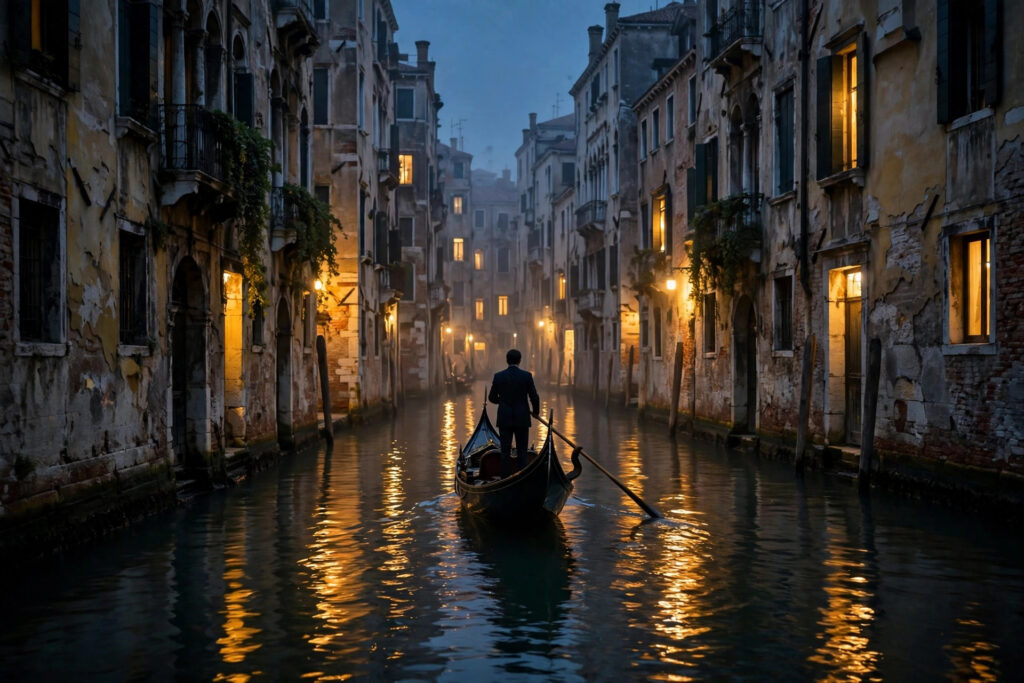
Then comes the film’s most graceful shot. Bond and Tatiana ride away in a gondola through the canals of Venice, and Bond takes the film reel — the blackmail footage of the two of them in bed, the evidence SPECTRE planned to use to destroy him — and throws it into the water. The trap’s last piece sinks out of sight. The film closes on the series’ trademark promise: James Bond will return. Goldfinger, the next film in the series, followed in 1964.
The Ending, Beat by Beat
Here is the from russia with love ending explained as a beat-by-beat timeline, from the train to the canal:
- The theft: Bond and Kerim Bey steal the Lektor from the Soviet consulate in Istanbul in a tear-gas raid and escape through the underground waterways to the Orient Express.
- Kerim Bey’s death: Grant kills Kerim Bey and the Soviet officer Benz aboard the train and stages the bodies to look like a mutual killing.
- The false agent: Grant murders the real British agent Nash at Belgrade and boards the train pretending to be him.
- The reveal: Grant drugs Tatiana, overpowers Bond, and explains the murder-suicide plan — the film of Bond and Tatiana will be left behind to disgrace MI6.
- The attaché case: Bond tempts Grant with fifty gold sovereigns; Grant opens the case and is blinded by tear gas. Bond stabs him with the case’s hidden knife and strangles him with Grant’s own garrotte wire.
- The escape: Bond and Tatiana leave the train, steal Grant’s truck, and destroy a pursuing SPECTRE helicopter and boat flotilla.
- Kronsteen’s execution: Blofeld has Kronsteen killed with a poisoned shoe blade for the plan’s failure and gives Klebb one last chance.
- Venice: Klebb, disguised as a maid, holds Bond at gunpoint and attacks him with her poisoned shoe blade. Tatiana shoots her dead.
- The film in the canal: Bond throws the blackmail film into a Venetian canal as he and Tatiana ride away in a gondola. The trap is over.
Film vs Book: Two Very Different Endings

The biggest surprise in any from russia with love ending explained is that Ian Fleming’s novel ends almost nothing like the film. For anyone comparing versions, the from russia with love ending explained changes completely depending on which version you mean — film or novel. The film keeps the bones of Fleming’s plot — the Lektor, the train, Grant, Klebb — but changes the ending completely, and the change is the difference between a cliffhanger and a clean victory.
| Film (1963) | Novel (1957) | |
|---|---|---|
| The villains | SPECTRE, seeking revenge for Dr. No and planning to sell the Lektor back to the Russians | SMERSH, the Soviet agency, planning a propaganda scandal to discredit Bond and MI6 |
| The device | The Lektor, a Soviet cryptography machine | The Spektor, the same device under its original name |
| Grant’s death | Bond tricks him with the booby-trapped attaché case, stabs him, and strangles him with Grant’s own garrotte | Bond blocks Grant’s bullet with a metal cigarette case hidden in a book, then kills him in the fight |
| Kronsteen’s fate | Executed by Blofeld for the plan’s failure | Survives — others are punished for the plan’s failure instead |
| Klebb’s fate | Shot dead by Tatiana in a Venice hotel room | Captured, but kicks Bond with her poisoned shoe blade before she is taken away |
| Bond’s fate | Victorious — he throws the blackmail film into a canal and sails off with Tatiana | Poisoned and collapsing on a hotel floor as the novel ends, his survival unknown |
In the novel, the last scene is one of the most famous cliffhangers in popular fiction. Klebb, already captured, manages to kick Bond with the poison-tipped blade in her shoe. Bond feels the poison take hold, struggles for breath, and falls to the floor — and Fleming ends the book there.
He had rewritten the ending in April 1956 precisely so he could kill Bond off if he wanted to, and for a year readers genuinely did not know whether 007 would return. It was only in Dr. No, the next novel, that Fleming revealed Bond had survived, saved by a doctor who happened to be nearby. The film could not end on a cliffhanger — it needed Bond alive for the next picture — so it gave Klebb’s poisoned shoe to the film’s climax instead, and gave Tatiana the gun.
The film also softens one thing the novel does not: in Fleming’s book, Tatiana is a more willing participant in her own seduction of Bond, and the scandal SPECTRE plans is crueller and more explicit. The film keeps the blackmail film as a plot device but lets Tatiana be an innocent — a clerk who believes she is serving her country — which is what makes her final act, shooting Klebb, land as a rescue rather than a revenge.
What the Ending Sets Up
The from russia with love ending explained is also the moment the Bond series becomes a series. Dr. No had introduced Bond; From Russia with Love introduces almost everything else. Blofeld appears for the first time, faceless and stroking his cat, and SPECTRE becomes the running enemy of the Connery era — returning in Thunderball, You Only Live Twice, On Her Majesty’s Secret Service and Diamonds Are Forever.
Q, played by Desmond Llewelyn, makes his first appearance here and would go on to appear in seventeen Bond films, more than any other actor in the series, working with five different Bonds. The pre-title sequence — Grant training to kill a man in a Bond mask — becomes a franchise tradition. And the closing promise, that James Bond will return, starts the pattern of each film announcing the next.
The film was also, reportedly, the last film President John F. Kennedy watched — he saw it the night before his assassination on 22 November 1963, and the novel was famously one of his favourite books. It earned over $78 million at the box office, a huge sum for 1963, and it is still often ranked among the best Bond films ever made — Sean Connery himself reportedly called it his favourite of his own Bond films, and it holds a 97% score on Rotten Tomatoes.
The ending is a large part of why: it is a thriller that resolves with brains rather than firepower, and the last person to save the day is the woman the villains treated as bait.
Our Take
Our take on the from russia with love ending explained: it is the cleverest ending of the Connery era, and the one that has aged best. Most Bond finales are won with a bigger explosion. This one is won with a briefcase. Bond does not outgun Grant — Grant is the better killer, and the film is honest about that.
Bond out-thinks him, and he does it by understanding Grant’s two weaknesses: greed, and the need to boast. The fifty sovereigns are not a lucky break; they are bait, offered by a man who has spent the whole film learning how his enemy thinks. And the garrotte is not a flourish; it is the film’s thesis in one image. Grant dies by his own weapon, in a trap of his own design, because SPECTRE’s plan was too clever to survive contact with its target.
That said, the ending has one soft spot, and it is worth naming. The boat and helicopter chase after the train feels like an afterthought — spectacle bolted on after the real climax has already happened in a railway compartment. The film knows it, too: it hurries through the pursuit in minutes and spends its final shot on something quieter, a film reel sinking into a canal.
That instinct is correct. The train fight is the ending; everything after it is the film exhaling. If you watch the film again, notice how little music there is in the Grant fight, and how much of it is just two men breathing in a small room. It is the most realistic fight in any Connery Bond film, and it is the reason the ending still works more than sixty years later.
Frequently Asked Questions
What is the from russia with love ending explained in one sentence?
Bond tricks SPECTRE assassin Red Grant into opening his booby-trapped attaché case on the Orient Express, kills him with the case’s knife and Grant’s own garrotte, and then Tatiana Romanova shoots Rosa Klebb dead in Venice before Bond throws the blackmail film into a canal.
How does Bond kill Red Grant on the train?
Bond offers Grant fifty gold sovereigns hidden in his Q-issued attaché case. When Grant opens the case, a tear-gas canister explodes in his face. Bond then stabs him with the throwing knife hidden in the case and strangles him with Grant’s own garrotte wire, which Grant keeps concealed in his watch.
How does Rosa Klebb die in From Russia with Love?
Klebb, disguised as a maid, holds Bond at gunpoint in their Venice hotel room and attacks him with a poisoned blade hidden in her shoe. Tatiana bursts back into the room, tackles Klebb, picks up the fallen pistol and shoots her dead.
How is the book ending different from the film ending?
In Ian Fleming’s 1957 novel, Klebb is captured but kicks Bond with her poisoned shoe blade, and the book ends with Bond collapsing and apparently dying — a cliffhanger. The film changes this completely: Tatiana shoots Klebb, Bond survives, and he throws the blackmail film into a Venetian canal. Kronsteen is also executed in the film but survives in the novel.
Does From Russia with Love have a post-credits scene?
No. Like most Bond films, From Russia with Love has no post-credits scene. The film ends with Bond and Tatiana riding away in a gondola as Bond throws the film into the canal, followed by the traditional promise that James Bond will return — in Goldfinger, the next film in the series.
Read Also:
Read Also:
James Bond Movies: The Complete 007 Film Guide (1962–2026)
Skyfall Ending Explained: M’s Death, Silva’s Revenge and the Reset
Goldfinger Ending Explained: Fort Knox, the 007-Second Bomb and Goldfinger’s Fall
For the film’s full background, the Wikipedia page on From Russia with Love covers its production, cast and legacy in detail, and IMDb’s page for the film lists the full cast, including Anthony Dawson as the uncredited Blofeld.
That is the from russia with love ending explained, start to finish: a chess master’s trap, a killer who talks too much, a briefcase that bites back, a planner executed by his own side, and a defector who turns out to be the hero of the final scene. Watch the train fight again and the from russia with love ending explained changes completely — every polite word Grant says to Bond is a man enjoying his own cleverness, and every second he spends boasting is a second Bond uses to set the trap that kills him. Few Bond endings reward a second viewing as richly as this one.

Kunal Chaudhary is the founder and editor of Media1Gyan, covering Bond 26 casting news, rankings and Bond history since July 2026, sourcing every developing story from trade reporting and official announcements and labelling rumor separately from confirmed fact. Kunal is the founder and editor of Media1Gyan.com, an independent James Bond 007 fan blog. A lifelong James Bond fan, he started Media1Gyan to give fellow fans clear, well-researched coverage of the world of 007 — from the classic Eon films to the new Amazon-MGM era and the road to Bond 26. On Media1Gyan, Kunal covers Bond movie news and casting rumors, ranked listicles (villains, Bond girls, theme songs, gadgets), explainers on Bond history and trivia, and deep dives into characters like Vesper Lynd and Ernst Stavro Blofeld. Every article is researched from publicly available information and reliable sources, and reviewed for accuracy before publishing. His approach is fan-first: no hype without sourcing, no rumors presented as fact, and complex Bond lore explained in plain language. When he covers developing stories like the next James Bond casting, articles are updated as new information breaks. Follow Media1Gyan.com for daily James Bond coverage — news, rankings, and guides for fans around the world. He writes under his real name.