Short Answer
Goldfinger ending explained in one line: Auric Goldfinger’s Operation Grand Slam fails because his own pilot, Pussy Galore, secretly warns Washington and swaps the deadly nerve gas for a harmless one, so the Fort Knox soldiers only pretend to be dead; Bond kills Oddjob inside the vault, an atomic specialist switches off the bomb with seven seconds left, and Goldfinger himself is sucked out of a plane window and falls to his death. That is the goldfinger ending explained in short: the villain’s perfect plan is undone by one betrayal, one bluff, and one very unlucky gunshot.
It is the most rewatched ending in the whole Bond series, and the confusion is understandable. Goldfinger (1964) is the third Eon Bond film, the one that turned 007 into a global phenomenon, and its finale stacks three twists on top of each other in about twenty minutes: a fake gas attack, a bomb that stops at 007 seconds, and a villain who dies by his own greed. This article is the full goldfinger ending explained, beat by beat: what Operation Grand Slam really was, why Pussy Galore switches sides, how Oddjob dies, why the bomb stops at seven seconds, and how Goldfinger meets his end on a plane to Washington.
The Story So Far: What You Need Before the Final Act
The goldfinger ending explained properly starts with what Bond already knows by the final act. Auric Goldfinger, played by Gert Fröbe, is a gold magnate who smuggles bullion out of Britain by melting it into the bodywork of his Rolls-Royce Phantom III. The Bank of England asks MI6 to investigate, and Bond’s trail leads from a rigged golf match — where Goldfinger cheats with a magnetic ball, Bond swaps it, and wins a £5,000 bet plus a bar of Nazi gold — to Goldfinger’s stud farm in Kentucky, where the villain unveils his real plan to a room full of American gangsters.
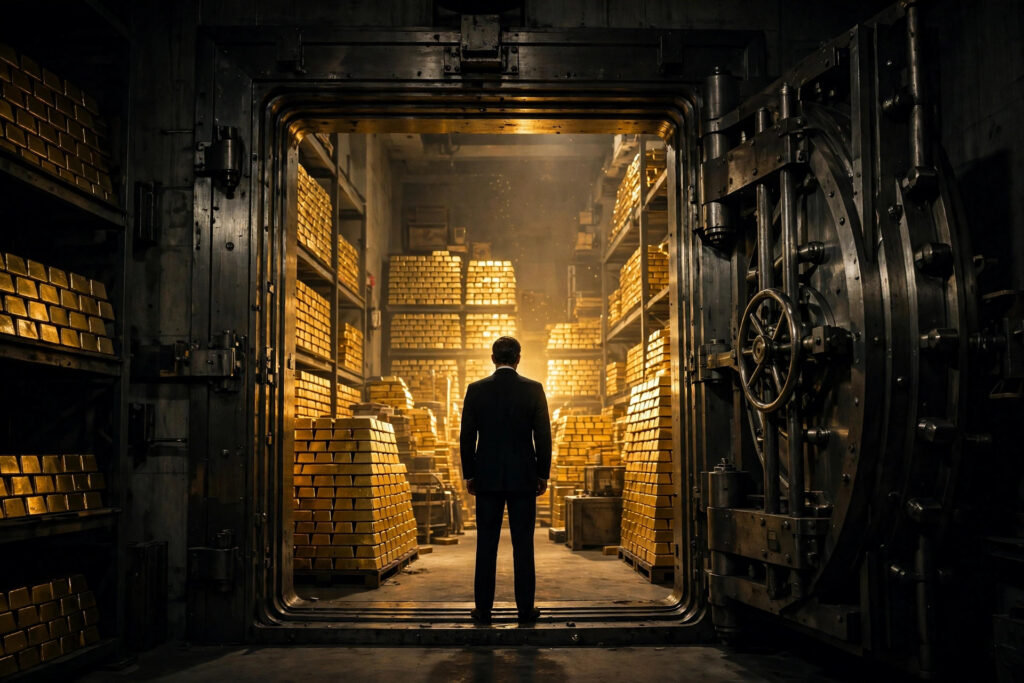
That plan is Operation Grand Slam, and it is not a robbery. Bond first assumes Goldfinger wants to steal the gold inside Fort Knox, the United States Bullion Depository, and tells him the idea is impossible: moving that much gold would take hundreds of trucks and days of work. Goldfinger’s answer is the film’s great reveal.
He does not want to steal the gold at all. With a dirty atomic bomb supplied by the Chinese, he will detonate it inside the vault and irradiate the entire United States gold reserve for fifty-eight years.
The gold becomes untouchable, the Western economy slides into chaos, and Goldfinger’s own vast private stockpile — held in Zurich, Amsterdam, Caracas and Hong Kong — multiplies in value overnight.
The gangsters who refuse to invest a million dollars each are gassed in the meeting room, and Mr. Solo, who tries to leave, is crushed inside his own car at a junkyard.
Two people matter most in the finale. Pussy Galore, played by Honor Blackman, is Goldfinger’s personal pilot and the leader of the Flying Circus, the all-woman squadron that will spray Delta 9 nerve gas over Fort Knox. And Oddjob, played by Harold Sakata, is Goldfinger’s silent Korean manservant, whose steel-rimmed bowler hat can decapitate a stone statue — and, as Tilly Masterson discovers, a person.
Bond has already lost Jill Masterson, painted gold and left dead in his bed, and watched her sister Tilly die to Oddjob’s hat.
He has also survived the film’s most famous scene: strapped to a golden table under an industrial laser, he bluffs his way out by pretending MI6 knows all about Operation Grand Slam. “Do you expect me to talk?” he asks. “No, Mr. Bond, I expect you to die,” Goldfinger replies — and then spares him anyway, because a dead Bond cannot be used as a shield against the manhunt he has just invented. Every beat of the goldfinger ending explained later depends on these facts, so keep them in mind as the finale unfolds.
The Ending in 60 Seconds: A Timeline of the Final Act
Here is the goldfinger ending explained as a straight timeline, so you can follow the finale without rewinding:
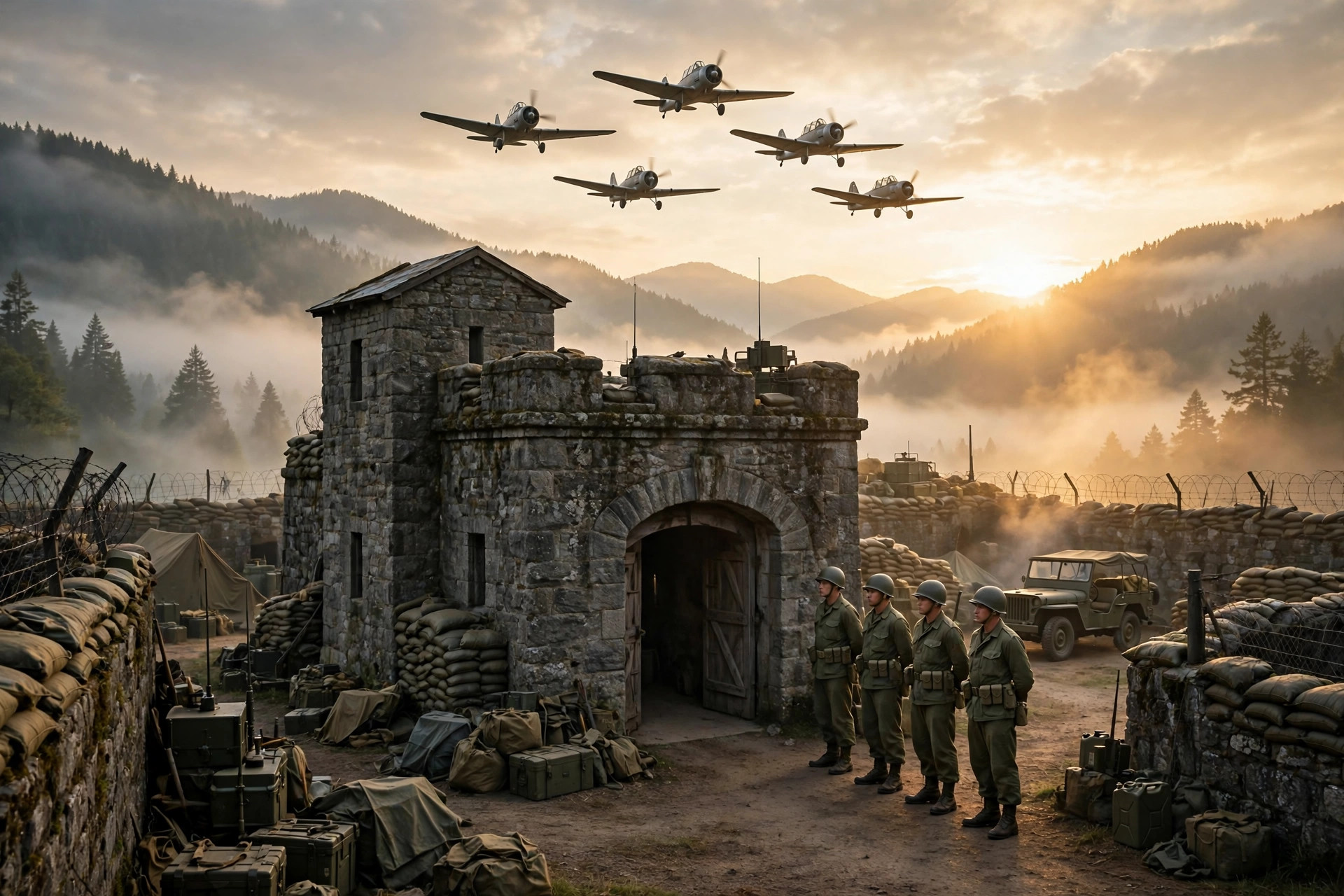
- The gas attack: Pussy Galore’s Flying Circus flies over Fort Knox and sprays Delta 9 nerve gas. Soldiers, sentries and CIA observer Felix Leiter collapse across the base. It looks like a massacre — but it is a performance.
- The break-in: Goldfinger’s private army blows the perimeter gates and uses the industrial laser to cut through the vault’s blast doors. Inside, Goldfinger arrives by helicopter with the atomic device.
- Bond is handcuffed to the bomb: Goldfinger chains Bond to the device inside the vault, then, disguised as a US Army colonel, shoots his Chinese contact Mr. Ling and seals the vault doors, locking Bond, Oddjob and Kisch inside.
- Oddjob dies: Kisch panics and tries to disarm the bomb; Oddjob throws him over a railing to his death. Bond breaks his handcuffs, fights Oddjob, and electrocutes him by jamming a severed high-voltage cable into the steel bars just as Oddjob retrieves his lodged hat from a grate.
- Seven seconds: With soldiers cutting their way into the vault, an atomic specialist reaches the device and switches it off with the timer reading 0:07 — seven seconds, or 007 seconds, to spare.
- The plane: Bond is flown to Washington for lunch with the President. Goldfinger, who hijacked the plane at gunpoint, fights Bond in the cabin; a shot from his gold-plated revolver shatters a window, and the explosive decompression sucks Goldfinger out through the hole. Bond and Pussy Galore parachute to safety.
Operation Grand Slam: What Goldfinger Really Planned
The heart of the goldfinger ending explained is the plan itself, because the film deliberately tricks you into misunderstanding it — just as Bond does. In Ian Fleming’s 1959 novel, Goldfinger really does try to steal the gold from Fort Knox, a scheme the book’s critics called absurd: the gold weighs thousands of tons and would need an army of trucks. Screenwriter Richard Maibaum fixed the problem by changing the crime entirely.
In the film, stealing the gold is the decoy. Irradiating it is the plan.
The bomb is a dirty atomic device, built around cobalt and iodine, supplied by the Chinese government through the nuclear specialist Mr. Ling. Detonated inside the vault, it would make the gold radioactive and unusable for fifty-eight years. That number is not random: it is long enough to wreck the gold standard and the Western economy, and short enough that Goldfinger, holding the world’s largest private gold stockpile, can wait it out and emerge the richest man on earth.
China gets economic chaos in the West; Goldfinger gets a fortune. The plan is also why the laser matters twice: the same industrial beam that nearly cut Bond in half is later used to slice open the vault doors at Fort Knox. Nothing in Goldfinger is wasted.
The plan’s genius is also its weakness. It depends on total secrecy and on one woman’s loyalty. Goldfinger needs the gas attack to work exactly as rehearsed, and he needs Pussy Galore to fly it. That is the hinge the whole ending turns on. Understanding the switch from theft to irradiation is the key to the whole goldfinger ending explained: once you see that the gold is the target, not the prize, every scene in the finale falls into place.
Pussy Galore’s Switch: The Twist That Saves Fort Knox
Why does Pussy Galore betray Goldfinger? The film gives you the answer in a single scene, and it is easy to miss on a first viewing. After Bond is captured at the stud farm, he is brought to Galore’s barn, and the two spend the night together. By morning, Galore has switched sides. The film never spells out her reasoning in a speech, and that is deliberate: Galore is a professional who has just realised her employer is about to murder thousands of soldiers and poison a country’s economy for a payday.
Bond’s seduction is the catalyst, not the whole explanation — the script trusts you to see that a pilot who runs her own squadron is not going to help gas a military base once she understands what the gas is for.
Her switch is total. Galore alerts Washington, and her pilots spray a harmless gas instead of Delta 9. The soldiers of Fort Knox collapse on cue and play dead, letting Goldfinger’s army walk into a trap. Felix Leiter, watching from the ground, knows the whole time.
That switch is the single most important beat in the goldfinger ending explained, and it happens off-screen, in a barn, the night before the raid. When the army counterattacks, Goldfinger’s men are outnumbered and outgunned inside a vault they cannot escape. The twist works because the film shows you the gas attack as a triumph — planes swooping, soldiers falling — and only reveals afterwards that every single body was acting. It is the same trick the film played with the golf match: you watch the cheat happen before you understand it.

Oddjob, the Bomb and 007 Seconds
The vault sequence is the most suspenseful ten minutes in any Connery Bond film, and the goldfinger ending explained is incomplete without the two deaths inside it. The vault fight is the most physical passage in the goldfinger ending explained, and it is also the most economical: Bond wins with a cable and a hat, not a gun. The first is Kisch, Goldfinger’s second-in-command, who panics as the bomb counts down and tries to disarm it himself. Oddjob, loyal to the plan over his own colleague, hurls Kisch over a railing to his death.
The second is Oddjob himself, and it is pure Bond logic: Bond, handcuffed to the bomb, breaks free and fights a man who is stronger than him in every way. He cannot beat Oddjob with strength, so he beats him with the room. When Oddjob’s steel-rimmed hat lodges in the steel bars of a grate, Bond grabs a severed high-voltage cable and jams it into the bars. The current arcs through the hat’s metal brim, and Oddjob is electrocuted on the spot. Bond’s verdict, delivered with a straight face as he steps over the body, is one of the series’ driest jokes: “Shocking. Positively shocking.”
Then comes the number every Bond fan knows. With the soldiers cutting through the vault doors, an atomic specialist reaches the device and flicks the cutoff switch as the timer halts on 0:07 — seven seconds to spare. In the film’s original cut the timer actually stopped at 003, which is why Bond’s line afterwards is “Three more ticks and Mr. Goldfinger would have hit the jackpot.”
The producers changed the on-screen timer to 007 for the release print, and the line stayed. The joke lands either way: Bond, the man numbered 007, is saved by seven seconds.
How Goldfinger Dies — and Why It Is Poetic
Goldfinger’s death is the strangest part of the goldfinger ending explained, because he escapes Fort Knox alive. Disguised as a US Army colonel, he shoots Mr. Ling to remove the last witness, slips out during the counterattack, and boards the private jet that is supposed to fly Bond to Washington for lunch with the President. He hijacks the plane at gunpoint with his gold-plated revolver, planning to force the pilots to fly him out of the country.
What kills him is the gold itself. The plane sequence is the last surprise in the goldfinger ending explained, because the villain has already lost and still nearly wins. In the struggle with Bond in the cabin, a shot from the revolver shatters a window. At altitude, the cabin depressurises in an instant, and Goldfinger — a heavy man in a heavy suit — is sucked out through the broken window and falls to his death.
The man who spent the whole film turning everything he touched into gold is killed by the weight of his own weapon and the fragility of the machine he tried to steal. Bond and Pussy Galore, who was flying the plane, parachute out together and land in a meadow as search helicopters circle overhead. Bond’s last line of the film, as the parachute settles over them, is a shrug at the rescue party: “This is no time to be rescued.”
What the Ending Means for Bond and the Series
The goldfinger ending explained in full is also the story of how James Bond became a blockbuster. Goldfinger was the third Eon film, directed by Guy Hamilton and released in September 1964 in Britain (December in the United States), on a budget of about $3 million — roughly the combined budgets of Dr. No and From Russia With Love. It grossed about $124.9 million worldwide, recouped its budget in two weeks, and became the first Bond film to pass $100 million.
The ending is a large part of why: it delivers a heist, a siege, a countdown and a mid-air death in a single final act, and it does it with a lightness the first two films never attempted.
The film also set the template every Bond film after it would follow. For a fan tracing the series, the goldfinger ending explained is the moment Bond stops being a spy thriller and becomes a spectacle. The Aston Martin DB5, introduced here with its ejector seat, machine guns, revolving number plates and oil slick, became the franchise’s signature car.
Shirley Bassey’s title song “Goldfinger” became the definitive Bond theme. The pre-title sequence — Bond emerging from the water in a wetsuit, planting explosives, stripping down to a white dinner jacket and ordering a vodka martini — became the formula for every opening to come. And the villain’s plan, a scheme so large it needs a lecture scene to explain it, became the standard Bond plot. Goldfinger is the film where the series stopped being a spy thriller and became a spectacle.
There is also a quieter meaning in the ending. Bond wins this film by talking, not shooting. He talks Goldfinger out of killing him with the laser by inventing a manhunt that does not exist. He talks Pussy Galore into betraying her employer.
He talks the Fort Knox plan apart in front of Goldfinger himself, pointing out that stealing the gold is impossible — and that argument is what forces Goldfinger to reveal the real plan. The finale rewards the Bond who thinks, not just the Bond who fights. That is why the ending still holds up sixty years later: the twists are earned by dialogue, and the action is the payoff, not the substitute.

Goldfinger Ending: Key Moments at a Glance
| Moment | What happens | Why it matters |
|---|---|---|
| Golf match | Goldfinger cheats with a magnetic ball; Bond swaps it and wins £5,000 and a bar of Nazi gold | Establishes Bond’s method: beat the cheat at his own game |
| Laser table | Bond bluffs about MI6 knowing Operation Grand Slam and survives the beam | Goldfinger spares him — the decision that dooms the plan |
| Operation Grand Slam revealed | Dirty bomb will irradiate Fort Knox gold for 58 years | The real plan is destruction, not theft |
| Pussy Galore’s switch | She warns Washington; the nerve gas is swapped for a harmless spray | The soldiers play dead; Goldfinger walks into a trap |
| Oddjob’s death | Electrocution via his own steel-rimmed hat and a live cable | Bond wins with the room, not with strength |
| 007 seconds | Bomb switched off with the timer at 0:07 | The series’ most famous countdown |
| Goldfinger’s death | Sucked out of a plane window after his own gunshot shatters it | Killed by his own gold-plated weapon |
Our Take
Goldfinger’s ending works because it cheats fair. Every twist is set up in plain sight: the laser returns to cut the vault, the gas is shown being loaded before it is sprayed, the timer’s 007 is a joke the film tells you about itself. The one twist that still divides viewers is Pussy Galore’s overnight change of heart, which the film explains with a night in a barn rather than a speech.
Sixty years on, that scene reads as a product of its time, and the film is honest enough to let Galore’s competence — she flies the mission, she runs the deception — carry the weight the writing does not. The ending’s real achievement is its construction: a heist film, a siege film and a disaster film stacked into twenty minutes, held together by a villain who explains his plan too well and a hero who listens. No Bond ending since has packed this much plot into this little time without dropping a thread, and that is why the goldfinger ending explained is still one of the most searched Bond questions on the internet.
Frequently Asked Questions
What is Operation Grand Slam in Goldfinger?
Operation Grand Slam is Auric Goldfinger’s plan to detonate a dirty atomic bomb inside the Fort Knox gold vault. The bomb, supplied by the Chinese, would irradiate the United States gold reserve for fifty-eight years, making it unusable and throwing the Western economy into chaos, while Goldfinger’s own private gold stockpile soars in value. It is not a robbery: Goldfinger never intends to steal the gold.
Why does Pussy Galore help Bond in Goldfinger?
Pussy Galore switches sides after Bond is captured at Goldfinger’s stud farm. She warns Washington about Operation Grand Slam and has her Flying Circus spray a harmless gas over Fort Knox instead of the deadly Delta 9 nerve gas, so the soldiers only pretend to be dead. The film presents her choice as a professional pilot refusing to help murder thousands of soldiers for a payday, with Bond’s persuasion as the catalyst.
How does Oddjob die in Goldfinger?
Oddjob dies by electrocution inside the Fort Knox vault. After throwing Kisch to his death for trying to disarm the bomb, Oddjob fights Bond and his steel-rimmed hat lodges in the steel bars of a grate. Bond grabs a severed high-voltage cable and jams it into the bars; the current arcs through the hat’s metal brim and kills Oddjob instantly. Bond’s line afterwards is “Shocking. Positively shocking.”
Why does the Goldfinger bomb stop at 007 seconds?
The bomb is switched off with seven seconds left on its timer, reading 0:07 — a deliberate joke on Bond’s number, 007. In the film’s original cut the timer actually stopped at 003, which is why Bond says “Three more ticks and Mr. Goldfinger would have hit the jackpot.” The producers changed the on-screen timer to 007 for release, and the dialogue line was kept.
How does Goldfinger die at the end of the movie?
Goldfinger dies after escaping Fort Knox disguised as a US Army colonel and hijacking Bond’s plane to Washington at gunpoint. During a struggle in the cabin, a shot from his gold-plated revolver shatters a window, and the sudden decompression sucks Goldfinger out of the plane. Bond and Pussy Galore parachute to safety.
Read Also:
Read Also:
James Bond Movies: The Complete 007 Film Guide (1962–2026)
Skyfall Ending Explained: M’s Death, Silva’s Revenge and the Reset
Spectre Ending Explained: Blofeld, Nine Eyes and Bond’s Choice
For the film’s full background, the Wikipedia page on Goldfinger covers its production, box office and legacy in detail, and the official James Bond 007 site is the home of the franchise’s news and film guides.
That is the goldfinger ending explained, start to finish: a fake gas attack, a bomb stopped at 007 seconds, and a villain undone by his own golden gun. Watch it again with Pussy Galore’s switch in mind and the whole finale changes — every soldier who falls is acting, every plane in the Flying Circus is flying a lie, and the man who planned everything is the only one in Fort Knox who does not know the plan has already failed.
Few Bond endings reward a second viewing as richly as this one. That is why this goldfinger ending explained is still shared and searched sixty years after release.

Kunal Chaudhary is the founder and editor of Media1Gyan, covering Bond 26 casting news, rankings and Bond history since July 2026, sourcing every developing story from trade reporting and official announcements and labelling rumor separately from confirmed fact. Kunal is the founder and editor of Media1Gyan.com, an independent James Bond 007 fan blog. A lifelong James Bond fan, he started Media1Gyan to give fellow fans clear, well-researched coverage of the world of 007 — from the classic Eon films to the new Amazon-MGM era and the road to Bond 26. On Media1Gyan, Kunal covers Bond movie news and casting rumors, ranked listicles (villains, Bond girls, theme songs, gadgets), explainers on Bond history and trivia, and deep dives into characters like Vesper Lynd and Ernst Stavro Blofeld. Every article is researched from publicly available information and reliable sources, and reviewed for accuracy before publishing. His approach is fan-first: no hype without sourcing, no rumors presented as fact, and complex Bond lore explained in plain language. When he covers developing stories like the next James Bond casting, articles are updated as new information breaks. Follow Media1Gyan.com for daily James Bond coverage — news, rankings, and guides for fans around the world. He writes under his real name.