
The Short Answer
The No Time To Die ending explained in one paragraph: James Bond dies. On Safin’s island, the villain infects Bond with Heracles nanobots programmed to kill Madeleine Swann and her daughter Mathilde, so Bond can never touch them again. Bond kills Safin, opens the island’s blast doors so British missiles can destroy the base, and stays behind to die in the strike.
He says goodbye to Madeleine by radio, M and the MI6 team raise a glass to him in London, and the credits promise that James Bond will return — because the death ends Daniel Craig’s era, not the franchise.
The No Time To Die ending explained here is the most asked-about ending in the history of the James Bond films, and for a simple reason: it is the only one in which 007 dies. For 59 years and 24 films, Bond had survived everything — torture, poison, falls, explosions, drowning — and walked away in a tuxedo.
In the 25th film, released in 2021, Daniel Craig’s Bond does not walk away. He is killed by a missile strike on a remote island, after choosing to stay there so that the two people he loves most can live. This article explains the No Time To Die ending step by step: what Project Heracles is, why Bond cannot leave the island, what happens to Madeleine and Mathilde, and what the final scene means for the future of James Bond.
It helps to know where the story starts. No Time To Die is Daniel Craig’s fifth and final film as James Bond, directed by Cary Joji Fukunaga, the first American director to make a Bond film. The film premiered at the Royal Albert Hall in London on 28 September 2021, opened in the United Kingdom on 30 September and in the United States on 8 October, and earned $774 million worldwide, making it the fourth-highest-grossing film of 2021.
The plot is a direct sequel to Spectre, and it closes the story that began in Casino Royale in 2006: the story of Bond, Vesper Lynd, Madeleine Swann and the criminal organisation SPECTRE. The No Time To Die ending explained below only makes full sense in that context, because the No Time To Die ending pays off fifteen years of Craig-era story.
The Ending in 60 Seconds
Here is the whole No Time To Die ending explained in 60 seconds, before the detail. Bond and fellow 00 agent Nomi reach Safin’s island base, a former Soviet missile site between Russia and Japan, where the villain is manufacturing Project Heracles, a bioweapon of programmable nanobots. They rescue Madeleine Swann and her young daughter Mathilde, and Nomi gets them off the island by boat.
Bond stays behind with two jobs: kill Safin, and open the base’s blast doors so that British missiles can destroy the facility. He does both.
But Safin shoots Bond several times and infects him with a dose of Heracles nanobots programmed to the DNA of Madeleine and Mathilde. Bond kills Safin, opens the doors, and radios Madeleine and Q. Q confirms there is no cure: the nanobots are permanent. Bond says goodbye to Madeleine, the missiles fall, and the island — and Bond — are destroyed.
Back in London, M, Q, Moneypenny, Nomi and Tanner drink to Bond’s memory. Madeleine drives away with Mathilde and promises to tell her a story about a man named Bond. James Bond. That is the No Time To Die ending explained in short, and the rest of this article explains why each part of it had to happen the way it did.
How Project Heracles Works
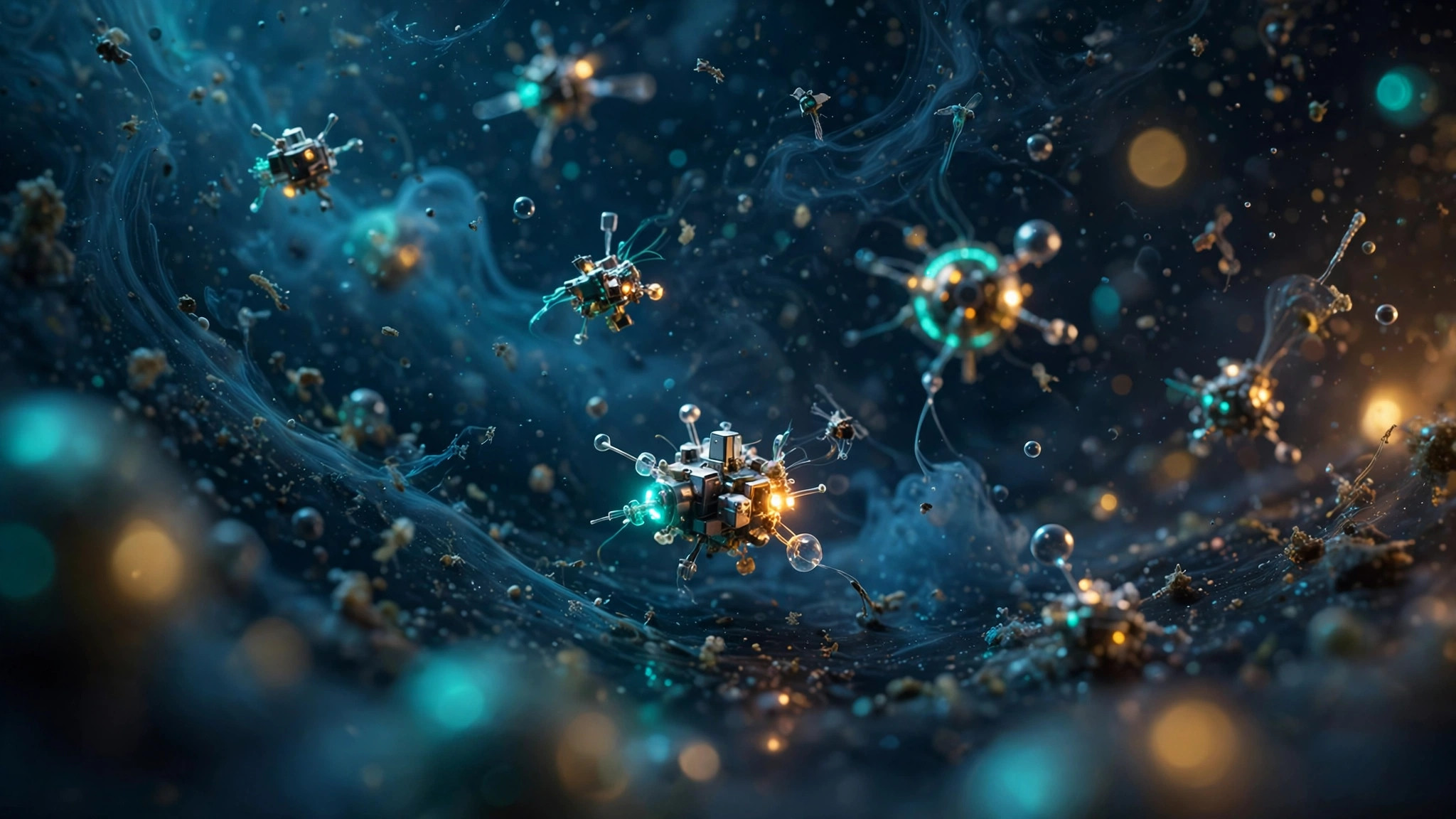
Nothing in the No Time To Die ending explained here works without understanding Project Heracles, so here is the weapon in plain terms. Heracles is a bioweapon built from nanobots — microscopic machines that enter the body on contact, spread like a virus from one person to another by touch, and kill within moments.
The twist is that the nanobots can be programmed to a specific person’s DNA. If the nanobots in your body are not coded to you, they do nothing at all. If they are coded to you — or to your blood relatives, who share your DNA — they kill you. That programming is the whole mechanism of the No Time To Die ending explained here: a weapon that kills exactly the people it was told to kill, and nobody else.
A person carrying nanobots coded to someone else is perfectly healthy and perfectly dangerous: one touch passes the weapon on.
The weapon was developed under M, the head of MI6, as a tool that could kill a target without collateral damage. The scientist behind it, Valdo Obruchev, was kidnapped from a secret government laboratory, and Safin took control of the project through him.
Safin’s first use of Heracles is the film’s most chilling scene: at a SPECTRE gathering in Cuba, a mist of nanobots is released to kill Bond. But Obruchev has secretly reprogrammed the mist on Safin’s orders, and it kills every SPECTRE member present instead — while Bond, who was never its target, walks out unharmed.
The scene shows the weapon’s rules in action — the rules the No Time To Die ending explained here turns on: Heracles is not a poison gas that kills everyone in the room. It is a weapon that kills exactly the people it was programmed to kill, and nobody else.
That rule is what makes the ending a trap rather than a fight. Heracles can be passed by a handshake, a touch on the wrist, a scratch on the face. It cannot be washed off, switched off or cured.
When Q tells Bond the nanobots in his system are permanent, he uses a single word: “They’re eternal.” The Den of Geek breakdown of the ending explains the same nanobot rules in the same terms, and reaches the same conclusion: the weapon is what makes Bond’s choice unavoidable. The No Time To Die ending explained in these terms is not about Bond losing a fight. It is about Bond catching something he cannot put down.
Why Blofeld Dies in Prison
The middle of the film answers a question the ending depends on: how does Ernst Stavro Blofeld die? Blofeld, the head of SPECTRE, has been in Belmarsh prison since the end of Spectre, running his organisation through a bionic eye. Safin wants him dead — he has been killing SPECTRE’s leadership one by one, in revenge for the murder of his family — and he has a plan.
He coerces Madeleine, who has been Blofeld’s psychiatrist in prison, into infecting herself with a dose of Heracles nanobots programmed to kill Blofeld, so that she can assassinate him with a touch during a prison visit.
Madeleine agrees under threat, then cannot go through with it. But before she leaves the prison, Bond touches her wrist — and unknowingly takes the nanobots into his own body.
When Bond interrogates Blofeld, the prisoner reveals the truth about the opening of the film: he staged the ambush at Vesper’s grave in Matera to make Bond believe Madeleine had betrayed him. It was revenge on his foster brother, and it cost Bond five years with the woman he loved.
Enraged, Bond grabs Blofeld by the throat — and the nanobots pass from Bond to Blofeld and kill him where he sits. Bond did not mean to kill him. He did not even know he was carrying the weapon. But the scene proves the rule that will decide the No Time To Die ending explained here: a touch is enough, and there is no way back from it.
Safin and the Island
Lyutsifer Safin, played by Rami Malek, is the villain of the No Time To Die ending explained here, and his plan is bigger than revenge. Safin first appears in the film’s prologue, as a young man who comes to Madeleine’s childhood home in Norway to kill her father, Mr. White. He kills Madeleine’s mother instead, and when the young Madeleine shoots him, he falls through the ice — then saves her from drowning.
He has been seeking revenge against SPECTRE ever since, for the murder of his parents, and by the time the film reaches its final act he has finished that revenge: Blofeld is dead, SPECTRE’s leadership is wiped out, and only Safin remains.
What he wants next is worse, and stopping it is the whole point of the No Time To Die ending explained here. On his island, Safin is manufacturing Heracles in huge quantities, and his plan is to release it against millions of people around the world. The nanobots can be programmed to anyone’s DNA, which means Safin can choose exactly who lives and who dies — a weapon that lets one man decide the population of the planet.
His base is a former Soviet missile facility on an island between Russia and Japan, shielded by blast doors that no missile can penetrate while they are closed. That detail matters, because it sets up the ending: the only way to destroy the base is for someone inside to open the doors, and to stay inside while the missiles come in.
Safin’s connection to Madeleine is personal as well as tactical. He knows about Mathilde, and he uses the threat against her to control Madeleine — first to force her to carry the nanobots into Blofeld’s prison, and later to draw Bond to the island.
When Bond and Nomi arrive, Safin holds Madeleine and Mathilde captive in the base, and the rescue is the last mission of Bond’s life. Nomi, who has held the 007 number while Bond was retired, gets Madeleine and Mathilde onto a boat and away from the island. Bond goes back inside alone, to finish the job.
Why Bond Stays for the Missiles
This is the heart of the No Time To Die ending explained, and it turns on a single moment. Bond has already opened the blast doors once, and he is on his way out when Safin reappears and shoots him several times. The two men fight in a pool of water, and Safin breaks open a vial of Heracles nanobots and smears them into Bond’s wounds, scratching them into his face to make sure they take hold.
As he dies, Safin tells Bond the truth: these nanobots are programmed to the DNA of Madeleine and Mathilde. If Bond ever touches either of them again, he will kill them both.
Bond kills Safin, then does the one thing the No Time To Die ending explained here has been building towards: he goes back and opens the blast doors a second time, knowing the missiles are already on their way. He radios Q, who confirms what Bond already suspects — the nanobots are in his system permanently, and there is no way to remove them.
He then calls Madeleine. In their last conversation, she confirms what she denied earlier in the film: Mathilde is his daughter. Bond tells her he loves her, and he tells her to look after their daughter. Then he stands on the roof of the base, looks up at the sky, and waits. The missiles hit the island, the base is destroyed, and James Bond dies.
It is worth saying clearly why Bond does not simply run — the question at the centre of the No Time To Die ending explained here. He is not trapped on the island — he could, in theory, get off it. The problem is what happens after that. The nanobots in his body are coded to the two people he loves most in the world. He can never touch them, never hold his daughter, never go home to them.
He can live, but only as a man who must stay away from his own family for the rest of his life, carrying a weapon that would kill them with a single touch.
The film’s answer is that this Bond — the Bond who has spent five films learning to love and to trust — would rather die than live like that.
The No Time To Die ending explained as a choice, rather than an accident, is the only reading that fits: Bond chooses the missiles, because the alternative is a life without Madeleine and Mathilde, and that is not a life he wants.
There is also a practical reason the ending had to be this way. As long as the blast doors are closed, the missiles cannot destroy the base, and Heracles survives to be used against millions of people.
Someone has to open the doors from the inside, and someone has to stay to make sure they stay open. Bond is that person. His death destroys the weapon, saves Madeleine and Mathilde, and ends Safin’s plan in a single stroke. The film makes sure we see all three things happen: the doors open, the missiles fall, and the base is gone.
What Happens to Madeleine and Mathilde
Madeleine Swann, played by Léa Seydoux, is the emotional centre of the No Time To Die ending explained here, and her story is the film’s second ending. Madeleine is the daughter of Mr. White, the SPECTRE operative from Casino Royale and Quantum of Solace. She met Bond in Spectre, and the two of them left together at the end of that film. Five years later, at the start of No Time To Die, they are in Matera, Italy — until a SPECTRE ambush at Vesper’s grave convinces Bond that Madeleine betrayed him, and he puts her on a train and walks away.
The truth, revealed by Blofeld in prison, is that Madeleine never betrayed him. Blofeld staged the ambush as revenge.
When Bond finds Madeleine again, she is living in Norway with a young daughter, Mathilde, and she insists the girl is not Bond’s child.
The film lets the audience see the resemblance and leaves the question open — until the final radio call, when Madeleine tells Bond the truth: Mathilde is his daughter.
It is the last thing he learns before he dies, and it changes the meaning of everything that came before it. Bond did not only lose five years with Madeleine. He lost five years with a daughter he never knew he had. The No Time To Die ending explained through Madeleine’s eyes is a story about a family that is reunited for exactly one phone call, and then broken again by the same weapon that broke it the first time.
Mathilde herself survives the film. She escapes the island with her mother on Nomi’s boat, and the final scene shows the two of them driving away together, alive and safe. That is the point of the No Time To Die ending explained here, in the simplest terms: his daughter lives because he dies.
For readers who want the full story of Mathilde and the question of Bond’s child, our article Does James Bond Have a Daughter? The Truth About Mathilde Swann covers it in detail, including what the film confirms and what it only implies.
The Final Scene and What It Means
After the missiles fall, the film does not end on the island. It ends in two quiet scenes, and both of them matter for the No Time To Die ending explained as a whole. The first is at MI6 headquarters in London. M, Q, Moneypenny, Nomi and Tanner gather with glasses in their hands, and M leads a toast to Bond.
It is the film’s goodbye to Daniel Craig’s Bond from the people who knew him best — the team that spent fifteen years and five films with him — and it is played without speeches or ceremony. Just a drink, and a name.
The second scene is the film’s last image. Madeleine is driving along a winding road with Mathilde in the passenger seat, and she tells her daughter that she wants to tell her a story. A story about a man named Bond. James Bond.
It is the same line the film has been circling since the opening: the line from On Her Majesty’s Secret Service, “We have all the time in the world,” which returns here as the film’s emotional through-line, and which the ending answers in the saddest possible way. Bond did not have all the time in the world. He had just enough time to save his family and say goodbye.
Then the credits roll, and the last words on the screen are the ones that have ended almost every Bond film since 1962: “James Bond will return.” That promise is the key to the No Time To Die ending explained properly. Bond’s death is final inside Daniel Craig’s story — there is no coming back from a missile strike, and the film is careful to leave no doubt about that.
But the franchise does not end with him. On 16 November 2026, Amazon MGM Studios announced Robert Pattinson as the next James Bond, with Denis Villeneuve directing. The death closed one era. The promise in the credits opened the next one.

Timeline: No Time To Die, End to End
The ending lands harder when the whole story is laid out in order. Here is the No Time To Die ending explained as a timeline, from the prologue to the final scene.
| When | What happens |
|---|---|
| The prologue | Young Safin comes to Madeleine’s home in Norway to kill her father, Mr. White. He kills her mother instead; the young Madeleine shoots him, and he saves her from the frozen lake. His revenge against SPECTRE begins here. |
| Matera, Italy | Five years after Spectre, Bond and Madeleine are together in Matera. A SPECTRE ambush at Vesper’s grave makes Bond believe Madeleine betrayed him. He puts her on a train and retires to Jamaica. |
| Five years later | Bond is living in retirement in Jamaica when his old friend Felix Leiter of the CIA asks for help: a scientist, Valdo Obruchev, has been kidnapped from a secret laboratory. Bond agrees to help. |
| Cuba | Bond meets CIA agent Paloma in Havana and infiltrates a SPECTRE gathering. A mist of Heracles nanobots is released to kill Bond — but Obruchev has reprogrammed it, and it kills every SPECTRE member present instead. Leiter is killed during the mission; his colleague Ash is revealed as Safin’s double agent. |
| London | Bond returns to MI6 and learns the truth about Heracles: it was developed under M. Nomi, the agent who holds the 007 number in Bond’s absence, is assigned to the case alongside him. |
| Belmarsh prison | Safin forces Madeleine to carry Heracles nanobots coded to kill Blofeld. She backs out, but Bond touches her wrist and becomes a carrier. He confronts Blofeld, who admits he staged the Matera ambush. Bond grabs him, the nanobots transfer, and Blofeld dies. |
| Norway | Bond reconciles with Madeleine at her childhood home and meets her daughter Mathilde, whom Madeleine insists is not his child. |
| Safin’s island | Bond and Nomi storm the island base. Madeleine and Mathilde are rescued and taken away by boat. Nomi kills Obruchev. Bond stays to kill Safin and open the blast doors. |
| The ending | Safin shoots Bond and infects him with nanobots coded to Madeleine and Mathilde. Bond kills Safin, opens the doors, says goodbye to Madeleine by radio, and dies in the missile strike. M’s team toasts him in London; Madeleine drives away with Mathilde. |
How the Five Craig Endings Compare
No Time To Die is the last of five Craig films, and its ending only makes full sense next to the other four. Each of the five films ends with Bond paying a price, and the price gets higher every time — until the fifth film, when the price is everything.
| Film | How it ends | What Bond loses |
|---|---|---|
| Casino Royale (2006) | Vesper Lynd drowns in Venice after betraying Bond; he tracks down Mr. White and introduces himself: “Bond. James Bond.” | His first love — and his trust. |
| Quantum of Solace (2008) | Bond finds Vesper’s boyfriend, Yusef, and lets him live; he drops Vesper’s necklace in the snow and walks away. | His revenge — he chooses to let it go. |
| Skyfall (2012) | M dies in Bond’s arms in a Scottish chapel; a new M takes over, and Moneypenny leaves the field for a desk. | His mentor — the closest thing he had to a mother. |
| Spectre (2015) | Bond captures Blofeld alive instead of killing him, then drives away with Madeleine. | Nothing — for once, he gets the girl and the win. |
| No Time To Die (2021) | Bond dies in a missile strike on Safin’s island, after learning Mathilde is his daughter. | His life — and five years with his family. |
The pattern is the point. The Craig era is one continuous story, and each film’s ending is a step towards the last one. Casino Royale teaches Bond not to trust. Quantum of Solace teaches him to let go. Skyfall takes his mentor. Spectre gives him a future with Madeleine — and then No Time To Die takes that future away, and takes him with it.
The No Time To Die ending explained beside the other four is not a twist for its own sake. It is the final step in a story that was always heading here: the only way this Bond’s story could end was with him giving up everything he had finally found.
7 Facts About the No Time To Die Ending
Here are the seven facts that matter most about the No Time To Die ending explained in this article, in one place.
- Bond’s death is a first. No Time To Die is the first film in the official series in which James Bond dies. Across 24 previous films and 59 years, Bond had survived poison, torture, drowning and explosions. The 25th film is the one that kills him — and the film is careful to leave no way back from it.
- It is the end of a 15-year story. No Time To Die is the 25th official Bond film and Daniel Craig’s fifth and final one. The story it closes began in Casino Royale in 2006, and the ending pays off threads from all five films: Vesper, Madeleine, Blofeld, SPECTRE and the question of whether Bond can ever have a life outside the job.
- Heracles works by touch. The nanobots infect on contact and pass from person to person with a touch — a handshake, a hand on a wrist, a scratch on the face. They kill only the DNA they are coded for, and they cannot be removed. Q’s verdict on them is one word: “They’re eternal.”
- Blofeld dies by accident. Bond does not plan to kill Blofeld in prison, and does not know he is carrying the weapon. Safin forces Madeleine to carry the nanobots, she backs out, Bond touches her wrist, and the nanobots pass to Blofeld when Bond grabs him. The man who tormented Bond for two films is killed by a touch Bond never meant to give.
- Mathilde is Bond’s daughter. Madeleine denies it in Norway and confirms it in the final radio call. Bond learns he has a daughter minutes before he dies — and that his daughter is one of the two people his infected body would kill with a touch. That is why he cannot leave the island.
- The film made history behind the camera too. Cary Joji Fukunaga is the first American director to make a Bond film, and Billie Eilish, at 18, became the youngest artist ever to write and record a Bond theme song. The film was delayed repeatedly by the COVID-19 pandemic, moving from its original April 2020 date to September 2021, and still earned $774 million worldwide.
- The ending is final — and the franchise is not. The credits end with the traditional promise, “James Bond will return,” and it has already come true: on 16 November 2026, Amazon MGM Studios announced Robert Pattinson as the next James Bond, directed by Denis Villeneuve. Bond’s death ends Daniel Craig’s era. It does not end James Bond.

Our Take
Our view is that the No Time To Die ending explained here works — and it works because it is earned. The Craig era spent five films and fifteen years teaching Bond to care about something other than the mission: Vesper in Casino Royale, M in Skyfall, Madeleine in Spectre.
A Bond who had learned nothing could not have an ending like this one, because the ending only hurts if the man dying has something to lose. Craig’s Bond finally has a family, and the film takes it away from him in the same moment it gives it to him. That is a cruel piece of writing, and it is also the honest end of the story the five films were telling.
Our other view is that the ending is stronger than the villain who causes it. Safin’s plan — to kill millions with a weapon he could aim at anyone — never quite adds up as a motive: he starts as a man avenging his murdered family and ends as a man who wants to decide who lives and who dies, and the film does not quite explain the step between the two.
But the No Time To Die ending explained here does not depend on Safin’s plan making sense. It depends on Bond’s choice making sense, and it does. Given a weapon in his blood that would kill his wife and daughter with a touch, and a base that can only be destroyed from the inside, Bond does the only thing this Bond would do. He stays.
Finally, a note on what the ending did to the franchise. Killing Bond was a risk, and it is easy to see why the producers hesitated for so long: the character had survived for 59 years precisely because he never died.
But the gamble paid off in the one way that matters. It gave Daniel Craig’s Bond a real ending — the first Bond actor to get one — and it gave the next actor a clean start instead of a handover. When Robert Pattinson steps into the role, he will not be following a Bond who retired to Jamaica. He will be following a Bond who died for the people he loved.
That is a harder act to follow, and a better one to inherit. The No Time To Die ending explained in full is, in the end, a love story with a missile strike at the end of it — and that is why, five years later, people are still asking how it ends.
Read Also:
Read Also: James Bond Movies: The Complete 007 Film Guide (1962–2026)
Read Also: Spectre Ending Explained: Blofeld, Nine Eyes and Bond’s Choice
Read Also: Casino Royale Ending Explained: Vesper, Venice and Mr. White
Frequently Asked Questions
Does James Bond die in No Time To Die?
Yes. Bond is killed by a British missile strike on Safin’s island at the end of the film. It is the first time James Bond has died in the official Eon series, in 25 films over 59 years. The film leaves no doubt: the missiles destroy the base with Bond still on it, and the final scenes show his colleagues toasting his memory.
Why does Bond stay on the island instead of escaping?
Because Safin infects him with Heracles nanobots programmed to the DNA of Madeleine Swann and Mathilde. If Bond leaves the island and touches either of them, the nanobots will kill them. He also has to open the blast doors from the inside so the missiles can destroy the base. He chooses to stay, open the doors, and die — rather than live a life in which he can never touch his family again.
What is Project Heracles in No Time To Die?
Project Heracles is a bioweapon made of nanobots that infect on touch and kill only the people whose DNA they are programmed to match. It was developed under M at MI6, stolen by Safin through the scientist Valdo Obruchev, and manufactured on Safin’s island. The nanobots are permanent once inside the body — Q tells Bond “They’re eternal” — and they pass from person to person by touch.
How does Blofeld die in No Time To Die?
Blofeld is killed by Heracles nanobots that Bond passes to him by accident. Safin forces Madeleine to carry nanobots coded to kill Blofeld into Belmarsh prison, but she backs out. Bond touches her wrist before she leaves and becomes an unwitting carrier. When he grabs Blofeld during the interrogation, the nanobots transfer and kill Blofeld where he sits.
Is Mathilde James Bond’s daughter?
Yes. Madeleine denies it when Bond first meets Mathilde in Norway, but in their final radio call, as Bond is about to die, she confirms that Mathilde is his daughter. It is the last thing Bond learns before the missiles fall, and it is why his sacrifice matters: his daughter lives because he dies.

Kunal Chaudhary is the founder and editor of Media1Gyan, covering Bond 26 casting news, rankings and Bond history since July 2026, sourcing every developing story from trade reporting and official announcements and labelling rumor separately from confirmed fact. Kunal is the founder and editor of Media1Gyan.com, an independent James Bond 007 fan blog. A lifelong James Bond fan, he started Media1Gyan to give fellow fans clear, well-researched coverage of the world of 007 — from the classic Eon films to the new Amazon-MGM era and the road to Bond 26. On Media1Gyan, Kunal covers Bond movie news and casting rumors, ranked listicles (villains, Bond girls, theme songs, gadgets), explainers on Bond history and trivia, and deep dives into characters like Vesper Lynd and Ernst Stavro Blofeld. Every article is researched from publicly available information and reliable sources, and reviewed for accuracy before publishing. His approach is fan-first: no hype without sourcing, no rumors presented as fact, and complex Bond lore explained in plain language. When he covers developing stories like the next James Bond casting, articles are updated as new information breaks. Follow Media1Gyan.com for daily James Bond coverage — news, rankings, and guides for fans around the world. He writes under his real name.