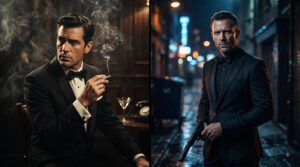
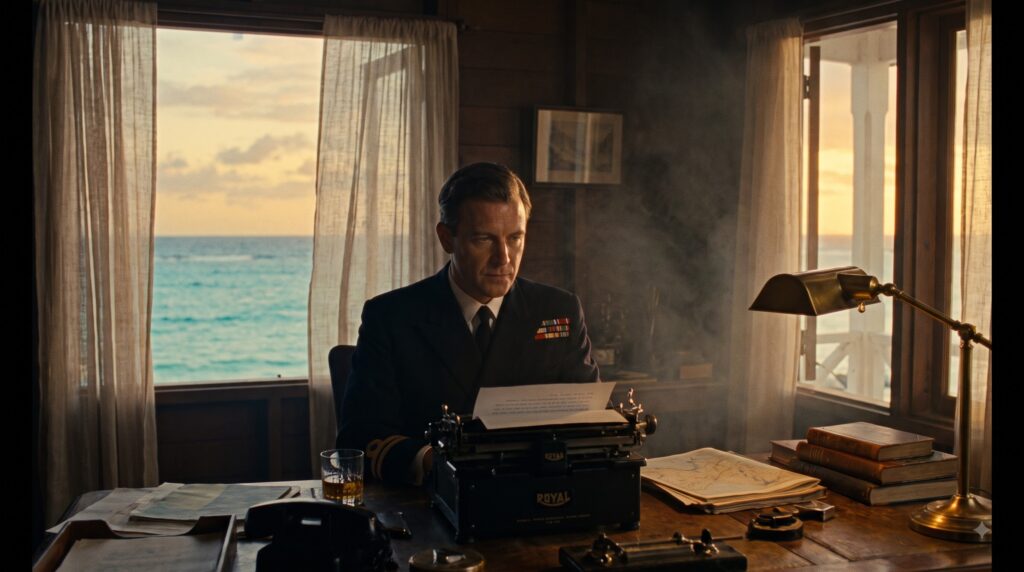
Ian Fleming created Secret Agent 007 in 1952 at his Goldeneye estate in Oracabessa, Jamaica.
While generations of moviegoers know Agent 007 through customized Aston Martins, laser watches, and explosive box office spectacles, the literary genesis of the world’s greatest secret agent was forged in real-world blood, deception, and wartime espionage. Investigating the authentic creation of James Bond reveals that Ian Fleming was not merely inventing escapist fiction—he was transcribing the covert warfare, lethal personalities, and psychological burnout he observed firsthand as a high-ranking intelligence officer during World War II.
In this authoritative historical deep dive, we uncover the declassified intelligence operations, real-life commandos, Jamaican retreats, and psychological motivations that gave birth to the 007 phenomenon.
Room 39 and Naval Intelligence: Fleming’s Wartime Espionage
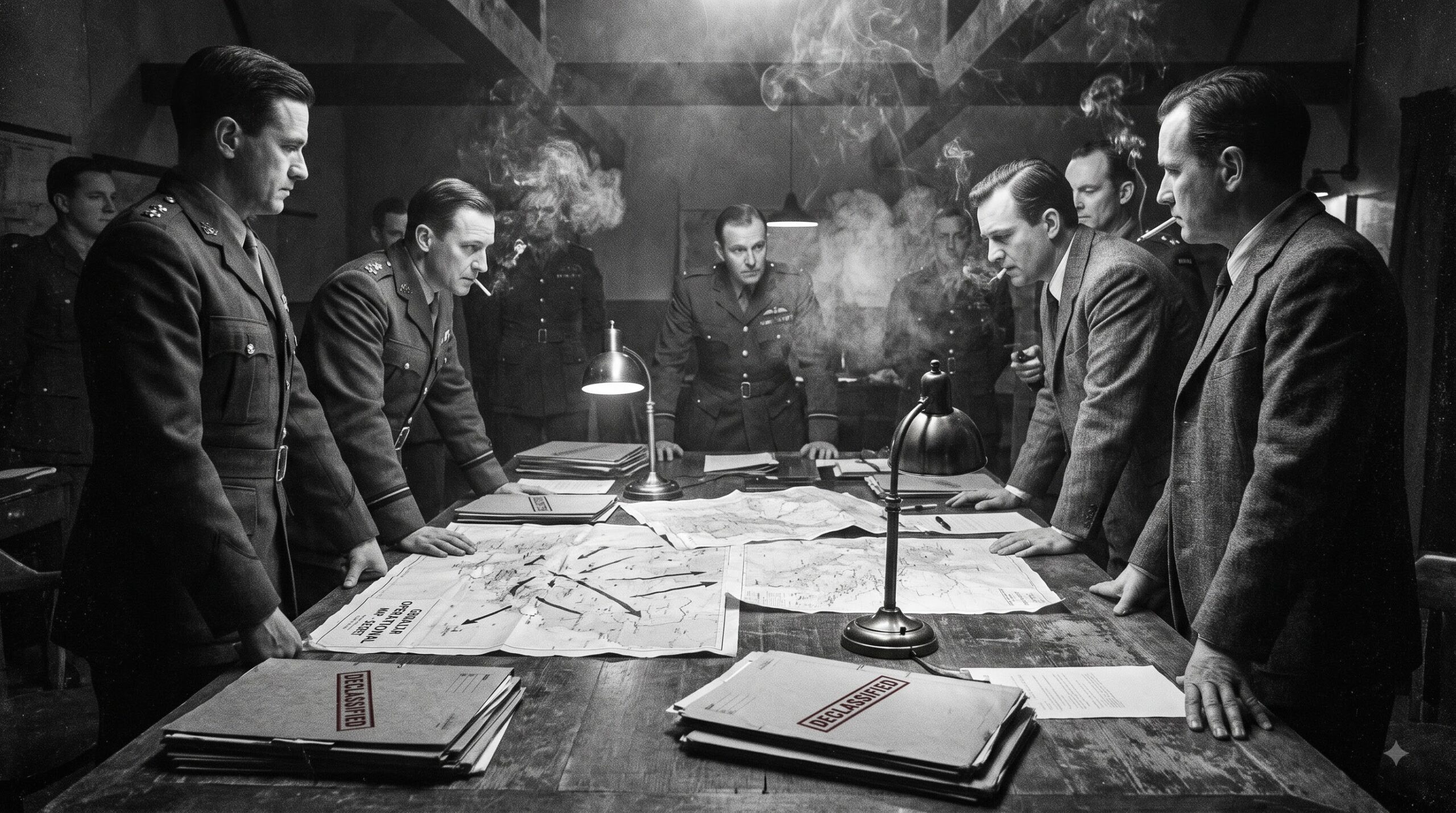
In May 1939, on the brink of World War II, Rear Admiral John Godfrey—Director of Naval Intelligence (DNI) for the British Admiralty—recruited Ian Fleming as his personal assistant. Commissioned as a lieutenant commander (and later commander) in the Royal Naval Volunteer Reserve (RNVR), Fleming was stationed in Room 39 of the Admiralty in Whitehall, London.
Fleming was not a field agent running across rooftops; he was the primary strategic architect of deception. Known for his fertile, unconventional imagination, Fleming drafted the famous “Trout Memo,” comparing covert deception schemes to fly-fishing. One of his suggestions in that memo directly inspired Operation Mincemeat, the famous intelligence plot that used a corpse carrying false documents to deceive German command regarding the 1943 Allied invasion of Sicily.
Admiral Godfrey’s austere demeanor, photographic memory, and demanding expectations served as the direct real-life prototype for Bond’s stern intelligence chief, M.
Read Also: Daniel Craig vs Sean Connery: Who Was the Most Accurate 007?
The Red Indians: 30 Assault Unit (30 AU)
In 1942, frustrated by traditional military bureaucracy, Fleming created a specialized commando formation known as 30 Assault Unit (30 AU), affectionately referred to as his “Red Indians.”
Trained in close-quarters assassination, safe-cracking, lock-picking, and silent infiltration, this elite intelligence assault team moved alongside or ahead of frontline forces. Their objective was simple: raid enemy headquarters, secure secret codes, seize Enigma cipher wheels, and capture classified naval archives before Axis forces could destroy them.
The ruthless efficiency, improvised tactical combat, and cold operational detachment of the 30 AU commandos laid the groundwork for James Bond’s license to kill as a “blunt instrument” of the British state.
Read Also: 7 Dark Eras of Ernst Stavro Blofeld History: 007’s Ultimate Nemesis
The Real Men Who Inspired the Character of 007
James Bond was not based on a single individual, but was a composite figure assembled from several remarkable operatives Fleming worked with during the war:
- Forest Frederick Edward Yeo-Thomas (“The White Rabbit”): An SOE secret agent dropped parachuting into occupied France multiple times, surviving brutal Gestapo interrogation and concentration camp torture with unbreakable resolve.
- Sir Fitzroy Maclean: A dashing Scottish diplomat, soldier, and adventurer who parachuted into Yugoslavia to coordinate with Tito’s partisan fighters, embodying the effortless aristocratic charm and lethal survival skills of Bond.
- Peter Fleming: Ian’s older brother, an explorer and covert deception officer who operated deep behind enemy lines in Norway and Greece.
- Dusko Popov: A Serbian double agent working for MI5 code-named “Tricycle.” Fleming shadowed Popov at the Casino Estoril in neutral Portugal in 1941, watching him place an audacious bet designed to humiliate German agents—the direct catalyst for the baccarat table stakes in Casino Royale.
Historical Inspiration Breakdown Matrix
The structured analysis below highlights how wartime realities directly shaped key pillars of the fictional 007 universe:
| Fictional Element | Real-World Origin / Historical Inspiration | Operational Role |
|---|---|---|
| James Bond (Character) | Composite of 30 AU commandos, Yeo-Thomas, and Dusko Popov. | Blunt instrument intelligence operative and assassin. |
| M (Head of MI6) | Rear Admiral John Godfrey (Director of Naval Intelligence). | Fleming’s demanding, sharp-tongued wartime superior. |
| Q Branch (Gadgets) | Charles Fraser-Smith & SOE technical workshops. | Engineered concealed compasses, hollow shoe heels, and pipe guns. |
| Miss Moneypenny | Kathleen Pettigrew & Vera Atkins (SOE Intelligence). | Admiralty administrative chiefs keeping track of operational files. |
| The “00” Licence to Kill | WWII Special Operations Executive (SOE) directive. | Covert permission to execute high-value targets behind enemy lines. |
Why “James Bond”? The Dullest Name in the World
When Ian Fleming sat down to write his first novel in early 1952, he actively rejected flamboyant, romantic-sounding names. He was determined that his operative should be a neutral, cold figure to whom violent events happened.
Fleming was an avid birdwatcher at his Jamaican estate. On his shelf was a copy of the definitive field guide, Birds of the West Indies, written by prominent American ornithologist James Bond. Fleming felt the name was the simplest, plainest, and dullest moniker he had ever encountered—making it the ideal covert cover identity for a cold civil servant.
Read Also: Vesper Lynd Daniel Craig Bond: 5 Tragic Ways She Shaped 007
Goldeneye, Jamaica: The Sanctuary Where It All Began
During a 1943 naval intelligence conference in Jamaica, Fleming vowed that when the war concluded, he would live in the Caribbean and write novels. In 1946, he acquired a 15-acre plot overlooking a private cove in Oracabessa, Jamaica, building a minimalist bungalow he named Goldeneye (named after Operation Goldeneye, a contingency plan he had drafted to maintain defense communications in Gibraltar).
On the morning of January 15, 1952, anxious about his impending marriage to the pregnant Ann Charteris, Fleming sat at his Imperial typewriter in the corner of his bedroom. Over the next two months, typing approximately 2,000 words a day with the window jalousies closed against the tropical sun, he completed the manuscript for Casino Royale.
For the next twelve years, until his death in August 1964, Fleming spent every winter holiday at Goldeneye, authoring all 14 original James Bond books (12 novels and two short-story collections) from that very desk.
Read Also: 7 Iconic James Bond Watches Omega Rolex: The Ultimate Buying Guide
The Lasting Cultural Impact of the Fleming Legacy
The creation of James Bond by Ian Fleming was more than just a publishing milestone; it provided post-war Britain with a cultural triumph during an era of geopolitical decline and austerity rationing. By imbuing Bond with his own luxurious tastes—custom Morland cigarettes, tailored Savile Row suits, vintage Rolex and Sea-Dweller references, and refined cocktails—Fleming elevated wartime tradecraft into iconic global mythos.
Decades later, whether tracking box office milestones or anticipating the casting of Bond 26, the entire cinematic universe remains anchored to that writing desk in Jamaica and the shadow warfare of Room 39.
For more detailed literary breakdowns, film histories, and franchise retrospectives, visit Media1Gyan, and discover official literary collections via the official Ian Fleming Estate.
Frequently Asked Questions (FAQ)
Did the real James Bond know Ian Fleming stole his name?
Yes. American ornithologist James Bond was initially unaware of the novels until they became international bestsellers. In February 1964, Bond and his wife visited Fleming at Goldeneye in Jamaica, where Fleming inscribed a copy of You Only Live Twice: “To the real James Bond, from the thief of his identity.”
Was Ian Fleming a spy in real life?
Ian Fleming served as a high-ranking naval intelligence officer (Lieutenant Commander and Commander RNVR) and top aide to Britain’s Director of Naval Intelligence during WWII. He planned high-level deception campaigns and commanded assault units rather than working as a solitary field operative.
Where was the first James Bond novel written?
The first James Bond novel, Casino Royale, was written between January and March 1952 at Ian Fleming’s estate, Goldeneye, in Oracabessa on the northern coast of Jamaica.