Beyond steel teeth and razor bowler hats, 007's most lethal adversaries relied on ruthless tradecraft.
Whenever movie fans discuss the lethal muscle of the 007 universe, conversations inevitably centre on two legendary figures: Harold Sakata’s steel-rimmed bowler-throwing Oddjob from Goldfinger and Richard Kiel’s towering steel-toothed Jaws from The Spy Who Loved Me.
While those figures are permanent fixtures of pop culture, an objective audit of six decades of espionage cinema proves that the franchise’s most dangerous adversaries rarely relied on cartoonish gimmicks. Investigating the most underrated Bond henchmen reveals a cadre of cold, tactically superior killers who pushed James Bond closer to genuine defeat than any megalomaniacal mastermind ever could.
In this authoritative tactical breakdown, we rank and examine the seven most underappreciated enforcers, assassins, and combat specialists in James Bond history — the definitive ranking of underrated Bond henchmen in cinema history.
1. Donald “Red” Grant (From Russia with Love, 1963)
Played with chilling physical presence by Robert Shaw, Donald “Red” Grant set the gold standard for every espionage enforcer that followed — and remains the most influential of all underrated Bond henchmen. Grant was not an eccentric bodyguard; he was a psychopathic British army deserter turned SPECTRE assassin who spent months shadowing Bond across Europe, letting 007 do the heavy lifting of stealing the Lektor decoding machine before stepping in to harvest the prize.
The climactic fight inside a claustrophobic compartment on the Orient Express remains arguably the finest, most brutal hand-to-hand combat sequence in the entire franchise. Grant disarmed Bond psychologically, outsmarted his cover, and failed only because Bond exploited Grant’s petty greed over concealed gold sovereigns inside an armaments-rigged attache case.
📌 Read Also: 10 Brilliant Bond Villain Schemes That Were Actually Genius (And 5 That Made No Sense)
2. Fiona Volpe (Thunderball, 1965)
Luciana Paluzzi’s portrayal of SPECTRE executioner Fiona Volpe completely inverted the conventional passive henchman role — and she remains one of the most underrated Bond henchmen despite stealing every scene. Operating as an elite motorcycle assassin wielding rocket launchers concealed in fairings, Volpe was ruthlessly competent, sharp-tongued, and entirely immune to Bond’s seduction.
When Bond attempts to charm her into defecting, Volpe delivers one of the most blistering monologues in 007 history, mocking his narcissistic belief that a woman can be turned from her mission by an evening in bed. Volpe controlled the tempo of every room she entered, succumbing only when Bond maneuvered her into the path of a stray bullet on a crowded Nassau dance floor.
📌 Read Also: The Evolution of the Bond Girl: From Sidekick to Secret Agent
3. Necros (The Living Daylights, 1987)

Andreas Wisniewski brought terrifying, robotic efficiency to the role of Necros, the primary KGB/SMIERSH-infiltrating mercenary in Timothy Dalton’s debut film — a master of silent infiltration and one of the most underrated Bond henchmen in cinema history. Blending seamlessly into various European identities — from an undercover milkman at an English safe house to an airport baggage handler — Necros was a ghost long before Bond ever saw his face.
His defining trait was chillingly mundane: listening to The Pretenders on a personal cassette player while methodically executing guards using explosive milk bottles and improvised garrote wires. His mid-air struggle against Bond while clinging to a cargo net hanging out of a flying C-130 Hercules transport aircraft stands as one of the franchise’s greatest physical stunt achievements.
Lethal Profiles: The 7 Most Underrated Henchmen Ranked
The structured tactical assessment below breaks down the primary skills, weaponry, and operational lethality of cinema’s most underrated enforcers — every one of these underrated Bond henchmen ranked side by side:
| Henchman | Film & Year | Primary Weapon / Technique | Tactical Threat Level |
|---|---|---|---|
| Red Grant | From Russia with Love (1963) | Concealed watch garrote wire & psychological deception | 10 / 10 (Flawless professional tradecraft) |
| Fiona Volpe | Thunderball (1965) | Rocket-firing motorcycle & social manipulation | 9.0 / 10 (Intellectually immune to 007 charm) |
| Necros | The Living Daylights (1987) | Explosive dairy containers, headphone garrote | 9.5 / 10 (Surgical infiltration expert) |
| Tee Hee Johnson | Live and Let Die (1973) | Mechanical steel pincer claw arm | 8.5 / 10 (Brutal close-quarters grappling) |
| Richard Stamper | Tomorrow Never Dies (1997) | Tactical chakra torture, heavy automatic weapons | 8.5 / 10 (Pathologically incapable of feeling pain) |
| Xenia Onatopp | GoldenEye (1995) | Acrobatic asphyxiation & dual machine guns | 9.5 / 10 (Extreme sadomasochistic combat lethality) |
| Mr. Hinx | Spectre (2015) | Thumb gouging, customized AF2011 double-barrel pistol | 9.0 / 10 (Unstoppable blunt force juggernaut) |
📌 Read Also: Top 10 Things You Didn’t Know About James Bond’s Military Background
4. Tee Hee Johnson (Live and Let Die, 1973)
Julius Harris delivered an unforgettably cheerful yet sinister performance as Tee Hee, Dr. Kananga’s chief enforcer — one of the most underrated Bond henchmen of the Roger Moore era. Having lost his right arm to an alligator farm accident — a story he recounts with a hearty laugh — Tee Hee replaces the limb with a powerful mechanical steel pincer claw capable of shearing gun barrels and snapping bones.
While often grouped into the campier elements of the Roger Moore era, Tee Hee’s final ambush in a narrow train compartment at the end of the film is genuinely terrifying, requiring Bond to use wire-cutters on the claw’s hydraulic cables before throwing him out of a moving train window.
5. Richard Stamper (Tomorrow Never Dies, 1997)
Danish actor Götz Otto stood six-foot-six as Richard Stamper, the fanatical protégé of media mogul Elliot Carver — a mountain of muscle among underrated Bond henchmen. Stamper was not just a hulking presence; he was trained in ancient eastern pressure-point torture techniques and claimed to suffer from congenital analgesia, rendering him physically incapable of feeling bodily pain.
Stamper operated Carver’s stealth catamaran, executing naval sailors with military precision and maintaining absolute fanatical loyalty to his master until the very end, trapping Bond underwater beneath heavy missile chains.
📌 Read Also: Ernst Stavro Blofeld: The Complete History of Bond’s Greatest Nemesis
6. Xenia Onatopp (GoldenEye, 1995)
Famke Janssen’s Xenia Onatopp was so charismatic and lethally unhinged that she frequently outshone primary villain Alec Trevelyan — the deadliest of all underrated Bond henchmen. A former Soviet combat pilot who derived intense sexual gratification from high-stakes slaughter, Onatopp dispatched Canadian admirals and Russian defense technicians by crushing their rib cages between her muscular thighs.
Onatopp was dangerous because she was completely unpredictable. Her combat style combined agile Russian hand-to-hand takedowns with an utter indifference to her own physical survival, proving that a female enforcer could match any classic heavyweight henchman in visceral threat.
📌 Read Also: What Happened to the Actresses Who Played the Most Famous Bond Girls?
7. Mr. Hinx (Spectre, 2015)
Dave Bautista proved that modern cinema could still deliver a classic, dialogue-free physical powerhouse with Mr. Hinx — one of the most underrated Bond henchmen of the modern era. Introduced during a shadowy meeting in Rome where he brutally gouges out a rival enforcer’s eyes with metal-tipped thumbnails, Hinx established himself as a terrifyingly silent hunter.
Paying direct homage to Red Grant and Tee Hee, Hinx engages Bond in an earth-shattering brawl through an Austrian passenger train, tossing 007 across seats and walls like a ragdoll. It took the combined efforts of Bond and Madeleine Swann, along with a heavy cargo crate tied to a moving train wheel, to finally dispatch him into the desert night.
What Makes a Legendary Enforcer?
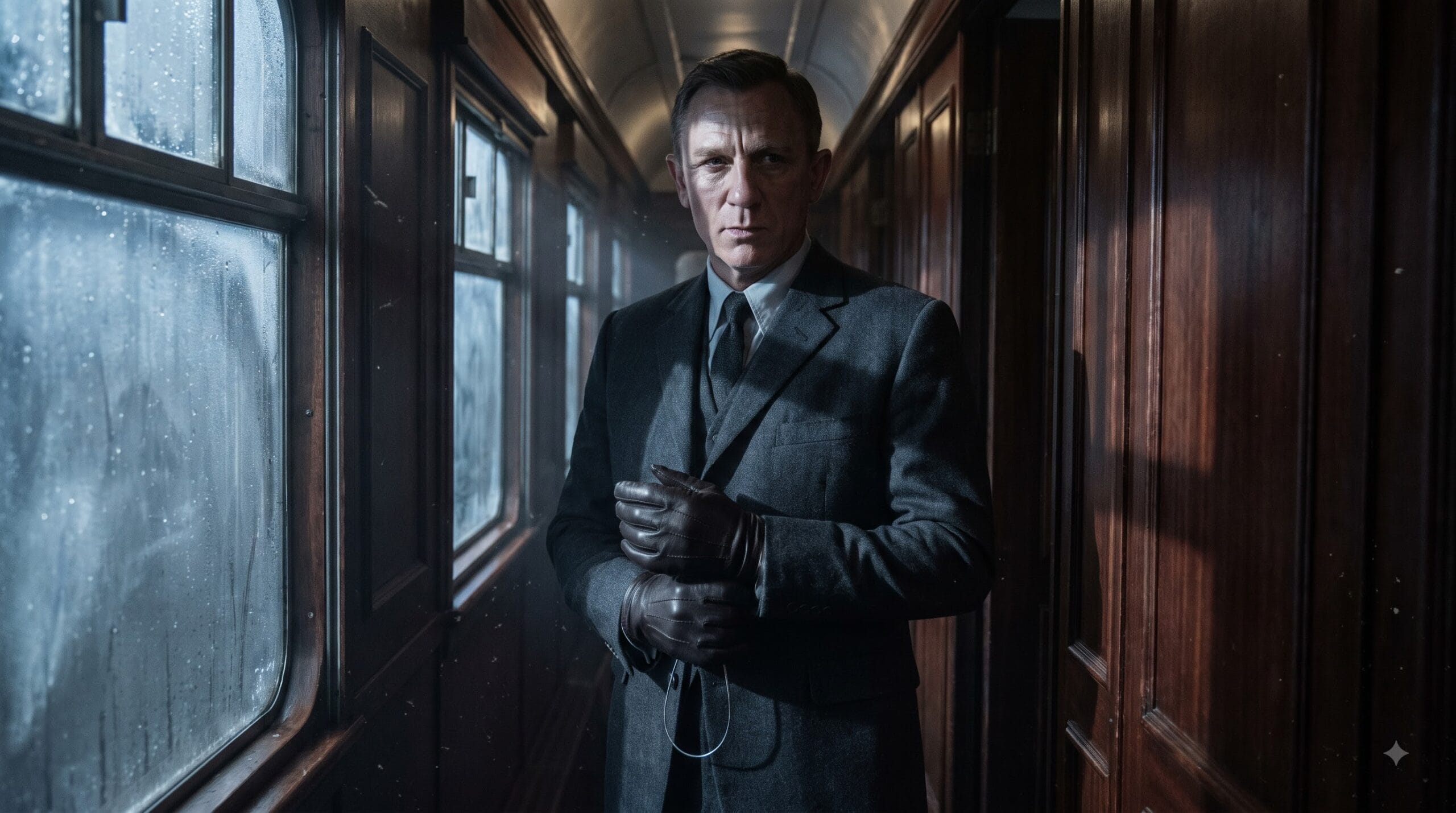
A James Bond film is fundamentally only as compelling as the obstacles standing between the agent and his objective. While criminal masterminds plan in the shadows, it is the enforcers who provide the visceral physical danger.
These underrated Bond henchmen succeeded because they grounded the stakes in tangible tactical reality — reminding audiences that behind the tuxedo, Agent 007 is a vulnerable man who can be bruised, cornered, and defeated by superior combat discipline.
As the franchise prepares for Bond 26, writers and directors would do well to bypass outlandish visual gimmicks and return to the grounded, relentless brutality demonstrated by these underrated Bond henchmen.
For more character deep dives, behind-the-scenes movie breakdowns, and franchise chronologies, visit Media1Gyan, and discover official villain archives at the official James Bond Website.
Frequently Asked Questions (FAQ)
Who was the first henchman to fight James Bond on a train?
Donald “Red” Grant (Robert Shaw) in 1963’s From Russia with Love engaged Bond in the legendary Orient Express fight, establishing the train brawl trope that later underrated Bond henchmen like Tee Hee and Mr. Hinx would repeat in Live and Let Die, The Spy Who Loved Me, and Spectre.
Did the actor who played Jaws appear in more than one Bond film?
Yes. Richard Kiel portrayed Jaws in both 1977’s The Spy Who Loved Me and 1979’s Moonraker, making him one of the only henchmen in franchise history to appear in multiple official films.
What happened to Red Grant’s actor, Robert Shaw?
Following his breakout role as Red Grant, British actor Robert Shaw achieved international cinematic immortality starring as Quint in Steven Spielberg’s 1975 masterpiece Jaws, along with acclaimed turns in The Sting and A Man for All Seasons.
Kunal is the founder and editor of Media1Gyan.com, an independent James Bond 007 fan blog. A lifelong James Bond fan, he started Media1Gyan to give fellow fans clear, well-researched coverage of the world of 007 — from the classic Eon films to the new Amazon-MGM era and the road to Bond 26. On Media1Gyan, Kunal covers Bond movie news and casting rumors, ranked listicles (villains, Bond girls, theme songs, gadgets), explainers on Bond history and trivia, and deep dives into characters like Vesper Lynd and Ernst Stavro Blofeld. Every article is researched from publicly available information and reliable sources, and reviewed for accuracy before publishing. His approach is fan-first: no hype without sourcing, no rumors presented as fact, and complex Bond lore explained in plain language. When he covers developing stories like the next James Bond casting, articles are updated as new information breaks. Follow Media1Gyan.com for daily James Bond coverage — news, rankings, and guides for fans around the world.